
www.industryemea.com
06
'26
Written on Modified on
Cognitive Robotics for Adaptive Building Infrastructure
NEURA Robotics and Drees & Sommer are collaborating to integrate physical AI into the planning and operation of intelligent buildings.
neura-robotics.com
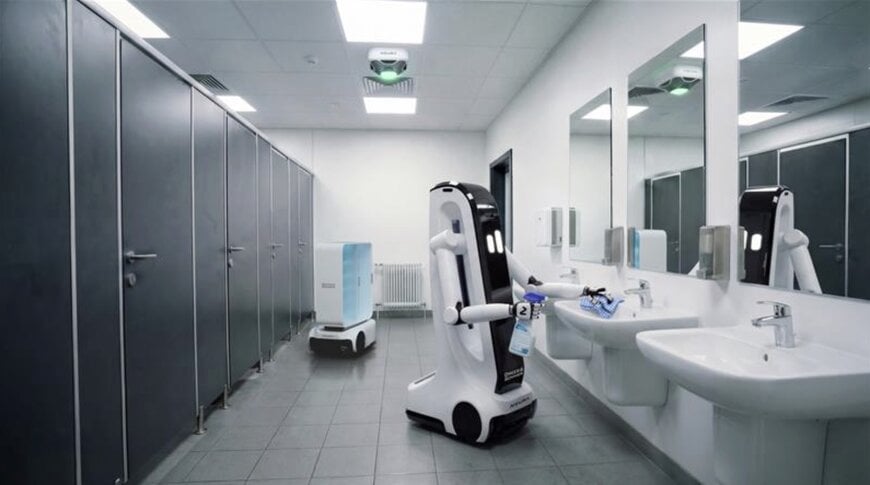
NEURA Robotics and Drees & Sommer have formed a strategic partnership to develop buildings as adaptive, sensorized systems that enable real-time interaction between humans, robots and building infrastructure, starting with sanitary facilities.
From automated buildings to cognitive environments
The partnership reflects a shift in how buildings are conceived and operated. Rather than treating automation as an add-on, the two companies aim to embed robotics and artificial intelligence into building design from the earliest planning stages. The objective is to create environments that can perceive conditions, interpret data and respond autonomously through coordinated interaction between digital systems and physical robots.
This approach aligns with increasing demand for higher efficiency, safety and resilience in building operations, particularly in sectors facing labor shortages and rising hygiene requirements.
Initial focus on sanitary facilities
Sanitary facilities have been selected as the first application area due to their high usage intensity, strict hygiene standards and frequent maintenance needs. In such environments, cognitive robots can perform tasks such as detecting contamination, adapting cleaning routines to actual conditions, refilling consumables and identifying technical anomalies before failures occur.
By automating these processes, the system aims to improve availability and cleanliness while reducing manual workload and operational risk. The same principles are intended to be transferable to other building types, including healthcare facilities, production environments, office buildings and transport hubs.
Sensorized Environment as a digital nervous system
A central concept of the collaboration is the Sensorized Environment. Buildings are equipped with distributed sensors that capture data such as light levels, motion, temperature and acoustic signals. These inputs are processed in real time to create situational awareness across the building.
This sensor layer functions as a digital nervous system, enabling robots to coordinate their actions with the building itself rather than operating as isolated machines. The result is tighter integration between space, infrastructure and robotic systems, supporting adaptive and context-aware behavior.
Roles and technical contributions
Drees & Sommer contributes expertise in building planning, sensor integration, digital twins and IT/OT network architecture. This includes designing environments that are compatible with robotic operation, data exchange and scalable automation.
NEURA Robotics provides cognitive robotics platforms, physical AI capabilities and interface technologies that allow robots to perceive, learn and make autonomous decisions. The combination is intended to support continuous learning and adaptation at both the building and robot level.
Implications for building lifecycle management
Integrating robotics and AI into building infrastructure from the outset has implications across the entire building lifecycle. Planning, construction and operation are linked through shared data models and sensor feedback, enabling predictive maintenance, adaptive service routines and more efficient resource use.
Rather than static assets, buildings are treated as evolving systems that respond dynamically to usage patterns and environmental conditions. This concept extends traditional building automation toward what the partners describe as cognitive infrastructure.
www.neura-robotics.com
