
Yokogawa launches OpreX Universal Autonomous Control System R1.01 PLC for process automation
Designed for small- to medium-sized process plants, the new PLC combines IEC 61131-3 and OPC UA compliance with self-diagnostic capabilities, an all-solid-state backup battery, and embedded cybersecurity.
www.yokogawa.com
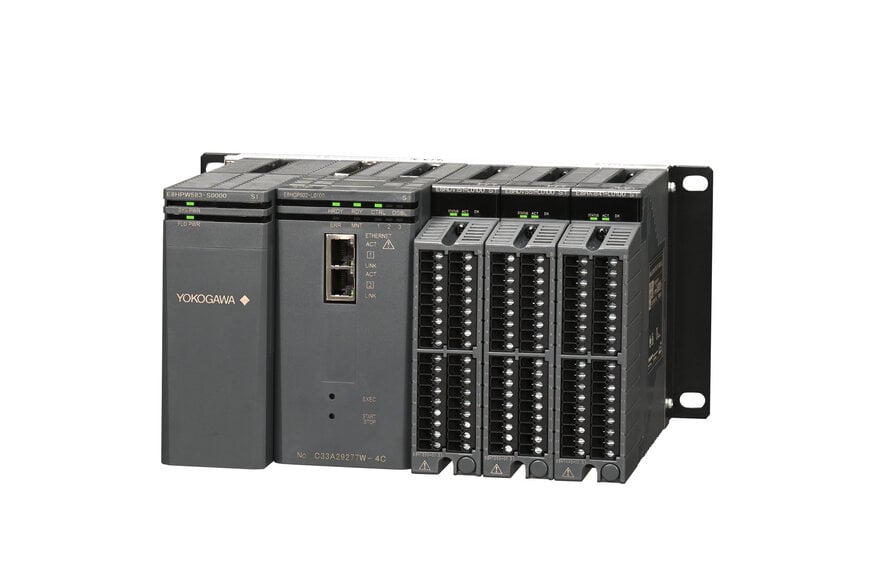
Yokogawa Electric Corporation (TOKYO: 6841) has announced the release of the OpreX™ Universal Autonomous Control System R1.01—introducing the Control Node Light Model—as a new addition to its OpreX Control and Safety Systems portfolio, launching on 26 November 2026. Engineered specifically for small- to medium-sized process plants, the programmable logic controller (PLC) pairs compliance with international IEC 61131-3 and OPC UA standards with self-diagnostic, self-repair, and security-by-design features to deliver flexible scalability and stable plant operations.
Bridging distributed control reliability with modular PLC scalability
Over more than five decades, Yokogawa has deployed approximately 31,000 CENTUM distributed control systems (DCS) across 120 countries, primarily serving large-scale industrial complexes. As operators of small- and medium-sized facilities increasingly seek PLCs that combine the high reliability of CENTUM with flexible system scalability—while meeting stricter global industrial cybersecurity regulations driven by plant-floor IoT adoption—Yokogawa developed the new controller with security embedded from the initial planning and design stages.
Core architecture, robustness, and cybersecurity features
The OpreX Universal Autonomous Control System R1.01 integrates open engineering standards with hardware resilience:
- Flexible expansion via IEC 61131-3 and OPC UA: Built on the open CODESYS engineering environment supporting IEC 61131-3 programming languages, the controller also implements OPC Unified Architecture (OPC UA) to ensure secure, reliable data exchange and straightforward integration or modification with other systems.
- Self-diagnostic hardware and all-solid-state backup battery: Onboard self-diagnostic and self-repair functions detect hardware anomalies early and recover data stored in system memory to help ensure autonomous and stable system operations. In addition, the CPU module incorporates an all-solid-state backup battery that will not need to be replaced for many years.
- Embedded operational cybersecurity: Communication encryption using digital certificates and configurable network access control settings ensure a stable system that enables safe and secure plant operations.
Mitsuhiro Yamamoto, Yokogawa Electric corporate officer and head of the Systems Business Division in the Digital Solutions Headquarters, stated that the OpreX Universal Autonomous Control System addresses the needs of small- and medium-sized plants across sectors including specialty chemicals, renewable energy, pharmaceuticals, and food. He added that Yokogawa plans to further strengthen the controller's robustness and expand its capabilities, including autonomous control functions, to support safe and stable customer operations.
Target markets and industrial applications
Major target markets for the platform encompass chemicals, renewable energy, pharmaceuticals, food, lifeline/water/sewage utilities, electrical/electronics, and battery manufacturing. Key applications include the management of equipment in pharmaceutical and food production facilities, such as energy management systems, pure steam generators, and water-for-injection (WFI) systems.
Additional Context:
This section explains general principles of open PLC programming standards and all-solid-state memory backup in industrial controllers not included in the original press release.
In process automation, the IEC 61131-3 standard harmonizes five programmable controller languages—Ladder Diagram (LD), Function Block Diagram (FBD), Structured Text (ST), Instruction List (IL), and Sequential Function Chart (SFC)—within a unified software framework such as CODESYS. Combined with OPC UA's platform-independent, encrypted client-server and publish-subscribe data modelling, process engineers can deploy modular skid-mounted control units (such as purified water or clean steam generators) that integrate cleanly into higher-level supervisory control and data acquisition (SCADA) or enterprise historians without proprietary protocol gateways.
From a hardware reliability perspective, industrial PLCs traditionally rely on conventional lithium coin-cell batteries or supercapacitors to retain non-volatile SRAM memory and real-time clock states during power outages. All-solid-state ceramic batteries replace flammable liquid or gel electrolytes with solid ceramic ion conductors, offering negligible self-discharge rates, high thermal stability inside compact control cabinets, and extended maintenance-free service lifespans.
Edited by an industrial journalist, Lekshman Ramdas, with AI assistance.
