
www.industryemea.com
16
'26
Written on Modified on
Veolia launches pioneering site for extracting strategic metals from EV batteries
A cutting-edge technology enables the recovery of more than 90% of the cobalt, nickel, and copper contained in the black mass resulting from battery shredding.
www.veoliawatertechnologies.com
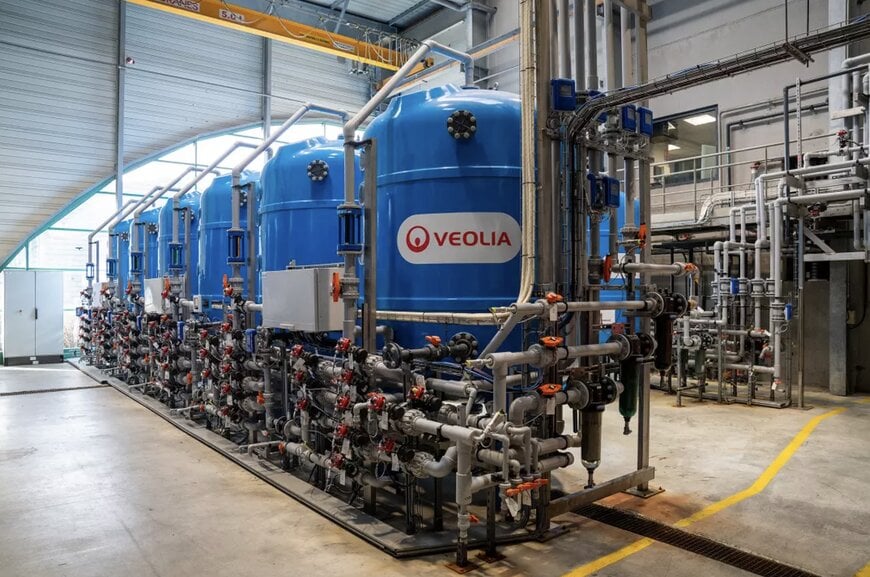
European battery gigafactories, automotive OEMs, and defense manufacturers face severe strategic vulnerability due to heavy reliance on imported critical raw materials and insufficient domestic chemical refining capacity. While mechanical shredding infrastructure across Europe can discharge and dismantle end-of-life lithium-ion electric vehicle batteries and production scrap into concentrated electrode powder—known as black mass—the continent has historically lacked downstream chemical refining plants to separate that powder back into pure metal salts. Consequently, large volumes of European black mass have been exported to Asian refining hubs, stripping Europe of strategic metals only to re-import finished cathode precursors and cells. With nearly 700,000 tonnes of batteries projected to enter European recycling streams within the next five years—representing over one billion euros in recoverable strategic metals—closing this downstream refining gap requires industrial-scale hydrometallurgical facilities capable of extracting high-purity cobalt, nickel, and copper domestically.
Proprietary Hydrometallurgical Refining and Domestic Material Recovery
To establish sovereign European refining capacity and halt the export of critical battery materials, Veolia inaugurated its pioneering hydrometallurgical processing facility in the Grand Est region of France (located at Amnéville/Malancourt-la-Montagne in Moselle). The launch event was attended by Estelle Brachlianoff, Chief Executive Officer of Veolia, Stéphane Séjourné, Executive Vice-President of the European Commission in charge of Prosperity and Industrial Strategy, and Franck Leroy, President of the Grand Est Region.
Equipped with Veolia’s proprietary hydrometallurgical chemical extraction technologies, the downstream facility processes black mass streams sourced from mechanical pre-treatment operations across France, the United Kingdom, and Switzerland. The chemical purification process extracts more than 90 percent of the cobalt, nickel, and copper contained within the shredded electrode feedstock. At full operational capacity, the facility will recycle nearly 7,000 tonnes of black mass per year—the equivalent of approximately 20,000 tonnes of end-of-life lithium-ion batteries—reintroducing the recovered strategic metals directly into European automotive, construction, and defense manufacturing markets.
Pan-European Dismantling Network and Regulatory Alignment
To ensure steady feedstock supply for its French refining hub, Veolia is deploying an integrated pan-European battery recycling value chain. Complementary upstream battery dismantling and mechanical separation projects are currently underway in the United Kingdom, Belgium, and Slovenia, creating a regional hub-and-spoke collection and pre-treatment network feeding the Grand Est hydrometallurgical plant.
Company leadership emphasized that achieving long-term circular industrial sovereignty requires immediate European regulatory and economic support to incentivize domestic reintegration of recycled metals and protect European refiners against subsidized non-European competition. The initiative aligns directly with European industrial policy frameworks, including the EU Batteries Regulation, the Critical Raw Materials Act, and the Clean Industrial Deal.
Edited by Romila DSilva, Induportals Editor, with AI assistance.
www.veolia.com
