
www.industryemea.com
09
'26
Written on Modified on
Deploying Physical AI for Critical Energy Infrastructure
NEURA Robotics, E.ON, and enviaM partner to develop cognitive robotic inspection and maintenance capabilities across electrical grid assets.
neura-robotics.com
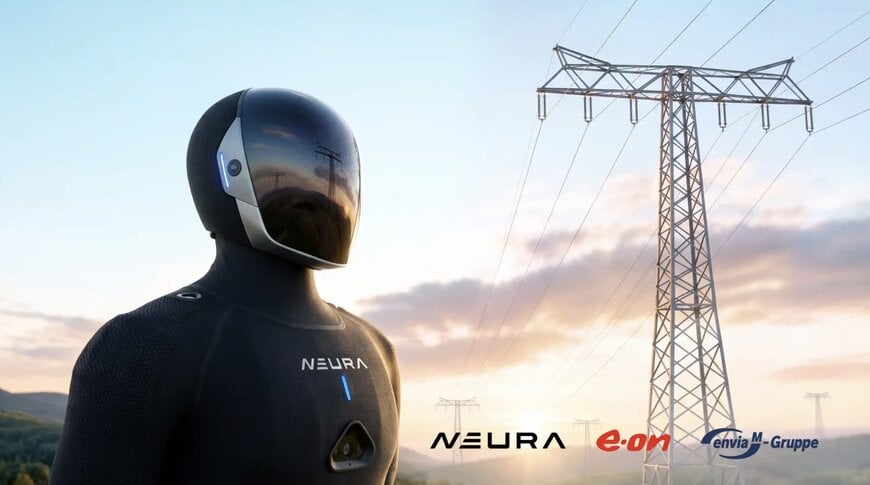
NEURA Robotics, E.ON, and enviaM have formed a strategic development partnership to engineer and deploy Physical Artificial Intelligence across high-voltage energy infrastructure. The initiative integrates NEURA’s open platform architecture with utility operational frameworks, targeting automated site security, asset inspection, and hazardous substation maintenance across distribution networks.
Operational Vulnerabilities and Hazardous Workflows in Grid Facilities
Electrical substations and distribution facilities require continuous condition monitoring, mechanical inspections, and immediate maintenance response. However, operating in close proximity to energized high-voltage switchgear, busbars, and pressurized transformers exposes field technicians to severe electrocution, arc flash, and environmental safety hazards. Furthermore, legacy facilities feature human-centric layouts—including steep access stairs, manual doors, narrow clearances, and elevated control cabinets—that prevent the deployment of conventional wheeled or tracked automated ground systems. Deploying cognitive, humanoid robotic platforms addresses these access and safety barriers directly within existing facility layouts without requiring structural site modifications.
Physical AI Architecture and Skill Acquisition Models
The technical framework utilizes NEURA’s Neuraverse open software ecosystem alongside Neuron AI, a multimodal foundation model engineered for embodied physical intelligence. The architecture fuses three-dimensional vision, tactile feedback, acoustic monitoring, internal proprioceptive robot states, and natural language interfaces into a centralized operational memory. By processing multi-sensory inputs, inspection robots capture acoustic frequency anomalies in humming transformers and mechanical tactile resistance in physical switches, detecting impending component failures alongside optical evaluations.
Robotic capability development executes through a tripartite training methodology within NEURA Gym:
- Human teleoperation and motion capture capture domain workflows from utility technicians utilizing sensor-instrumented suits.
- Direct real-world execution logs physical contact dynamics, movement profiles, and procedural outcomes.
- Physics-based synthetic simulation magnifies training data sets, simulating varied weather, lighting conditions, and structural anomalies prior to on-robot validation.
Validation Infrastructure and Utility Pilot Deployment
Skill engineering will take place at TUM RoboGym powered by NEURA, a 2,300-square-meter facility located at LabCampus at Munich Airport. Within this controlled environment, interdisciplinary engineering teams from E.ON, regional utility enviaM, and NEURA will design and validate automated task sequences.
Following initial bench and simulation testing, field qualification shifts to MITNETZ STROM, enviaM’s distribution grid operating subsidiary, for live pilot testing. Primary operational use cases evaluate autonomous site patrols, visual and thermal transformer inspections, substation perimeter monitoring, and manipulation tasks performed by bipedal humanoid platforms such as NEURA’s 4NE1. The Neuraverse platform orchestrates fleet lifecycle governance, allowing tested procedures to be deployed as standardized, containerized application skills across disparate grid substations while E.ON and enviaM retain direct data sovereignty.
Infrastructure Resilience and Workforce Protection
Deploying Physical AI across live distribution grids reduces human exposure to high-voltage hazards, prevents maintenance backlogs during adverse operating conditions, and lowers manual inspection overhead. Combining multimodal foundation models with flexible humanoid locomotion validates an scalable pathway to secure critical energy infrastructure, optimize asset reliability, and automate complex physical workflows across decentralized power distribution networks.
Edited by Romila DSilva, Induportals Editor, with AI assistance.
