
www.industryemea.com
02
'26
Written on Modified on
Battery Energy Storage Systems: Powering the Clean Energy Transition
As renewable energy reshapes electricity generation, battery energy storage systems are emerging as a critical enabler of grid stability, energy security and industrial decarbonisation.
induportals-media-publishing.com
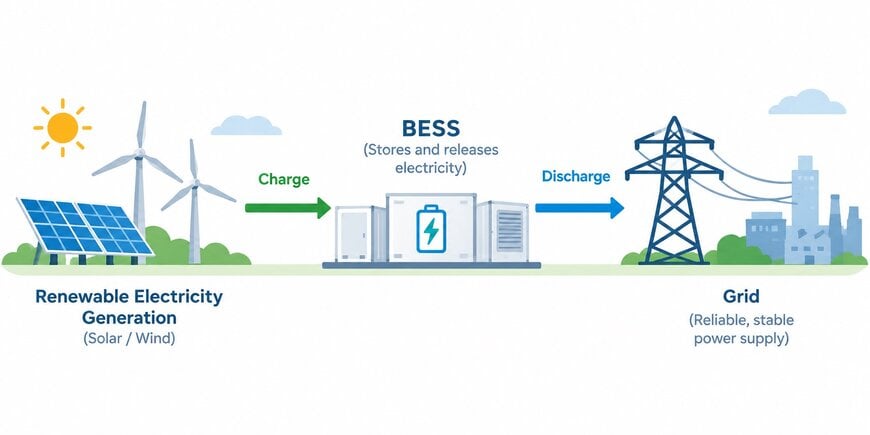
BESS stores electricity when it is abundant and releases it when demand rises. AI-generated image
The global energy transition faces a fundamental challenge: generating clean electricity is only half the battle; delivering it when and where it is needed is equally important. Solar power peaks during daylight hours, while wind generation fluctuates with weather conditions. Electricity demand, meanwhile, follows its own pattern, often rising when renewable generation declines. Battery energy storage systems (BESS) are increasingly providing the missing link between intermittent renewable generation and reliable electricity supply.
A BESS stores electricity when it is abundant or inexpensive and releases it when demand rises, renewable output falls or grid conditions require support. By shifting energy across time, these systems improve the utilisation of solar and wind installations, reduce dependence on fossil-fuel-based peaking plants and help electricity networks respond to sudden changes in supply and demand.
Their significance extends beyond renewable energy integration. Utilities can deploy BESS for frequency regulation, peak-load management, congestion relief and reserve capacity. Commercial establishments and factories can use them to manage electricity costs, improve resilience and support onsite renewable generation. Remote facilities and microgrids can combine batteries with solar or wind power to reduce reliance on diesel generators.
BESS is therefore becoming a strategic asset in the clean energy value chain, connecting renewable generation, electricity networks, industrial consumers and the emerging ecosystem of electric mobility and electrified infrastructure. It is not a substitute for every form of long-duration storage or conventional generation, but it offers a particularly versatile solution for balancing electricity systems over periods ranging from minutes to several hours.
A rapidly expanding global market
The expansion of BESS is being driven by falling battery costs, ambitious renewable-energy targets, electricity-market reforms and the growing need for grid flexibility. According to the International Energy Agency (IEA), global battery storage capacity additions reached approximately 108 GW in 2025, around 40% higher than in 2024. This brought annual deployment to roughly eleven times the level recorded in 2021. Utility-scale installations accounted for about 80% of new capacity, highlighting the growing importance of large grid-connected projects.
The longer-term outlook is equally compelling. The IEA estimates that global energy storage capacity must increase sixfold to approximately 1,500 GW by 2030 in its assessment of the requirements for meeting international clean-energy ambitions. Batteries account for the overwhelming majority of the increase in storage capacity in its net-zero scenario.
In monetary terms, market estimates vary according to whether they include battery packs alone, complete storage systems, software, installation and associated services. MarketsandMarkets valued the global BESS market at approximately US$50.81 billion in 2025 and projects it to reach US$105.96 billion by 2030, representing a compound annual growth rate of 15.8%. These figures are commercial market estimates rather than a direct measure of installed storage capacity.
China remains the largest deployment market, supported by extensive renewable-energy development and large-scale storage projects. The United States and Europe are also major markets, while Australia, the Middle East and other emerging economies are expanding their investments. Growth opportunities are particularly significant wherever solar and wind capacity is increasing faster than the flexibility of the electricity network.
Battery technologies: Choosing the right chemistry
Lithium-ion technology dominates contemporary BESS deployments, but several battery chemistries compete to meet different requirements. The choice depends on capital cost, energy density, cycle life, safety, operating conditions, response time and the duration for which electricity must be stored.
1. Lithium iron phosphate (LFP): LFP has become the preferred chemistry for many stationary storage applications. It offers good cycle life, strong thermal stability and comparatively low cost, making it attractive for frequent charging and discharging. Its principal disadvantage is lower energy density than some alternative lithium-ion chemistries, which can increase the space required for a given storage capacity. The IEA estimates that LFP accounted for around 90% of battery storage deployments in 2025.
2. Nickel manganese cobalt (NMC): NMC batteries offer higher energy density and can be useful where space and weight are important considerations. They have established manufacturing expertise and a substantial track record in electric vehicles. However, their reliance on nickel and cobalt can increase costs and expose projects to commodity-price volatility. Their thermal management and safety requirements also demand careful engineering. For stationary installations where space is less constrained, LFP often offers a more attractive balance of cost and performance.
3. Lead-acid batteries: A mature and widely understood technology, lead-acid batteries have relatively low upfront costs and established applications in backup power and uninterruptible power supplies. Their limitations include lower energy density, shorter cycle life under demanding operating conditions and greater maintenance requirements in some configurations. They are generally less competitive than LFP for applications requiring frequent, deep cycling over many years.
4. Vanadium redox and other flow batteries: Flow batteries store energy in liquid electrolytes held in external tanks. Their principal attraction is the ability to scale energy capacity by increasing electrolyte volume, while power capacity is determined largely by the cell stack. They can offer long cycle life and are suited to applications requiring extended discharge durations. However, their relatively low energy density, larger footprint, system complexity and higher upfront costs have limited widespread deployment compared with lithium-ion batteries.
5. Sodium-ion batteries: Sodium-ion technology is emerging as a potential alternative, using more abundant raw materials than lithium-based systems. Depending on the design, it can offer attractive low-temperature performance and reduced dependence on certain critical minerals. However, commercial maturity, energy density, product availability and lifetime economics vary across manufacturers. Sodium-ion is a promising option for selected stationary applications, although its long-term competitiveness at utility scale remains to be established across a broad range of operating conditions.
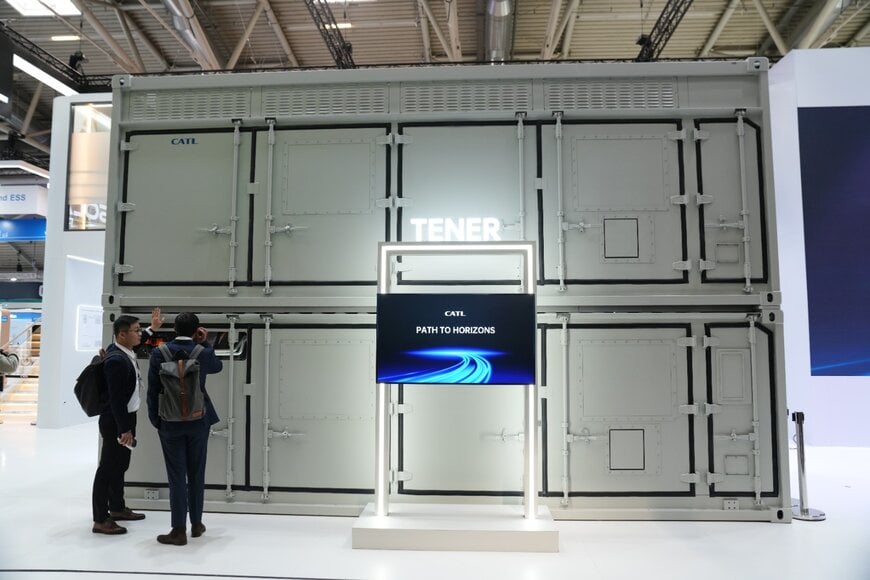
CATL’s TENER Stack – the world's first 9MWh ultra-large capacity energy storage system solution. Image source: CATL
Ultimately, no single chemistry is ideal for every application. Short-duration grid services, daily solar shifting, industrial backup and longer-duration storage have different performance requirements. Project developers must evaluate total lifetime cost and operational performance rather than selecting a battery solely on its initial purchase price.
Top 5 global BESS battery manufacturers
The following Top 5 global manufacturers of storage batteries are listed based on their actual battery-cell shipments for stationary energy storage, and not on the broader electric-vehicle battery market. These are all China based companies with manufacturing facilities across the globe.
1. CATL (China) — The global leader in energy storage battery cells, offering large-format LFP batteries and integrated storage solutions for utility-scale projects.
2. Hithium (China) — Specialises in stationary energy storage, with LFP battery cells and systems designed for utility-scale projects and long-duration applications.
3. EVE Energy (China) — A major battery manufacturer with a growing presence in grid-scale and commercial energy storage, supported by its large-format LFP cell portfolio.
4. BYD (China) — Combines battery manufacturing expertise with integrated energy storage systems for utility-scale, commercial and residential applications.
5. CALB (China) — A significant lithium-ion battery manufacturer expanding its presence in stationary energy storage with cells designed for large-scale installations.
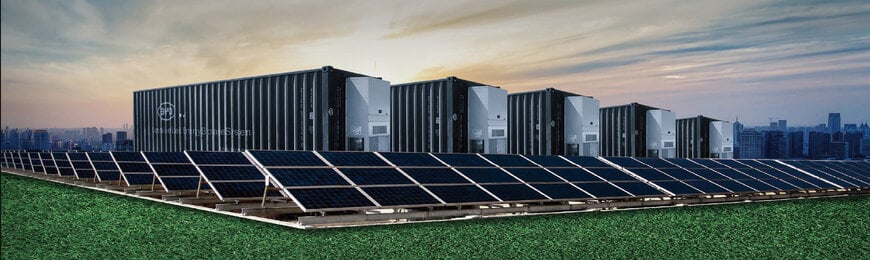
BYD provides a wide range of energy storage products in different sizes for various market segments. Image source: BYD
Economics and the road ahead
Despite strong growth, BESS projects must overcome several commercial challenges. Battery costs have declined considerably, but project economics still depend on financing, installation, grid connection, power-conversion equipment, thermal management, operating expenses and the cost of maintaining performance over the system's lifetime.
Revenue generation is another critical consideration. A battery may earn income by purchasing electricity when prices are low and selling it when prices rise. Additional value can come from frequency regulation, reserve services, peak-demand reduction and improved utilisation of renewable generation. However, these revenue streams depend on local electricity-market rules, price volatility and the ability to participate in multiple services without compromising battery life.
Duration is also becoming increasingly important. Two-hour systems remain common, but four-hour and longer-duration batteries are gaining attention as markets seek to move greater volumes of solar electricity into evening demand periods. Batteries nevertheless remain better suited to many short-duration flexibility requirements than to prolonged or seasonal energy storage.
The future of BESS will be shaped not only by improvements in battery chemistry but also by advances in power electronics, controls, software and system integration. As renewable generation expands and electricity demand becomes more dynamic, storage will increasingly be judged by how effectively it converts intermittent electricity into dependable, dispatchable power.
The global energy transition faces a fundamental challenge: generating clean electricity is only half the battle; delivering it when and where it is needed is equally important. Solar power peaks during daylight hours, while wind generation fluctuates with weather conditions. Electricity demand, meanwhile, follows its own pattern, often rising when renewable generation declines. Battery energy storage systems (BESS) are increasingly providing the missing link between intermittent renewable generation and reliable electricity supply.
A BESS stores electricity when it is abundant or inexpensive and releases it when demand rises, renewable output falls or grid conditions require support. By shifting energy across time, these systems improve the utilisation of solar and wind installations, reduce dependence on fossil-fuel-based peaking plants and help electricity networks respond to sudden changes in supply and demand.
Their significance extends beyond renewable energy integration. Utilities can deploy BESS for frequency regulation, peak-load management, congestion relief and reserve capacity. Commercial establishments and factories can use them to manage electricity costs, improve resilience and support onsite renewable generation. Remote facilities and microgrids can combine batteries with solar or wind power to reduce reliance on diesel generators.
BESS is therefore becoming a strategic asset in the clean energy value chain, connecting renewable generation, electricity networks, industrial consumers and the emerging ecosystem of electric mobility and electrified infrastructure. It is not a substitute for every form of long-duration storage or conventional generation, but it offers a particularly versatile solution for balancing electricity systems over periods ranging from minutes to several hours.
A rapidly expanding global market
The expansion of BESS is being driven by falling battery costs, ambitious renewable-energy targets, electricity-market reforms and the growing need for grid flexibility. According to the International Energy Agency (IEA), global battery storage capacity additions reached approximately 108 GW in 2025, around 40% higher than in 2024. This brought annual deployment to roughly eleven times the level recorded in 2021. Utility-scale installations accounted for about 80% of new capacity, highlighting the growing importance of large grid-connected projects.
The longer-term outlook is equally compelling. The IEA estimates that global energy storage capacity must increase sixfold to approximately 1,500 GW by 2030 in its assessment of the requirements for meeting international clean-energy ambitions. Batteries account for the overwhelming majority of the increase in storage capacity in its net-zero scenario.
In monetary terms, market estimates vary according to whether they include battery packs alone, complete storage systems, software, installation and associated services. MarketsandMarkets valued the global BESS market at approximately US$50.81 billion in 2025 and projects it to reach US$105.96 billion by 2030, representing a compound annual growth rate of 15.8%. These figures are commercial market estimates rather than a direct measure of installed storage capacity.
China remains the largest deployment market, supported by extensive renewable-energy development and large-scale storage projects. The United States and Europe are also major markets, while Australia, the Middle East and other emerging economies are expanding their investments. Growth opportunities are particularly significant wherever solar and wind capacity is increasing faster than the flexibility of the electricity network.
Battery technologies: Choosing the right chemistry
Lithium-ion technology dominates contemporary BESS deployments, but several battery chemistries compete to meet different requirements. The choice depends on capital cost, energy density, cycle life, safety, operating conditions, response time and the duration for which electricity must be stored.
1. Lithium iron phosphate (LFP): LFP has become the preferred chemistry for many stationary storage applications. It offers good cycle life, strong thermal stability and comparatively low cost, making it attractive for frequent charging and discharging. Its principal disadvantage is lower energy density than some alternative lithium-ion chemistries, which can increase the space required for a given storage capacity. The IEA estimates that LFP accounted for around 90% of battery storage deployments in 2025.
2. Nickel manganese cobalt (NMC): NMC batteries offer higher energy density and can be useful where space and weight are important considerations. They have established manufacturing expertise and a substantial track record in electric vehicles. However, their reliance on nickel and cobalt can increase costs and expose projects to commodity-price volatility. Their thermal management and safety requirements also demand careful engineering. For stationary installations where space is less constrained, LFP often offers a more attractive balance of cost and performance.
3. Lead-acid batteries: A mature and widely understood technology, lead-acid batteries have relatively low upfront costs and established applications in backup power and uninterruptible power supplies. Their limitations include lower energy density, shorter cycle life under demanding operating conditions and greater maintenance requirements in some configurations. They are generally less competitive than LFP for applications requiring frequent, deep cycling over many years.
4. Vanadium redox and other flow batteries: Flow batteries store energy in liquid electrolytes held in external tanks. Their principal attraction is the ability to scale energy capacity by increasing electrolyte volume, while power capacity is determined largely by the cell stack. They can offer long cycle life and are suited to applications requiring extended discharge durations. However, their relatively low energy density, larger footprint, system complexity and higher upfront costs have limited widespread deployment compared with lithium-ion batteries.
5. Sodium-ion batteries: Sodium-ion technology is emerging as a potential alternative, using more abundant raw materials than lithium-based systems. Depending on the design, it can offer attractive low-temperature performance and reduced dependence on certain critical minerals. However, commercial maturity, energy density, product availability and lifetime economics vary across manufacturers. Sodium-ion is a promising option for selected stationary applications, although its long-term competitiveness at utility scale remains to be established across a broad range of operating conditions.
CATL’s TENER Stack – the world's first 9MWh ultra-large capacity energy storage system solution. Image source: CATL
Ultimately, no single chemistry is ideal for every application. Short-duration grid services, daily solar shifting, industrial backup and longer-duration storage have different performance requirements. Project developers must evaluate total lifetime cost and operational performance rather than selecting a battery solely on its initial purchase price.
Top 5 global BESS battery manufacturers
The following Top 5 global manufacturers of storage batteries are listed based on their actual battery-cell shipments for stationary energy storage, and not on the broader electric-vehicle battery market. These are all China based companies with manufacturing facilities across the globe.
1. CATL (China) — The global leader in energy storage battery cells, offering large-format LFP batteries and integrated storage solutions for utility-scale projects.
2. Hithium (China) — Specialises in stationary energy storage, with LFP battery cells and systems designed for utility-scale projects and long-duration applications.
3. EVE Energy (China) — A major battery manufacturer with a growing presence in grid-scale and commercial energy storage, supported by its large-format LFP cell portfolio.
4. BYD (China) — Combines battery manufacturing expertise with integrated energy storage systems for utility-scale, commercial and residential applications.
5. CALB (China) — A significant lithium-ion battery manufacturer expanding its presence in stationary energy storage with cells designed for large-scale installations.
BYD provides a wide range of energy storage products in different sizes for various market segments. Image source: BYD
Economics and the road ahead
Despite strong growth, BESS projects must overcome several commercial challenges. Battery costs have declined considerably, but project economics still depend on financing, installation, grid connection, power-conversion equipment, thermal management, operating expenses and the cost of maintaining performance over the system's lifetime.
Revenue generation is another critical consideration. A battery may earn income by purchasing electricity when prices are low and selling it when prices rise. Additional value can come from frequency regulation, reserve services, peak-demand reduction and improved utilisation of renewable generation. However, these revenue streams depend on local electricity-market rules, price volatility and the ability to participate in multiple services without compromising battery life.
Duration is also becoming increasingly important. Two-hour systems remain common, but four-hour and longer-duration batteries are gaining attention as markets seek to move greater volumes of solar electricity into evening demand periods. Batteries nevertheless remain better suited to many short-duration flexibility requirements than to prolonged or seasonal energy storage.
The future of BESS will be shaped not only by improvements in battery chemistry but also by advances in power electronics, controls, software and system integration. As renewable generation expands and electricity demand becomes more dynamic, storage will increasingly be judged by how effectively it converts intermittent electricity into dependable, dispatchable power.
Article contributed by Milton D’Silva, a freelance technical writer, and former editor of Industrial Products Finder, India.
