
www.industryemea.com
25
'26
Written on Modified on
Integrated Radar Systems for Industrial Movement and Traffic Tracking
Pilz introduces a contactless monitoring solution to detect, count, and analyze the flow of personnel and vehicles within complex manufacturing environments.
www.pilz.com
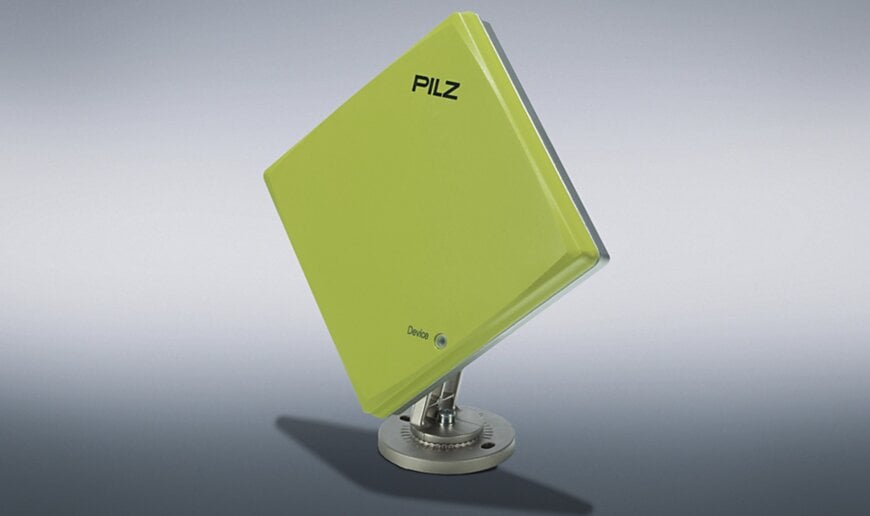
Pilz is releasing PSENradar live, an industrial-grade radar sensor designed to identify, quantify, and trace moving objects and personnel within defined operational zones. The technology targets intralogistics operations and heavy manufacturing facilities requiring precise traffic flow management without relying on wearable transponders.
Radar Technology and Infrastructure Requirements
The PSENradar live system operates contactlessly by utilizing radar wave reflections to identify spatial presence and motion, eliminating the requirement for tags, transponders, or reflectors on personnel and vehicles. This architectural approach reduces organizational overhead and integration complexity compared to traditional active tracking networks. Because the mushroom-shaped sensor operates autonomously without requiring secondary infrastructure on the tracked entities, facilities can deploy the technology rapidly and reduce associated maintenance expenditures within industrial automation environments.
Multi-Functional Operational Capabilities
The radar unit consolidates three distinct monitoring functions into a single hardware platform to manage spatial data. The presence detection feature identifies whether people or objects occupy a specific zone, functioning as a critical safeguard in areas with limited visibility to ensure clearance before automated machinery activates. The counting mechanism quantifies the exact number of dynamic entities within the defined perimeters, verifying when a zone is entirely vacated. Concurrently, the tracking function continuously assigns specific trajectories to moving entities and analyzes their directional vectors.
Intralogistics Applications and Traffic Management
By analyzing the actual flow of movement rather than recording isolated spatial events, the sensor provides actionable data for route optimization and traffic flow planning. In active intralogistics operations, continuous directional tracking helps prevent collisions between autonomous mobile robots, manually operated forklifts, and pedestrian traffic. This monitoring mechanism sustains high system availability and maintains continuous material flow while establishing strict baseline safety parameters across the factory floor.
Additional Context
This section details technical specifications and competitive benchmarking not included in the original news release.
Within the industrial automation sector, personnel and asset tracking typically relies on Ultra-Wideband (UWB) real-time locating systems (RTLS) or optical LiDAR scanners. UWB solutions, such as those provided by Kinexon or Sewio, offer highly precise spatial positioning (typically down to 10 to 30 centimeters) but require an extensive infrastructure of fixed anchors and battery-powered active tags worn by every tracked person or vehicle. LiDAR safety scanners, manufactured by companies like SICK or Omron, provide accurate tagless presence detection but can be susceptible to optical interference from airborne dust, smoke, or varying lighting conditions common in heavy manufacturing.
Radar-based solutions like the PSENradar live compete by offering high resilience to environmental contaminants and operating entirely without active user tags. While radar generally provides slightly lower raw spatial resolution than optical LiDAR, its capacity to penetrate non-metallic debris and function reliably without secondary tag infrastructure makes it a robust benchmark for continuous traffic counting and collision avoidance in harsh industrial environments.
Edited by Aishwarya Mambet, Induportals Editor, with AI assistance.
www.pilz.com
