
www.industryemea.com
15
'26
Written on Modified on
Hydrogen Ecosystem Development in Slovenia
ELES, Plinovodi, and Yokogawa Electric Corporation collaborate to advance national hydrogen infrastructure and sector coupling.
www.yokogawa.com
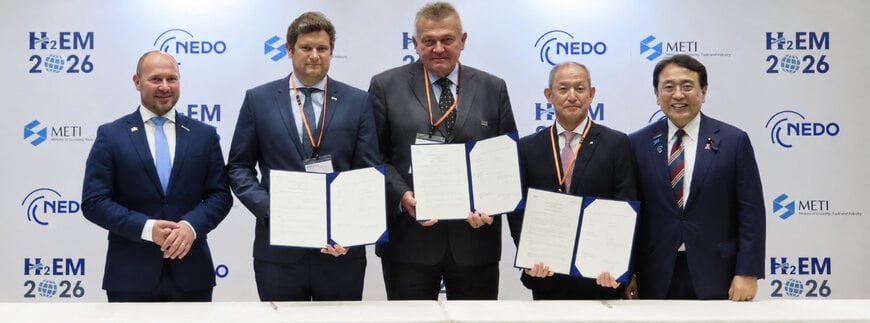
The integration of renewable energy sources into regional grids requires advanced sector coupling between electricity and gas transmission networks. ELES, d.o.o., Plinovodi, d.o.o., and Yokogawa Electric Corporation have signed a Memorandum of Understanding to establish a cooperative framework for developing a low-carbon hydrogen ecosystem in Slovenia. This initiative focuses on reinforcing the resilience of critical national energy infrastructure while aligning with broader European hydrogen corridor frameworks.
Technical Solution and Division of Responsibilities
The cooperative project centers on a demonstration hydrogen plant designed to interface directly with existing electricity and gas transmission networks. Operational coordination relies on industrial automation and digital infrastructure provided by Yokogawa Europe to enable orchestrated management across multi-carrier energy systems.
Responsibilities are divided according to core competencies:
- ELES manages power transmission operations and leads the consortium focused on power-side low-carbon hydrogen integration.
- Plinovodi manages gas transmission infrastructure and prepares the transmission network for renewable and carbon-neutral gases in line with the European Hydrogen Backbone initiative.
- Yokogawa Electric Corporation provides industrial automation, digitalization architecture, and green hydrogen application expertise.
Implementation and Phased Deployment
Activities under the agreement commence with a comprehensive feasibility study led by Yokogawa Europe to evaluate technical, operational, and commercial viability. The roadmap includes the deployment of a demonstration hydrogen plant, green hydrogen mobility solutions for critical infrastructure maintenance, and multifunctional mobile backup units capable of acting as electricity fast-charging units. Implementation leverages existing asset footprints across Slovenian transmission grids to test automated load-balancing and sector-coupling algorithms.
Applications and Operational Impact
Target application areas encompass national electricity transmission, natural gas transport networks, and emergency backup power supplies. Concrete use cases involve coordinating surplus renewable electricity conversion into hydrogen, injecting or storing hydrogen within gas grids, and deploying mobile hydrogen-electric units for grid maintenance and rapid vehicle charging.
The primary operational benefits include enhanced grid flexibility, mitigated peak load imbalances, diversified energy storage pathways, and reduced dependence on fossil fuel assets during critical infrastructure operations.
Edited by Sucithra Mani, Induportals editor – adapted by AI.
www.yokogawa.com
Activities under the agreement commence with a comprehensive feasibility study led by Yokogawa Europe to evaluate technical, operational, and commercial viability. The roadmap includes the deployment of a demonstration hydrogen plant, green hydrogen mobility solutions for critical infrastructure maintenance, and multifunctional mobile backup units capable of acting as electricity fast-charging units. Implementation leverages existing asset footprints across Slovenian transmission grids to test automated load-balancing and sector-coupling algorithms.
Applications and Operational Impact
Target application areas encompass national electricity transmission, natural gas transport networks, and emergency backup power supplies. Concrete use cases involve coordinating surplus renewable electricity conversion into hydrogen, injecting or storing hydrogen within gas grids, and deploying mobile hydrogen-electric units for grid maintenance and rapid vehicle charging.
The primary operational benefits include enhanced grid flexibility, mitigated peak load imbalances, diversified energy storage pathways, and reduced dependence on fossil fuel assets during critical infrastructure operations.
Edited by Sucithra Mani, Induportals editor – adapted by AI.
www.yokogawa.com
