
www.industryemea.com
09
'26
Written on Modified on
Fraunhofer IPMS Previews Spatial Light Modulators at Photonix Japan
The MEMS-based evaluation kits enable high-precision light control for holography, adaptive optics, and quantum computing applications.
www.fraunhofer.de
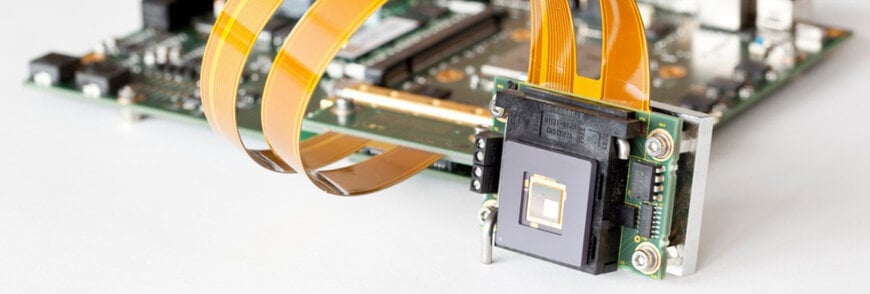
Fraunhofer IPMS will showcase its latest research on microelectromechanical systems (MEMS)-based spatial light modulators (SLMs) at Photonix Japan 2026. These high-precision devices enable the rapid modulation of both the amplitude and phase of light, providing a versatile technology platform that operates across wavelengths from the deep ultraviolet (DUV) to the near-infrared. By precisely manipulating light at the microscopic level, the SLMs facilitate breakthroughs in microlithography, true 3D holographic imaging, laser materials processing, and sample illumination in advanced microscopy.
To assist industry partners in testing and deploying this technology, the institute has introduced the "DIFFRACTIVE MEMS KIT," a comprehensive evaluation system. The kit features a microchip with 256 × 256 individually addressable analog tilting micromirrors, each measuring 16 micrometers, which are capable of continuous movement to steer light in highly specific directions. Accompanied by full control electronics, quick-start software, and a PC interface library, the kit allows companies to validate different SLM architectures in their own environments—spanning from initial feasibility analysis through to custom pilot production.
Additional Context
This section provides technological and market background not explicitly detailed in the original release.
The deployment of Spatial Light Modulators in quantum computing represents a major leap in atomic-level manipulation. In neutral atom quantum computers, SLMs are utilized to generate dynamic, holographic optical traps—commonly known as "optical tweezers"—that hold and arrange individual atoms in precise 2D or 3D grids. Because atomic excitation requires highly specific laser wavelengths, the ability of Fraunhofer’s SLMs to operate efficiently in the deep ultraviolet (DUV) spectrum without degrading the micromirrors is critical for stable quantum state control. Beyond quantum research, in commercial semiconductor manufacturing, replacing static diffractive optical elements with programmable, high-speed MEMS mirror arrays allows fabs to dynamically adjust laser beam profiles on the fly. This electronic adaptability significantly reduces optical losses, accelerates DUV lithography processes, and improves overall manufacturing throughput by eliminating the need to physically swap out optical components.
Edited by Lekshman Ramdas, Induportals editor – adapted by AI.
www.fraunhofer.com
