
www.industryemea.com
13
'26
Written on Modified on
Jungheinrich Begins Sodium-Ion Battery Trials for Forklifts
Field testing evaluates alternative battery chemistry for sustainable and cost-efficient material handling operations.
www.jungheinrich.co.uk
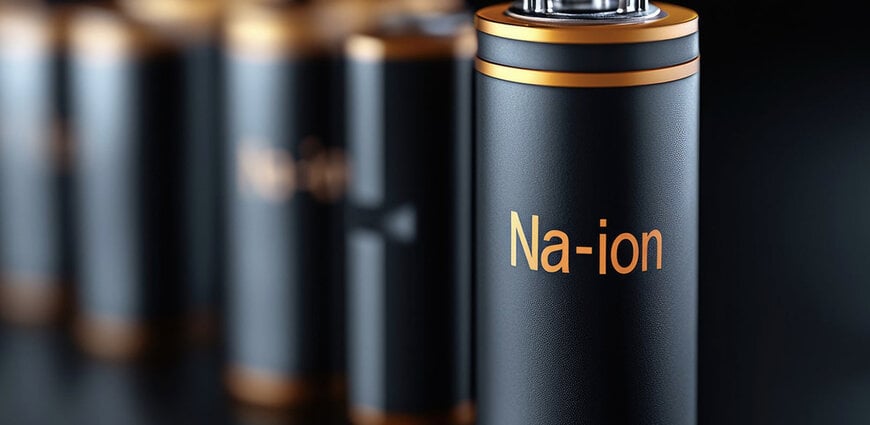
Jungheinrich AG has started field trials of sodium-ion battery technology in industrial trucks at selected customer sites. The project is intended to evaluate the operational performance, reliability, and suitability of sodium-ion batteries for material handling applications under real-world logistics conditions.
The initiative reflects increasing industry interest in alternative battery chemistries as logistics operators seek lower-cost and more sustainable energy storage solutions for electrically powered industrial vehicles. Sodium-ion technology is being explored as an alternative to lithium-ion systems because of broader raw material availability, reduced dependency on geopolitically constrained resources, and potential manufacturing cost advantages.
Real-world testing in material handling environments
As part of the testing program, Jungheinrich equipped industrial vehicles with sodium-ion battery systems and deployed them within customer operations to assess performance across different duty cycles and operational environments.
According to the company, the field trials aim to generate operational data relating to battery lifespan, charging behavior, reliability, and safety before potential future series production. Prototype battery systems have already undergone initial testing in forklift truck applications.
Battery performance validation under practical operating conditions is increasingly important for warehouse automation and industrial fleet operators, where uptime, charging efficiency, and operational reliability directly affect logistics productivity and digital supply chain performance.
Sodium-ion technology as an alternative to lithium-ion
Sodium-ion batteries use sodium instead of lithium as the primary charge carrier. Sodium is more widely available globally and is not subject to the same supply chain concentration risks associated with lithium and certain other battery materials.
The technology is also being evaluated for potential environmental benefits, including more resource-efficient production processes and improved recyclability. Reduced raw material costs could also lower battery manufacturing expenses and improve total cost efficiency for industrial electric vehicle fleets.
Although sodium-ion systems generally offer lower energy density compared with advanced lithium-ion batteries, they are increasingly being considered for industrial applications where operating cycles, charging infrastructure, and vehicle weight constraints differ from passenger automotive requirements.
Research partnerships and battery development
Jungheinrich stated that it is collaborating with international battery cell manufacturers and research partners to optimize sodium-ion technology for material handling equipment.
Laboratory and operational testing conducted so far has focused on service life, safety performance, and energy efficiency under industrial operating conditions. Such testing is essential because forklift trucks and warehouse vehicles often operate in high-utilization environments involving frequent charging cycles, continuous operation, and variable load demands.
Industrial vehicle manufacturers are increasingly investing in alternative battery research as warehouse electrification expands across logistics, manufacturing, and distribution sectors.
Expanding battery options for industrial logistics
Electrification remains a central trend within material handling and intralogistics operations as companies seek to reduce emissions, improve operational efficiency, and lower long-term fleet operating costs.
Sodium-ion technology is emerging as one of several alternative battery approaches being explored alongside lithium iron phosphate and solid-state battery systems for industrial mobility applications. Comparative evaluation typically focuses on cost efficiency, raw material availability, charging behavior, lifecycle performance, and sustainability metrics.
Jungheinrich stated that the field trials are intended to accelerate the practical evaluation of sodium-ion technology and support future deployment of alternative battery systems within industrial logistics operations.
Edited by Natania Lyngdoh, Induportals Editor, with AI assistance.
www.jungheinrich.com
