
www.industryemea.com
09
'26
Written on Modified on
Industrial Heat Pump Enables CO₂-Free Steam Production
BASF advances large-scale electrified heat pump deployment in Ludwigshafen to generate emission-free process steam using waste heat recovery.
www.basf.com
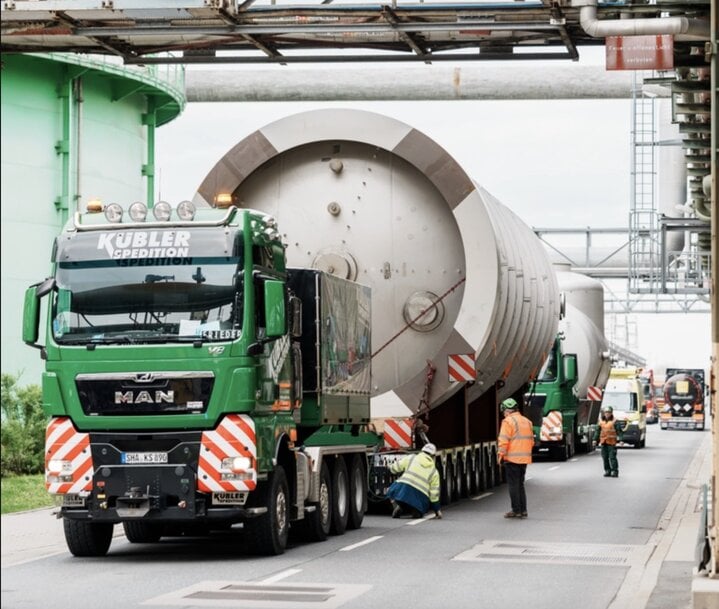
BASF is progressing the construction of a large-scale industrial heat pump at its Ludwigshafen site, designed to generate CO₂-free steam using renewable electricity and recovered waste heat. The installation targets high-energy chemical processes, with commissioning planned for mid-2027.
Key Component Integration and Logistics
A central component of the system, a 95-ton plate falling-film evaporator, has been delivered and installed following multimodal transport via inland waterways and on-site heavy haulage. The approximately 16-metre-long unit plays a critical role in the heat pump’s operation.
The evaporator is designed to generate oxygen-free steam, meeting the requirements for use in industrial processes. This steam is then distributed through the site-wide Verbund network, where it functions as an energy carrier for multiple production units.
Heat Pump Design and Operating Principle
The industrial heat pump converts low-grade waste heat from cooling processes into usable process steam. By applying electrical energy—sourced from renewables—the system upgrades thermal energy to higher temperature levels suitable for industrial applications.
The falling-film evaporator is a key element in this process. It enables efficient phase change by distributing liquid in a thin film over heat exchange surfaces, maximising heat transfer while maintaining controlled evaporation conditions.
The system is designed to deliver a thermal output of approximately 50 MW and produce up to 500,000 tonnes of steam annually.
Emissions Reduction and Energy Efficiency
By replacing conventional fossil-based steam generation, the heat pump is expected to reduce greenhouse gas emissions associated with steam production by up to 98%. This corresponds to an annual reduction of approximately 100,000 metric tonnes of CO₂.
The integration of waste heat recovery further improves overall energy efficiency, reducing the need for primary energy input and supporting decarbonisation of energy-intensive chemical processes.
Engineering and System Integration
The heat pump system has been developed in collaboration with engineering partner GIG Karasek, with components tailored to the operational requirements of the Ludwigshafen site. Infrastructure such as plant buildings, switchgear systems, and piping connections to the steam cracker have already been completed.
The project demonstrates the complexity of integrating large-scale electrification technologies into existing industrial environments, where compatibility with established process networks is critical.
Edited by Romila DSilva, Induportals Editor, with AI assistance.
www.basf.com
