
www.industryemea.com
03
'26
Written on Modified on
Automation Platform Integrates AI into Industrial Robotics
KUKA presents its AMP software platform at NVIDIA GTC, combining Physical AI and intent-based automation to extend industrial robotics capabilities across manufacturing and logistics.
www.kuka.com
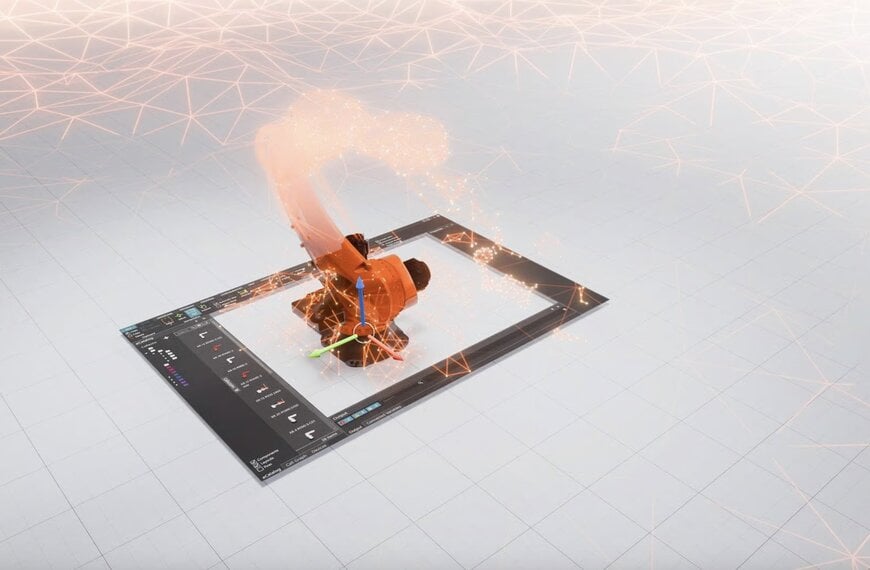
KUKA Group introduced its automation management platform KUKA AMP at NVIDIA GTC, outlining its approach to integrating Physical AI into industrial automation systems. The platform is designed to extend conventional rule-based automation with AI-driven capabilities for perception, decision-making, and autonomous action.
From deterministic automation to Physical AI
Traditional industrial automation—often referred to as rule-based or “Automation 1.0”—relies on predefined logic and deterministic workflows. While effective for high-volume and safety-critical processes, these systems require detailed programming and limited adaptability.
KUKA AMP introduces intent-based automation, where users define desired outcomes rather than explicit instructions. AI models interpret these goals and generate actions, enabling systems to adapt dynamically to changing conditions. This approach aligns with the broader concept of Physical AI, where AI systems interact directly with physical environments.
Software platform for integrated automation
KUKA AMP functions as a software layer that connects robotics, system integration, and digital tools. It is designed to bridge existing automation infrastructure with AI-driven capabilities, supporting faster deployment and more flexible operation.
The platform integrates across multiple domains, including:
- Industrial and mobile robotics
- Warehouse and intralogistics systems
- Simulation and digital engineering environments
- Healthcare automation applications
By unifying these components, the system enables coordinated control and data exchange across the automation stack.
Role of AI, simulation, and compute infrastructure
Advances in large-scale AI models, simulation technologies, and distributed compute architectures are central to this development. Systems can process data across edge devices, industrial PCs, and data centers, enabling real-time analysis and decision-making.
Simulation-driven development allows validation of automation scenarios before deployment, reducing commissioning time and improving system reliability.
Coexistence of Automation 1.0 and 2.0
KUKA positions AI-driven automation as an extension rather than a replacement of existing systems. Rule-based automation continues to provide stability and repeatability, particularly in structured environments.
The addition of AI capabilities introduces flexibility, allowing systems to handle variability in production processes, supply chains, and service operations. This hybrid approach supports gradual adoption without disrupting established workflows.
Application scope across industries
The integration of Physical AI expands automation use cases in manufacturing, logistics, and industrial services. Robots can perform more complex tasks, adapt to unstructured environments, and collaborate more effectively with human operators.
Applications include adaptive assembly, dynamic material handling, and automated warehouse operations, where variability and real-time decision-making are critical.
Strategic positioning and global expansion
KUKA’s development of AI-enabled automation is supported by increased investment in research and development, with €213 million allocated in 2025. The company is also expanding its global presence through innovation centers in regions including Asia, the United States, and Europe.
Growth in markets such as China, which accounts for a significant share of global robotics demand, reinforces the importance of scalable and flexible automation solutions.
Toward AI-enabled industrial ecosystems
The introduction of platforms such as KUKA AMP reflects a broader shift toward software-defined industrial systems. By integrating AI, simulation, and automation hardware into a unified framework, manufacturers can achieve greater adaptability and efficiency.
This transition toward Physical AI-enabled systems is expected to play a central role in the evolution of industrial automation, supporting more autonomous, data-driven operations across sectors.
Edited by Romila DSilva, Induportals Editor, with AI assistance.
Role of AI, simulation, and compute infrastructure
Advances in large-scale AI models, simulation technologies, and distributed compute architectures are central to this development. Systems can process data across edge devices, industrial PCs, and data centers, enabling real-time analysis and decision-making.
Simulation-driven development allows validation of automation scenarios before deployment, reducing commissioning time and improving system reliability.
Coexistence of Automation 1.0 and 2.0
KUKA positions AI-driven automation as an extension rather than a replacement of existing systems. Rule-based automation continues to provide stability and repeatability, particularly in structured environments.
The addition of AI capabilities introduces flexibility, allowing systems to handle variability in production processes, supply chains, and service operations. This hybrid approach supports gradual adoption without disrupting established workflows.
Application scope across industries
The integration of Physical AI expands automation use cases in manufacturing, logistics, and industrial services. Robots can perform more complex tasks, adapt to unstructured environments, and collaborate more effectively with human operators.
Applications include adaptive assembly, dynamic material handling, and automated warehouse operations, where variability and real-time decision-making are critical.
Strategic positioning and global expansion
KUKA’s development of AI-enabled automation is supported by increased investment in research and development, with €213 million allocated in 2025. The company is also expanding its global presence through innovation centers in regions including Asia, the United States, and Europe.
Growth in markets such as China, which accounts for a significant share of global robotics demand, reinforces the importance of scalable and flexible automation solutions.
Toward AI-enabled industrial ecosystems
The introduction of platforms such as KUKA AMP reflects a broader shift toward software-defined industrial systems. By integrating AI, simulation, and automation hardware into a unified framework, manufacturers can achieve greater adaptability and efficiency.
This transition toward Physical AI-enabled systems is expected to play a central role in the evolution of industrial automation, supporting more autonomous, data-driven operations across sectors.
Edited by Romila DSilva, Induportals Editor, with AI assistance.
