
www.industryemea.com
26
'26
Written on Modified on
Omlox-Based RTLS Kit for Industrial Positioning
NXP Semiconductors introduces an omlox-compliant starter kit to simplify deployment of interoperable real-time location systems in industrial environments.
www.nxp.com
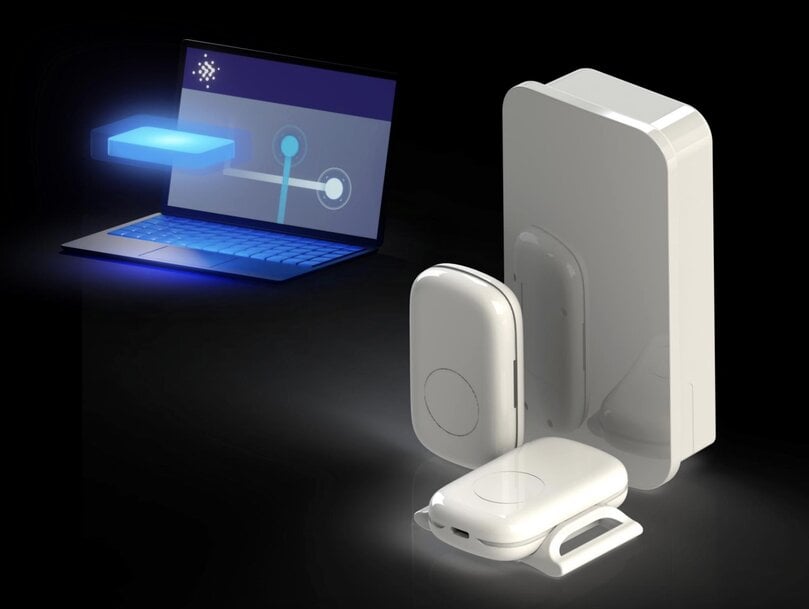
A new hardware and software platform has been introduced to accelerate the deployment of Real-Time Location Systems (RTLS) in industrial environments. The solution combines Ultra-Wideband (UWB) positioning, standardized interfaces, and analytics capabilities to support applications such as asset tracking, worker safety, and robotic navigation.
Standardized RTLS for Industrial Applications
The increasing adoption of RTLS in manufacturing, logistics, and intralogistics is driven by the need for precise indoor positioning. According to ABI Research, UWB-based RTLS deployments are expected to grow at a compound annual growth rate (CAGR) of 21% between 2025 and 2030. These systems enable measurable improvements in operational efficiency, automation, and safety.
However, implementation has often been constrained by fragmented vendor ecosystems and limited interoperability. The omlox standard addresses these challenges by defining an open, technology-agnostic framework that supports multi-vendor integration and backward compatibility. This reduces integration risk and enables long-term scalability in industrial environments.
System Architecture and Components
The presented starter kit integrates UWB hardware, localization software, and data analytics into a unified RTLS platform. It combines UWB-based tags and anchors with a real-time localization engine and middleware layer, enabling continuous tracking and analysis of assets and processes.
At the hardware level, the system is based on a UWB system-on-chip and a wireless microcontroller, enabling high-precision ranging and reliable wireless communication. The platform supports multiple positioning methods, including Time Difference of Arrival (TDoA), Round Trip Time of Flight (RToF), and Downlink TDoA (DL-TDoA), allowing flexible deployment depending on accuracy and infrastructure requirements.
The localization engine automates network setup and positioning calculations, reducing commissioning time and supporting scalable installations across facilities. Middleware processes location data streams and converts them into actionable insights, enabling integration with higher-level systems such as warehouse management or manufacturing execution systems.
Accuracy, Scalability, and Industrial Robustness
The system is designed to deliver high-accuracy positioning required for complex industrial use cases, including robot guidance, indoor navigation, and safety zone monitoring. Its low-power architecture supports battery-operated tags, making it suitable for mobile assets and wearable devices.
Operating within a temperature range of -40°C to 115°C, the platform is suited for harsh industrial environments such as production lines, warehouses, and outdoor logistics areas. The architecture allows pilot installations to scale into full-facility deployments without requiring hardware replacement or software redesign, supporting incremental digitalization strategies.
Interoperability and Future Integration
Support for standardized UWB profiles, including omlox air specifications, ensures compatibility across different vendors and systems. The platform is also designed to coexist with emerging ecosystems such as FiRa-based mobile navigation, enabling integration with smartphones and other consumer devices.
By combining interoperable hardware, standardized communication, and integrated analytics, the system provides a foundation for digital supply chain optimization. It enables not only real-time tracking but also process analysis and decision-making based on precise location data.
Application Scope
The solution targets a wide range of industrial use cases, including asset tracking, workflow optimization, worker safety monitoring, and autonomous robot positioning. Its modular architecture and standards-based design allow deployment across sectors such as manufacturing, logistics, automotive production, and industrial IoT environments.
Edited by Romila DSilva, Induportals Editor, with AI assistance.
www.nxp.com
