
www.industryemea.com
22
'26
Written on Modified on
Automotive Audio and Radio Processing Integration for Next-Generation Vehicles
NXP Semiconductors introduced a single-chip architecture combining analog radio reception with artificial intelligence audio processing to streamline software-defined automotive infotainment systems.
www.nxp.com
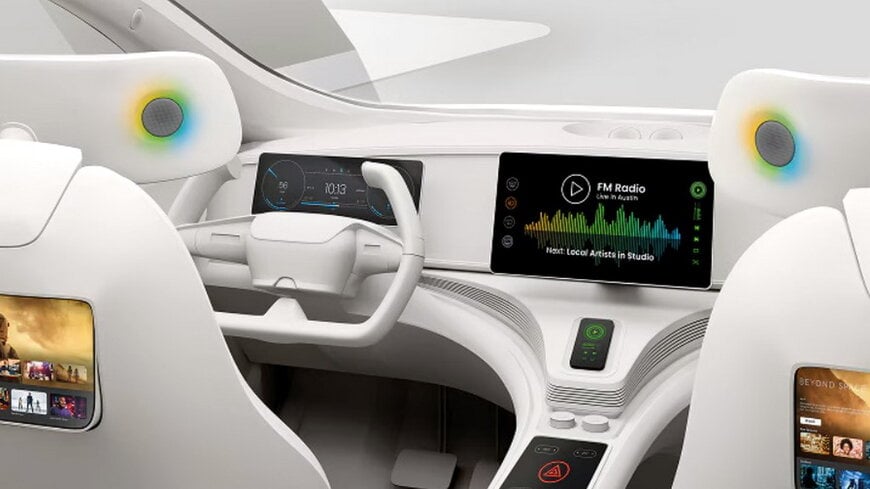
The announcement details the SAF9800 integrated processor, which combines analog broadcast reception with hardware-accelerated audio processing for vehicle infotainment architectures. The system addresses the transition toward software-defined vehicles by consolidating signal processing functions across global automotive platforms.
Single-Chip Consolidation of Broadcast and Digital Signal Processing
Automotive electronic architectures are transitioning from fragmented, hardware-bound controllers toward centralized software-defined platforms. The SAF9800 consolidates AM and FM analog radio reception with high-performance audio signal processing into a single silicon device. By integrating functional blocks that historically required separate radio frequency tuners and discrete digital signal processors, vehicle manufacturers can reduce component count, minimize printed circuit board footprint, and lower wiring complexity across vehicle tiers.
Neural Processing and High-Performance DSP Hardware
The processor integrates a HiFi 5 audio DSP equipped with dedicated neural-network processing engines alongside hardware-based biquad accelerators. This configuration provides more than ten times the audio processing performance compared to prior NXP processor generations. The integrated compute architecture enables real-time acoustic source separation driven by machine-learning models. Rather than relying on fixed digital filters, the system processes multi-microphone cabin data to isolate critical acoustic signals — including driver voice commands, emergency sirens, and vehicle mechanical noise — from ambient cabin background interference.
Electrification Challenges and Signal Interference Mitigation
High-voltage power electronics and traction inverters in electric vehicles introduce electromagnetic interference into the AM frequency band. To preserve analog reception quality without requiring complex hardware filtering, the processor incorporates specialized signal-processing algorithms, including EVAM-lite AM denoising technology. This mitigation addresses RF interference at the software layer, helping automakers satisfy regulatory access considerations for broadcast radio across international markets. John van den Braak, Senior Vice President and General Manager of Infotainment and Audio Systems at NXP Semiconductors, stated that integrating broadcast radio and digital audio with artificial intelligence processing on a single chip allows manufacturers to fulfill RF and audio requirements while enabling software-based upgrades across extended vehicle lifecycles.
Additional Context
This section details technical specifications and competitive benchmarking not included in the original product announcement.
In modern cockpit architectures, automotive systems typically choose between dedicated audio DSPs coupled with discrete radio tuners or centralized cockpit System-on-Chips that process signal filtering in software. Discrete component topologies, such as those utilizing standalone audio DSPs and separate tuner ICs, offer low latency and high RF isolation but demand larger board area and complex inter-chip bus communication over interfaces like A2B or PCIe. Conversely, executing radio software stacks directly on primary application processors increases system host load. The SAF9800 serves as a dedicated radio and audio coprocessor, offloading real-time neural network inference, noise suppression, and tuner processing from the central host SoC. Incorporating specialized hardware biquads alongside matrix accelerators lowers operational latency and energy consumption during continuous active noise control and voice extraction tasks compared to general-purpose DSP architectures lacking matrix extensions.
Edited by Evgeny Churilov, Induportals Media - Adapted by AI.
www.nxp.com
