
www.industryemea.com
05
'26
Written on Modified on
Inline CO₂ Probes Validate Carbon Capture Performance
Measurement technology from Vaisala enables continuous monitoring of CO₂ concentrations in membrane-based capture systems, supporting performance verification in industrial decarbonization applications.
www.vaisala.com
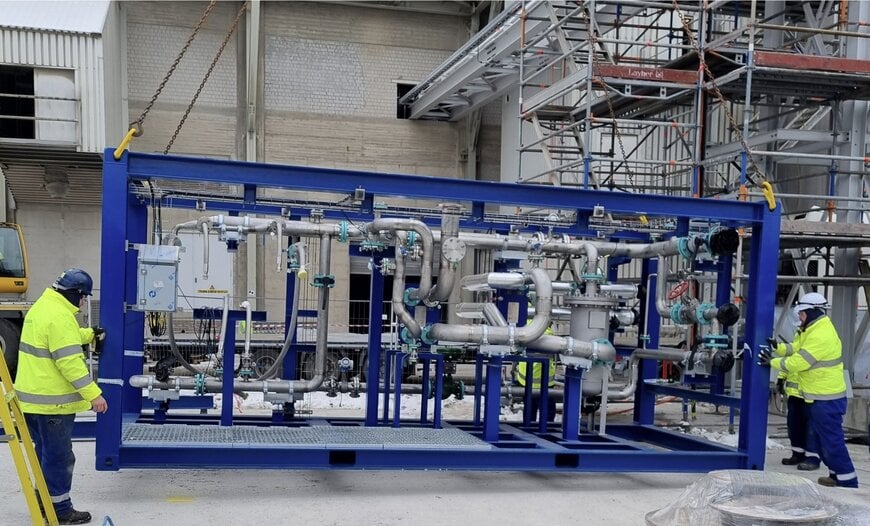
Cool Planet Technologies Rig
Carbon capture technologies are increasingly deployed in heavy industries where reducing greenhouse gas emissions through electrification alone remains difficult. Accurate measurement of CO₂ concentrations during capture processes is essential to verify system performance and operational efficiency. In this context, Vaisala measurement probes were used to monitor carbon dioxide levels during a pilot demonstration of membrane-based carbon capture technology developed by Cool Planet Technologies (CPT).
Carbon Capture for Hard-to-Abate Industries
Industries such as cement, lime, steel, chemicals, and waste-to-energy generate process emissions that are difficult to eliminate through conventional decarbonization strategies. Carbon capture technologies are therefore being developed to remove CO₂ directly from industrial exhaust gases before they enter the atmosphere.
Cool Planet Technologies, focuses on modular membrane-based carbon capture systems designed for industrial applications. The company commercializes membrane technology originally developed by the Helmholtz-Zentrum Hereon in Germany. CPT holds exclusive global commercialization rights for Hereon’s latest generation PolyActive™ membrane technology and has jointly filed a patent application for the design of a carbon capture module.
Membrane-based CO₂ separation offers a different approach compared with chemical absorption methods. The system separates carbon dioxide through selective permeability in membrane materials rather than chemical solvents. The technology operates without consumable chemicals and membranes are designed for service lifetimes of approximately five years.
Flat sheet membranes used in the system allow application-specific material selection and optimized gas-flow dynamics across the membrane surface. This configuration supports efficient use of the membrane’s separation properties while enabling compact module designs.
Captured CO₂ can subsequently be processed in downstream units for purification or liquefaction, allowing it to be used for industrial applications or stored for long-term sequestration.
Pilot Plant Demonstration and Performance Verification
To validate the technology under operating conditions, CPT built a pilot carbon capture facility in Grimsby, United Kingdom. The pilot installation allows operators to control both the pressure ratio across the membranes and the CO₂ concentration of the feed gas.
The demonstration system currently uses two carbon capture modules installed in series, although the facility can accommodate four modules. In the present configuration, the system provides capture capacity of up to 37,000 tonnes of CO₂ per year.
Two live demonstrations of the pilot plant were conducted in June and October 2025 for invited participants from sectors including cement, lime, and steel manufacturing. The events focused on verifying real-time capture performance and demonstrating the operational principles of the membrane system.
Performance modeling during early development stages relied on simulation tools based on single-gas permeation data. Results from the Grimsby pilot plant confirmed the accuracy of these models, with measured CO₂ capture results matching predicted values within approximately 1%.
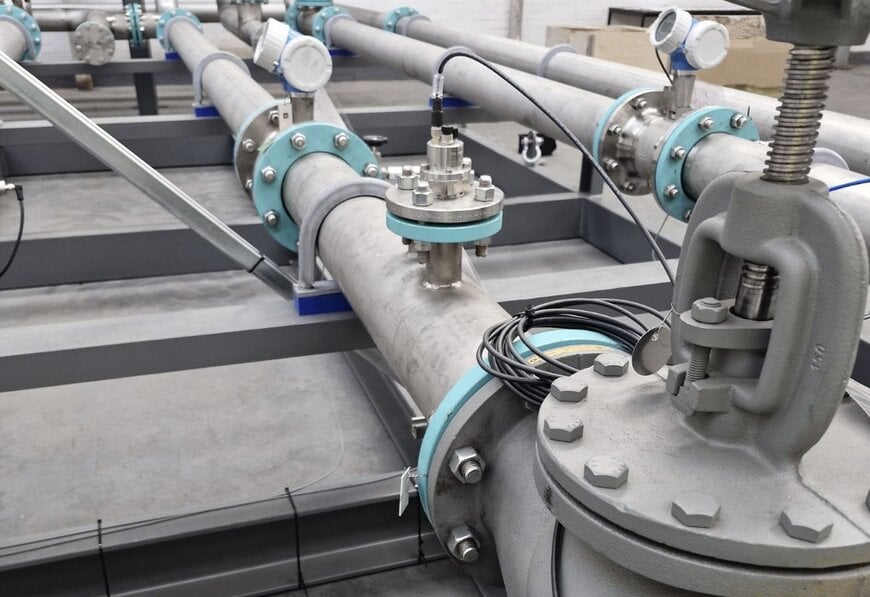
Vaisala In-Line CO2 Probe
Continuous Monitoring with Inline CO₂ Measurement
Verification of carbon capture efficiency during the demonstrations relied on continuous gas analysis using Vaisala MGP241 inline probes. Five probes monitor CO₂ concentrations at different points within the process: in the incoming gas stream, during separation, and in both permeate and retentate flows.
Measurement data are recorded once per second, enabling real-time calculation and display of capture efficiency. Continuous monitoring allows engineers to verify system performance under varying process conditions and confirm that membrane modules operate as expected.
The MGP241 probe was designed for carbon capture measurement environments and uses patented CARBOCAP® infrared technology to measure both carbon dioxide concentration and humidity simultaneously. The probes can measure CO₂ concentrations across the entire 0–100% range, allowing them to monitor both dilute flue gases and high-concentration process streams.
Humidity monitoring is also important in carbon capture systems because condensation can lead to acid formation, which may damage equipment. Inline measurement of both parameters therefore supports process stability and equipment protection.
Scaling Up Carbon Capture Deployment
Following the pilot demonstrations, CPT began assembling a 10,000-tonne-per-year carbon capture plant at the Höver cement facility in Germany. Prefabricated capture modules are being installed and connected on site, with installation expected to take approximately two months.
The facility is scheduled to begin capture operations in 2026, where it will demonstrate the performance, economics, and operational characteristics of the membrane technology at industrial scale during a 12-month evaluation period. Vaisala measurement probes will also be used at the Höver installation to verify capture performance.
The project forms part of a broader decarbonization strategy involving collaboration with Holcim. Longer-term plans involve scaling the system to capture around 90% of the plant’s CO₂ emissions, corresponding to approximately 800,000 tonnes per year.
Reliable measurement of gas concentrations remains a key component in these deployments. Continuous CO₂ monitoring provides operational data needed to validate carbon capture efficiency and establish confidence in large-scale industrial decarbonization technologies.
www.vaisala.com
Carbon capture technologies are increasingly deployed in heavy industries where reducing greenhouse gas emissions through electrification alone remains difficult. Accurate measurement of CO₂ concentrations during capture processes is essential to verify system performance and operational efficiency. In this context, Vaisala measurement probes were used to monitor carbon dioxide levels during a pilot demonstration of membrane-based carbon capture technology developed by Cool Planet Technologies (CPT).
Carbon Capture for Hard-to-Abate Industries
Industries such as cement, lime, steel, chemicals, and waste-to-energy generate process emissions that are difficult to eliminate through conventional decarbonization strategies. Carbon capture technologies are therefore being developed to remove CO₂ directly from industrial exhaust gases before they enter the atmosphere.
Cool Planet Technologies, focuses on modular membrane-based carbon capture systems designed for industrial applications. The company commercializes membrane technology originally developed by the Helmholtz-Zentrum Hereon in Germany. CPT holds exclusive global commercialization rights for Hereon’s latest generation PolyActive™ membrane technology and has jointly filed a patent application for the design of a carbon capture module.
Membrane-based CO₂ separation offers a different approach compared with chemical absorption methods. The system separates carbon dioxide through selective permeability in membrane materials rather than chemical solvents. The technology operates without consumable chemicals and membranes are designed for service lifetimes of approximately five years.
Flat sheet membranes used in the system allow application-specific material selection and optimized gas-flow dynamics across the membrane surface. This configuration supports efficient use of the membrane’s separation properties while enabling compact module designs.
Captured CO₂ can subsequently be processed in downstream units for purification or liquefaction, allowing it to be used for industrial applications or stored for long-term sequestration.
Pilot Plant Demonstration and Performance Verification
To validate the technology under operating conditions, CPT built a pilot carbon capture facility in Grimsby, United Kingdom. The pilot installation allows operators to control both the pressure ratio across the membranes and the CO₂ concentration of the feed gas.
The demonstration system currently uses two carbon capture modules installed in series, although the facility can accommodate four modules. In the present configuration, the system provides capture capacity of up to 37,000 tonnes of CO₂ per year.
Two live demonstrations of the pilot plant were conducted in June and October 2025 for invited participants from sectors including cement, lime, and steel manufacturing. The events focused on verifying real-time capture performance and demonstrating the operational principles of the membrane system.
Performance modeling during early development stages relied on simulation tools based on single-gas permeation data. Results from the Grimsby pilot plant confirmed the accuracy of these models, with measured CO₂ capture results matching predicted values within approximately 1%.
Vaisala In-Line CO2 Probe
Continuous Monitoring with Inline CO₂ Measurement
Verification of carbon capture efficiency during the demonstrations relied on continuous gas analysis using Vaisala MGP241 inline probes. Five probes monitor CO₂ concentrations at different points within the process: in the incoming gas stream, during separation, and in both permeate and retentate flows.
Measurement data are recorded once per second, enabling real-time calculation and display of capture efficiency. Continuous monitoring allows engineers to verify system performance under varying process conditions and confirm that membrane modules operate as expected.
The MGP241 probe was designed for carbon capture measurement environments and uses patented CARBOCAP® infrared technology to measure both carbon dioxide concentration and humidity simultaneously. The probes can measure CO₂ concentrations across the entire 0–100% range, allowing them to monitor both dilute flue gases and high-concentration process streams.
Humidity monitoring is also important in carbon capture systems because condensation can lead to acid formation, which may damage equipment. Inline measurement of both parameters therefore supports process stability and equipment protection.
Scaling Up Carbon Capture Deployment
Following the pilot demonstrations, CPT began assembling a 10,000-tonne-per-year carbon capture plant at the Höver cement facility in Germany. Prefabricated capture modules are being installed and connected on site, with installation expected to take approximately two months.
The facility is scheduled to begin capture operations in 2026, where it will demonstrate the performance, economics, and operational characteristics of the membrane technology at industrial scale during a 12-month evaluation period. Vaisala measurement probes will also be used at the Höver installation to verify capture performance.
The project forms part of a broader decarbonization strategy involving collaboration with Holcim. Longer-term plans involve scaling the system to capture around 90% of the plant’s CO₂ emissions, corresponding to approximately 800,000 tonnes per year.
Reliable measurement of gas concentrations remains a key component in these deployments. Continuous CO₂ monitoring provides operational data needed to validate carbon capture efficiency and establish confidence in large-scale industrial decarbonization technologies.
www.vaisala.com
