
Custom Robot Dress Packs And Integrated Systems
LÜTZE introduces its Robotic Solutions product area, offering customised dress packs, pre-assembled system solutions and repair and maintenance services for industrial robotics.
www.luetze.com
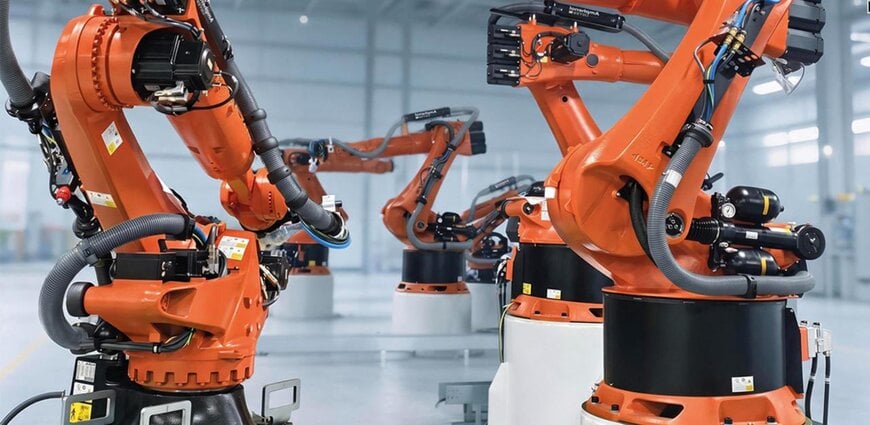
Industrial automation lines rely on continuous multi-axis robot movements that subject power, data and media lines to intense torsion, bending and abrasion. To prevent unplanned downtime and simplify system engineering, automation specialist LÜTZE has launched its new Robotic Solutions product area, delivering end-to-end dress pack systems for industrial robotics applications.
In automated manufacturing cells, routing energy, pneumatic, fluid and welding lines along articulated robot arms presents considerable mechanical challenges. Rapid acceleration, tight bending radii and continuous torsional stress can cause premature cable fatigue and wear, while coordinating separate suppliers for cables, protective conduits, connectors and mounting hardware creates engineering bottlenecks and fragmented responsibilities for system integrators and plant operators.
End-To-End Robot Dress Pack Approach
LÜTZE, based in Weinstadt, Germany, takes a consistent system approach: from technical design through production and quality assurance to service, repair and replacement, customers receive all services from a single source. Each solution is tailored to the specific robot type, motion profile, media and ambient conditions. The range extends from structured empty conduit packages and motion-optimised robot dress packs to fully pre-assembled and tested systems, in which energy, data and signal cables, bus cables, pneumatics, fluids, welding current and other process media can be combined in one overall system. LÜTZE develops solutions for all common robot types and payload classes, from six-axis articulated robots and palletisers to cobots.
Controlled Guidance And Harsh Environment Protection
The dress packs are motion-optimised and designed for long service life and operational reliability. Retraction and retention systems, mounting elements and suitable protective and corrugated conduit systems ensure clean, controlled hose guidance along the entire travel path. Demanding environments with weld spatter, grinding dust or coolants are taken into account during design. As LÜTZE also handles technical design and system integration, cables, wires, protective systems, connectors and assembly are matched to one another to create a functionally reliable overall system, with clear responsibilities, fewer interfaces and reproducible production quality.
Scalable Manufacturing And Amphenol Expertise
Production is scalable from single units to large series. Prototyping, first-article inspection and documented bills of materials and drawings provide a solid basis for series approvals, replacement and long-term spare parts availability. The offering is aimed at system integrators, plant manufacturers, OEMs and operators of automated systems. Combining LÜTZE's local development expertise in Weinstadt with the global resources of the Amphenol Group allows cables, wires and connectors from a broad technology and product portfolio to be integrated, so users receive a complete system from one responsible partner instead of coordinating several separate trades.
Fast Support In The Event Of Service
The portfolio is complemented by maintenance, repair, overhaul and damage analysis services. Damaged dress packs are analysed, repaired or reproducibly rebuilt if required, regardless of brand, including dress packs from other manufacturers and existing installations. In the future, LÜTZE also plans to offer service solutions to reduce downtime, an important contribution to system availability in production-critical robotics applications.
Additional Context
This section details technical specifications and competitive benchmarking not included in the original product announcement.
In industrial robotics, dress pack engineering is driven by the need to decouple the linear and rotational movements of the robot arm from the conductors inside. Standard industrial cables are typically designed for static installation or simple linear cable chains and can fail quickly under the combined torsional and bending loads of a six-axis wrist. Dedicated robot cables use specific stranding, low-friction layers and durable outer jackets such as polyurethane (PUR) to withstand millions of torsion cycles. Retraction systems, typically spring-loaded or pneumatic modules mounted on the robot arm, help prevent slack loops that could snag on tooling or fixtures during high-speed handling or spot-welding cycles. Consolidating dress pack design, connectorisation and brand-independent refurbishment with one supplier supports total cost of ownership strategies in automated manufacturing, where reducing mean time to repair directly improves overall equipment effectiveness.
Edited by Maria Brueva, Induportals editor – adapted by AI.
