
www.industryemea.com
18
'26
Written on Modified on
SECO launches Modular Link DIN-rail platforms for the industrial edge
Now available to order, the Modular Link IQ-615 and Modular Link MX93 combine local processing, industrial connectivity and lifecycle management through the Clea ecosystem.
www.secotools.com
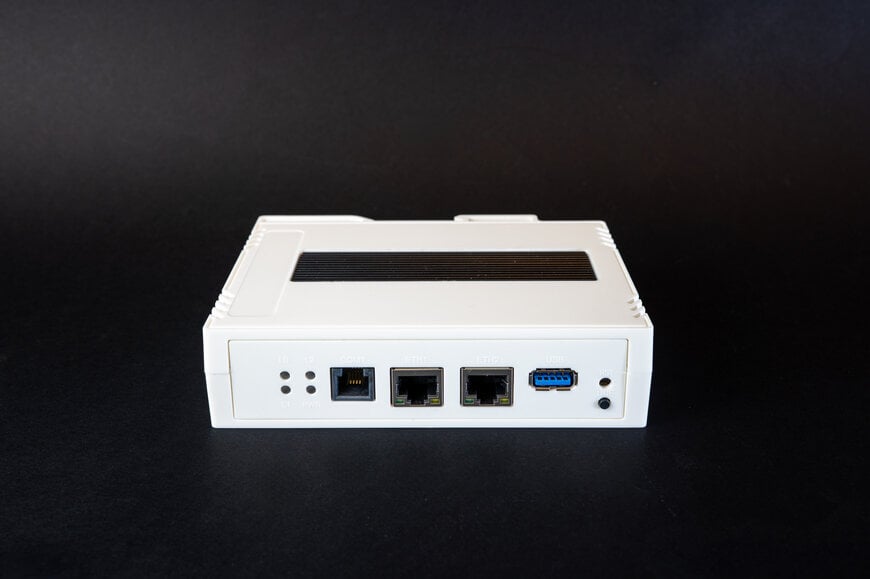
SECO has announced that its Modular Link IQ-615 and Modular Link MX93 platforms have entered mass production and are now available to order. Designed for OEMs and system integrators deploying connected edge systems, the two compact DIN-rail platforms combine local processing capabilities with industrial connectivity and software enablement through the Clea ecosystem. Addressing different computing, expansion and connectivity requirements, they provide flexible building blocks for industrial and energy applications where reliable edge data processing and long-term device management are key.
Two complementary platforms
Powered by the Qualcomm Dragonwing IQ6 Series platform (IQ-615), Modular Link IQ-615 is designed for connected infrastructures requiring local data processing and integrated AI capabilities alongside industrial connectivity. Its compact DIN-rail form factor makes it suitable for distributed applications including industrial IoT, automation, smart energy and remote monitoring. Built around the NXP i.MX 93 processor, Modular Link MX93 focuses on energy-efficient computing and flexibility through a modular architecture that can adapt to different connectivity and I/O requirements. Its stackable design allows the platform to be expanded through interchangeable daughter boards according to application needs, making it particularly suited to industrial automation, energy and utilities, building automation and retrofit scenarios where requirements may evolve over time.
Key features
Modular Link IQ-615 uses the Qualcomm Dragonwing IQ6 Series platform (IQ-615) with an octa-core Qualcomm Kryo 460 CPU and Qualcomm Hexagon AI acceleration delivering up to 1 TOPS. It offers dual Ethernet, USB 3.1 and RS-485 connectivity, Wi-Fi and Bluetooth support, up to 4 GB LPDDR4 memory and 32 GB eMMC storage, and an operating temperature range of -40°C to +80°C. Modular Link MX93 uses the NXP i.MX 93 processor with integrated machine learning acceleration of up to 0.5 TOPS. It offers dual Gigabit Ethernet and wireless connectivity options, stackable expansion through daughter boards for additional connectivity and I/O configurations, up to 2 GB LPDDR4 memory and 32 GB eMMC storage, and an operating temperature range of -40°C to +85°C.
Lifecycle management with Clea
Integration with the Clea ecosystem, recently enhanced with the launch of the Clea 2.0 Agentic Framework, provides both platforms with a common software foundation for managing connected devices throughout their lifecycle. From remote monitoring and device management to over-the-air software updates, Clea helps OEMs and system integrators operate distributed fleets more efficiently while maintaining control over devices as requirements evolve. According to Francesco Vaiani, Product Manager Team Leader SOM & SYS at SECO, industrial edge projects increasingly require more than processing power and connectivity, and by combining complementary hardware with the Clea ecosystem, SECO aims to help customers build, deploy and manage connected edge infrastructures on a consistent foundation.
Additional Context:
This section explains general principles of DIN-rail edge devices and AI performance figures not included in the original press release.
DIN rails are standardised metal rails, most commonly 35 mm wide, used inside control cabinets to mount equipment such as circuit breakers, power supplies, PLCs and gateways. Edge computers in a DIN-rail format can therefore be installed alongside existing automation equipment, close to the machines and sensors that generate data.
Processing data locally at the edge reduces the amount of raw data that has to be sent to central servers or the cloud. AI accelerator performance is often given in TOPS (trillions of operations per second), a peak figure that indicates the processing capacity available for running machine learning models, although real-world performance also depends on the model, software and memory.
Edited by an industrial journalist, Lekshman Ramdas, with AI assistance.
www.seco.com
