
www.industryemea.com
10
'26
Written on Modified on
Hydrodynamic Efficiency and Material Passivation in Valve Architectures
AQ Matic Valves & Controls outlines material and configuration options for fluid-handling components, addressing corrosion, pressure loss, and shutoff requirements across industrial applications.
aqmaticvalvesandcontrols.com
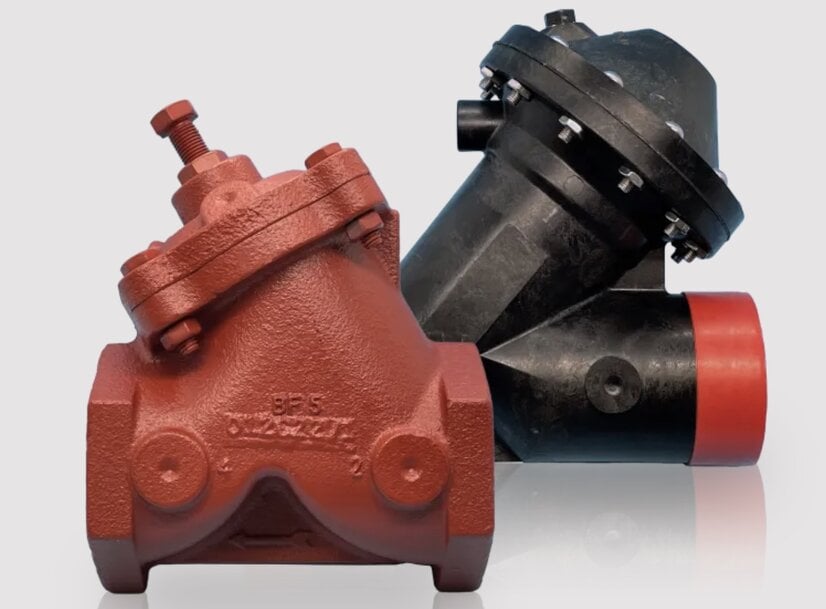
AQ Matic is highlighting its portfolio of metal and thermoplastic valves designed for continuous processing applications. The components address specific fluid-handling requirements, offering specialized construction materials and internal mechanisms for corrosive environments, gas service, and high-cycle applications within the dairy, pulp, and water treatment sectors.
Material Specifications for Corrosive Process Environments
Stainless steel construction featuring passivated metal parts is utilized to improve corrosion resistance in demanding processing environments, including paper, pulp, dairy, and municipal water treatment systems. For severe chemical service, glass-filled thermoplastic bodies and caps provide an alternative nonmetallic construction that prevents environmental degradation. Specific thermoplastic configurations utilize composite internal parts and feature designs with no external metal components to avoid exposure to harsh external conditions. Furthermore, select models incorporate an isolated bonnet, a mechanical design choice that prevents corrosive process fluids from migrating into and contaminating automated control lines.
Structural Mechanisms for Diaphragm Protection
Valve durability and maintenance lifecycles are managed through reinforced or pre-formed diaphragms, alongside seal material options such as Nitrile elastomers that are selected based on the specific media characteristics. In metal variants, separate diaphragm chambers isolate the flexible diaphragm from the primary flow stream. This physical separation prevents abrasive wear and allows for in-line servicing, enabling technicians to replace components without removing the entire valve from the piping infrastructure. In thermoplastic models, the inclusion of two dynamic O-rings helps prevent localized diaphragm damage during actuation.
Flow Efficiency and System Configuration
The highlighted valves utilize high-flow geometries engineered to minimize pressure loss during industrial fluid handling, maintaining system efficiency. Metal valve options support both liquid and gas handling, with high-temperature variants and specialized designs optimized for high-use air applications requiring frequent cycle operations. Shutoff capabilities are matched to system safety requirements, including drip-tight closing in stainless steel valves to prevent bypass leakage. Select metal and thermoplastic models utilize a positive closing mechanism that functions without a closing spring. For integration, thermoplastic designs provide failsafe closed options, alongside normally open or normally closed configurations, and employ female socket weld connectors to simplify pipeline installation.
Additional Context
This section details technical specifications and competitive benchmarking not included in the original news release.
In the industrial valve sector, AQ Matic competes with fluid control manufacturers such as GEMÜ, Bürkert, and GF Piping Systems. Benchmarking in this space typically focuses on flow coefficients (Cv or Kv values), material chemical compatibility, and actuation cycle life. While AQ Matic utilizes passivated stainless steel and glass-filled thermoplastics for its housings, competitors like GF Piping Systems and GEMÜ offer comparable glass-fiber reinforced polymers (such as PP-GF or PVDF) specifically formulated for highly corrosive media.
Bürkert and other pneumatic control manufacturers provide similar separated-diaphragm designs that isolate the fluid path from actuation mechanics, a standard architectural requirement for avoiding actuator corrosion in chemical dosing. A measurable differentiator in this market segment is the method of diaphragm protection and sealing; while AQ Matic highlights dual dynamic O-rings and isolated bonnets, competing European fluid control systems often utilize hermetic separation via continuous PTFE diaphragm shields. Maintenance parameters across these industrial brands prioritize in-line serviceability, allowing operators to replace elastomeric wear parts—such as Nitrile or EPDM diaphragms—without disconnecting the primary valve body from the fluid network.
Edited by Aishwarya Mambet, Induportals Editor, with AI assistance.
www.aqmaticvalvesandcontrols.com
