
www.industryemea.com
19
'26
Written on Modified on
Yokogawa launches OpreX Gas Density Meter for hydrogen applications
The modernized analyzer utilizes vibrating element technology to detect gas composition changes in just five seconds.
www.yokogawa.com
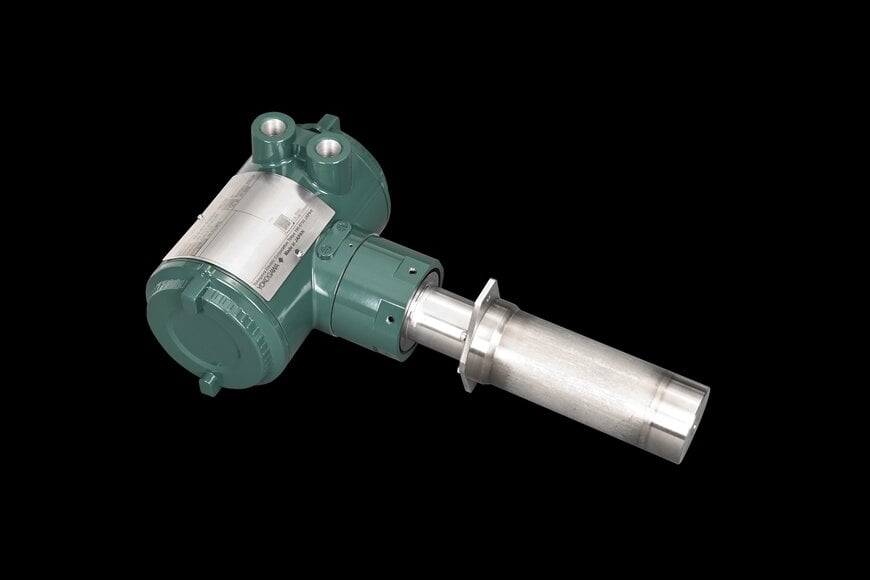
Yokogawa Electric Corporation has launched the OpreX Gas Density Meter, expanding its OpreX Analyzer lineup with a modernized system featuring a color touchscreen and advanced digital communication capabilities. Engineered for high-speed gas density measurement across power generation, oil and gas, and steel production, the meter detects changes in gas composition in approximately five seconds. While the non-explosion-proof version is available immediately, explosion-proof models compliant with international IECEx and European ATEX standards will be released in April 2027, enabling safe deployment in hazardous areas containing flammable gases like hydrogen and methane.
Hydrogen purity and cross-leak monitoring
The OpreX Gas Density Meter calculates specific gravity, molecular weight, concentration, and calorific value by measuring the resonant frequency of the target gas. This multi-parameter capability is critical for large power-generation turbines, which are cooled with hydrogen gas to suppress heat. By measuring the concentration of binary gas mixtures, a single gas density meter can monitor both hydrogen purity and replacement gas concentrations, eliminating the need for two separate thermal conductivity analyzers. Furthermore, the meter supports emerging decarbonization initiatives, providing early cross-leak detection in water electrolysis systems and optimizing feed gas mixing ratios in methanation processes.
Enhanced usability and system integration
To improve maintenance efficiency and operational visibility, the updated converter features a color touchscreen interface. The system supports digital communications via Ethernet (Modbus TCP/IP) and RS-485 (Modbus RTU), enabling seamless data integration with a wide range of plant control systems, recorders, and monitoring architectures.
Additional Context: Vibrating element gas density measurement
This section details technical specifications and competitive benchmarking not included in the original product announcement.
Vibrating element gas density meters operate on the principle that the resonant frequency of a thin-walled cylinder changes depending on the density of the gas flowing inside and outside of it—similar to how a tuning fork's pitch changes in helium versus air. In these devices, piezoelectric elements drive the cylinder to vibrate at specific frequencies and measure the resultant vibrations. Because lighter gases allow the cylinder to vibrate faster, the system calculates the exact gas density from the frequency ratio. By measuring two independent frequencies, the meter maintains high accuracy and stability, compensating for ambient temperature fluctuations and changes in the cylinder material's Young's Modulus. To prevent external plant vibrations from skewing the high-frequency measurements, the internal resonator is mechanically isolated and floated using specialized O-rings that act as both physical shock dampers and thermal insulators.
Edited by an industrial journalist, Lekshman Ramdas, with AI assistance.
www.yokogawa.com
