
www.industryemea.com
13
'26
Written on Modified on
KABELSCHLEPP at EuroBLECH 2026 in Hanover
KABELSCHLEPP presents an automated residual mesh shear at EuroBLECH to shred laser-cutting skeleton sheets and streamline circular industrial automation workflows.
www.kabelschlepp.com
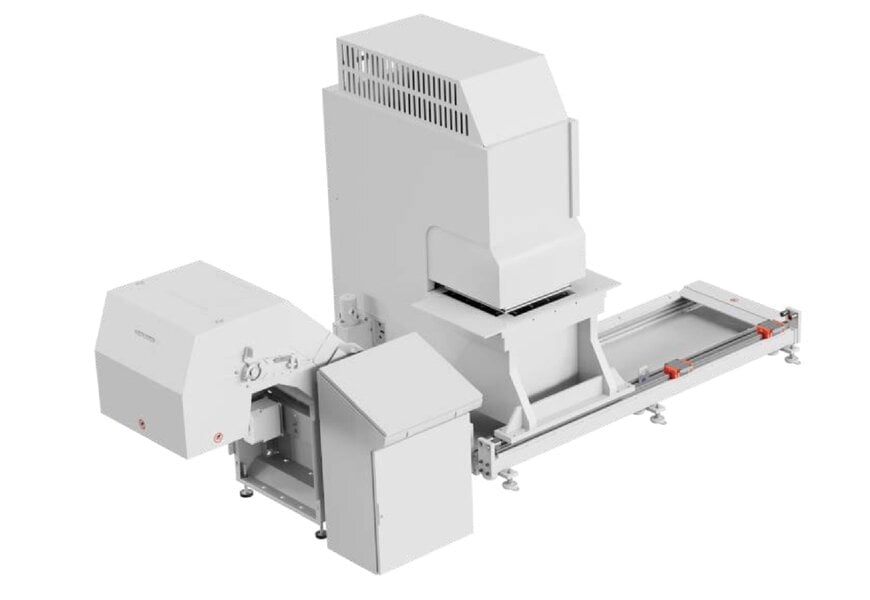
EuroBLECH 2026 takes place from 20 to 23 October 2026 in Hanover, Germany, focusing on advances in sheet metal working, cutting, and automated material handling across industrial manufacturing. During the event in Hall 11, Booth D01, TSUBAKI KABELSCHLEPP showcases an automated residual mesh shear engineered to process skeleton scrap from high-throughput laser cutting and punching systems.
Core Technology and System Architecture
The residual mesh shear operates by systematically feeding and mechanically shredding skeleton sheets that remain after thermal cutting or mechanical punching cycles. The integrated cutting mechanism reduces high-volume, irregular scrap into uniform metal fragments, followed by a material classification sequence that segments output fractions based on alloy specifications. By preventing mixed-metal contamination, the architecture stabilizes recovery purity and ensures scrap meets secondary metallurgy requirements directly at the production cell.
Deployment or Implementation
The shredding and sorting station is engineered for dual-mode deployment within industrial automation architectures. Facilities can implement the equipment as a decentralized, standalone workstation for batch scrap processing or link it directly to downstream sheet processing centers via standard digital infrastructure and handling interfaces. In synchronized configurations, the unit integrates into existing production layouts, taking residual skeletons directly from automated unloading systems without manual operator transfers.
Industry Applications
The system serves precision sheet metal fabricators, automotive component suppliers, and mechanical engineering facilities utilizing automated CNC laser and punch centers. Handling voluminous skeletal metal webs traditionally requires excessive manual handling, poses snagging hazards, and increases forklift traffic within production bays. Automating the shredding and sorting phase eliminates structural handling bottlenecks, stabilizes post-cutting cycle times, and enhances workplace safety by removing manual scrap bundling procedures.
Operational Impact and Performance Metrics
Fragmenting skeletal scrap directly at the machine envelope reduces required floor storage area and optimizes transport density. Processing metals by distinct alloy grades preserves scrap value, allowing facilities to feed sorted materials directly back into recycling circuits and reduce bulk waste disposal costs. The operational logic shifts post-process material management from an unorganized scrap overhead into a predictable, resource-efficient supply chain.
Edited by Romila DSilva, Induportals Editor, with AI assistance.
www.tsubaki-kabelschlepp.com
