
www.industryemea.com
12
'26
Written on Modified on
Saudi Arabia Railways orders ten additional Stadler intercity trains
The 300 million Swiss franc contract doubles the bespoke fleet designed to operate in extreme desert conditions.
stadlerrail.com
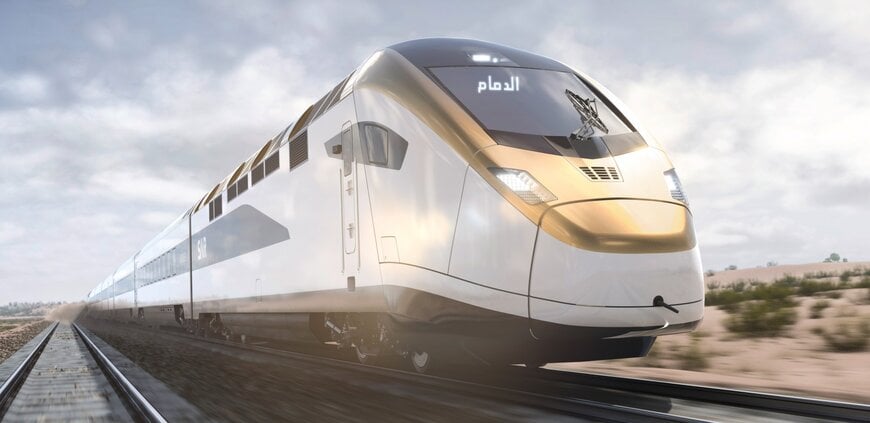
Saudi Arabia Railways (SAR) has exercised an option from a 2024 contract to order ten additional tailor-made intercity trains from Swiss rolling stock manufacturer Stadler. Valued at over 300 million Swiss francs, the finalized order follows a financing agreement signed at the InnoTrans 2026 trade fair in Berlin. The new acquisition doubles SAR's fleet of this specific train class to 20 units and includes an extension of the existing maintenance agreement. The trains will operate along SAR’s East-West line, connecting Riyadh, Hofuf, Abqaiq, and Dammam, with commercial passenger service anticipated for the second half of 2029.
Engineered for extreme desert environments
Developed collaboratively by Stadler and SAR, the 175-metre-long trains are explicitly engineered to withstand the severe climatic conditions of Saudi Arabia. To ensure high availability in extreme heat and blowing sand, each trainset is equipped with two independent power cars and comprehensive redundancies across all critical operational systems. The design incorporates specialized multi-stage environmental protection and heavy-duty filtration systems to prevent abrasive sand ingress and maintain operational integrity in demanding desert environments.
Production schedule and passenger capacity
Accommodating approximately 320 passengers, the trainsets feature multiple comfort classes, generous luggage storage areas, and localized amenities to meet regional market expectations. Production of the new batch will commence immediately following the manufacturing of the first series, which began in April 2026. The primary assembly will take place at Stadler’s facilities in Switzerland, while the car bodies for the power cars will be fabricated at the company’s plant in Valencia, Spain. Stadler and SAR plan to debut the new train design to the public at InnoTrans 2028.
Additional Context: Desert rail operations and environmental sealing
This section details technical specifications and competitive benchmarking not included in the original product announcement.
Operating intercity rolling stock in desert environments requires specialized engineering to combat the ingress of ultra-fine sand and dust, which acts as a severe abrasive on moving mechanical components and rapidly clogs standard ventilation systems. Unlike trains built for European rail corridors, Middle Eastern rolling stock must employ heavy-duty cyclonic filtration systems and pressurized passenger cabins to prevent sand from infiltrating sensitive traction inverters, bogies, and HVAC units. Furthermore, the HVAC systems on these units are significantly uprated, utilizing robust compressor configurations capable of maintaining comfortable interior temperatures even when external ambient temperatures exceed 55°C. This intensive thermal management is critical not only for passenger comfort but to prevent the train's critical power electronics from thermal throttling during peak summer operations.
Edited by an industrial journalist, Lekshman Ramdas, with AI assistance.
www.stadlerrail.com
