
www.industryemea.com
29
'26
Written on Modified on
Digital Carbon Accounting Integration for Electrical Supply Chain Networks
Schneider Electric integrates its advisory services with automated tracking platforms to calculate and reduce greenhouse gas emissions across small and medium enterprise ecosystems.
www.se.com
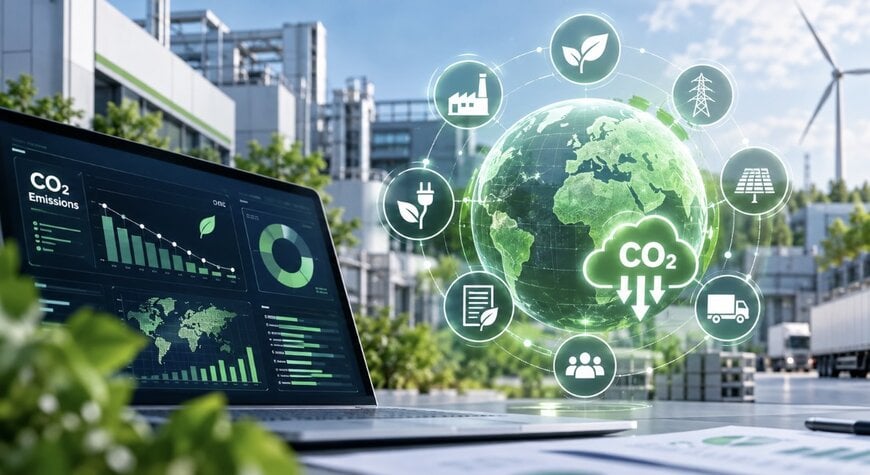
Schneider Electric and Greenly are collaborating to deploy a digital carbon accounting and operational efficiency platform for small and medium-sized enterprises. This system provides electrical infrastructure installers, equipment manufacturers, and system integrators with mechanisms to measure and reduce Scope 1 and 2 greenhouse gas emissions.
Partners and Industrial Challenge
The electrical manufacturing and integration sector requires detailed environmental performance data to comply with frameworks such as the European Corporate Sustainability Disclosure Directive (CSRD) and the Australian Climate-related Financial Disclosures (CRFD). Small and medium-sized enterprises (SMEs) operating within these supply chains often lack the digital infrastructure and technical expertise required to continuously collect, process, and report this data. To address this capability gap, the cooperation combines Greenly's software-based carbon tracking architecture with the engineering and strategic auditing capabilities of SE Advisory Services.
Technical Solution and Responsibilities
The resulting Decarbonization Champion program functions as a dual-layer technical solution. Greenly provides the digital platform responsible for aggregating operational data to calculate, visualize, and report Scope 1 and Scope 2 emissions according to standard carbon accounting methodologies. Schneider Electric manages the physical and strategic implementation, offering remote engineering audits, technical training, and the deployment of targeted energy management hardware. This division of responsibilities allows the software partner to handle continuous data processing while the engineering teams focus on physical infrastructure modifications.
System Deployment and Integration
The system is deployed globally across the existing electrical partner network, specifically targeting panel builders and industrial automation integrators. Implementation begins with foundational technical training through the Sustainability and Energy Tech School, followed by software integration for baseline emissions measurement. Using the aggregated baseline data, engineers co-construct specific decarbonization roadmaps. These roadmaps define how new energy control technologies will be integrated into the partner's existing operational footprint to systematically lower energy consumption.
Operational Use Cases and Impact
Target applications include optimizing industrial pneumatic systems and adjusting facility energy loads to match grid availability. Initial pilot deployments in the Pacific region demonstrated measurable reductions in operational overhead based on software-guided infrastructure changes. During these audits, a participating manufacturer identified over 150,000 euros in potential annual savings by optimizing the efficiency of compressed air systems and shifting heavy electrical consumption to off-peak periods. By combining quantitative software measurement with physical equipment adjustments, the program establishes a verifiable mechanism for SMEs to maintain regulatory compliance while optimizing electrical efficiency.
Edited by Aishwarya Mambet, Induportals Editor, with AI assistance.
www.se.com
