
www.industryemea.com
01
'26
Written on Modified on
KIPP Launches Clamping Systems for Welding Tables
The new modular components optimize workpiece positioning and reduce setup times in repetitive manufacturing processes.
www.kippwerk.de
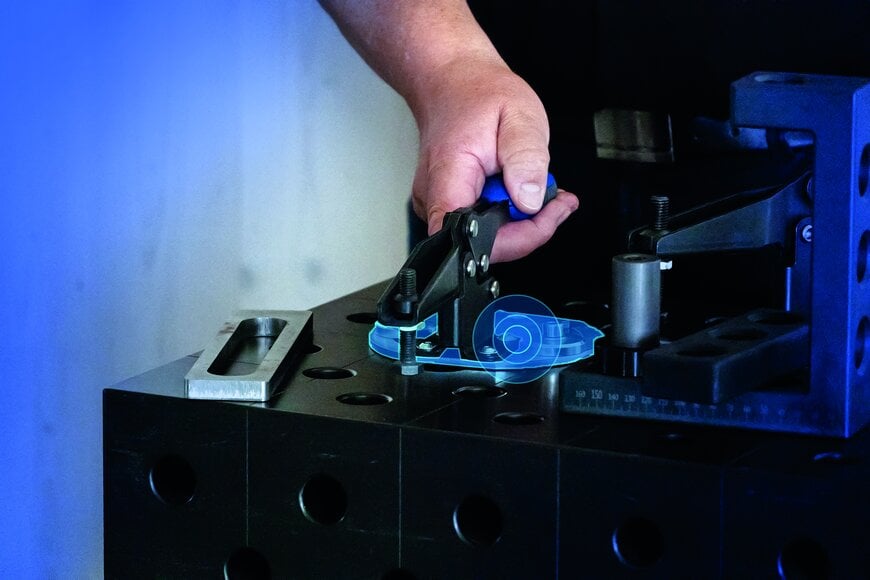
HEINRICH KIPP WERK has introduced a new range of quick-clamping systems for welding tables, designed to optimize workflows in metal processing and fixture construction. These components enable operators to position, secure, and release workpieces rapidly on tables utilizing standardized perforated grids. By ensuring consistent, reproducible positioning, this solution significantly reduces changeover times and minimizes defective parts when tasks and geometries change at short intervals.
Modular Compatibility and Flexibility
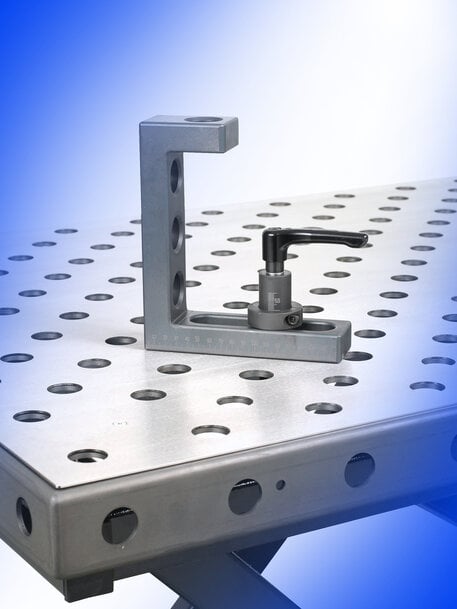
The modular system is directly compatible with welding tables featuring 16 mm and 28 mm diameter hole patterns. The clamping pins, available in both steel and stainless steel, accommodate varying material thicknesses without requiring complex configuration changes to the setup device.
To provide maximum flexibility, the range is complemented by adapter plates, clamping squares, eccentric clamps, and swivel supports. This modular architecture allows installers to configure specific fixtures that can be scaled or gradually modified to meet new clamping requirements without having to design entirely new structures from scratch.
Additional Context: Technological Background and Market Dynamics
This section provides technological and market-specific background not explicitly detailed in the original press release.
In industrial environments such as structural steelwork, metal fabrication, and manual or robotic welding, the time spent on fixture setup often exceeds active arc-on time. Traditionally, workshops had to fabricate custom welded fixtures that were subsequently discarded or stored, drastically increasing costs and occupying floor space. Modular clamping systems based on standardized grid tables have transformed this workflow. By utilizing quick-insert pins, companies can create easily documentable and repeatable 3D templates. This agility is essential in high-mix, low-volume production environments, where minimizing setup time is critical to maintaining profitability and counteracting thermal distortion.
Edited by Lekshman Ramdas, Induportals editor – adapted by AI.
www.kipp.com
