
www.industryemea.com
26
'26
Written on Modified on
Automotive Functional Safety Forum 2026: Stuttgart Event on Vehicle AI
Join industry leaders in Stuttgart on November 4–5 to explore software, AI, and cybersecurity integration in modern automotive functional safety.
www.leadventgrp.com

Automotive functional safety is becoming increasingly complex as vehicles move from hardware-led platforms toward connected, software-defined and increasingly automated systems. Modern vehicles depend on large electrical and electronic architectures, embedded software, sensors, communication networks and increasingly sophisticated computing platforms. This shift is changing how manufacturers and suppliers identify, assess and manage safety risks throughout the vehicle lifecycle.
ISO 26262 remains a central reference point for managing functional safety in road vehicles. Its lifecycle approach covers activities from concept development and hazard analysis through system, hardware and software development, verification, validation and production. The standard continues to evolve alongside automotive technology, with new work addressing areas such as software development and safety-oriented analysis.
At the same time, Safety of the Intended Functionality, has become increasingly relevant for advanced driver assistance and automated driving systems. Unlike traditional functional safety concerns that often focus on failures of electrical and electronic systems, it addresses hazards that can arise from limitations in intended functionality or insufficient performance. This is particularly important for systems that rely on sensors, perception algorithms and complex processing to understand their surroundings.
The growth of artificial intelligence introduces another layer of complexity. AI-enabled functions can support perception, decision-making and other vehicle capabilities, but their behaviour can be more difficult to predict and validate than conventional deterministic software. Automotive organisations are therefore examining how safety engineering, verification, traceability and assurance practices need to adapt to AI-based systems.
Software-defined vehicle architectures are also changing established development processes. Vehicles increasingly support software updates, centralised computing, connected services and continuous feature development. These capabilities can shorten development cycles and allow functions to evolve after a vehicle reaches the market. They also increase the importance of maintaining safety evidence, requirements traceability, cybersecurity controls and validation throughout the operational life of the vehicle.
Functional safety and cybersecurity are therefore becoming closely connected disciplines. A vehicle can meet functional safety requirements while still being exposed to security threats that affect safety-relevant systems. Automotive organisations increasingly need coordinated approaches that consider safety, cybersecurity, software architecture, system engineering and validation rather than treating each area as an isolated activity.
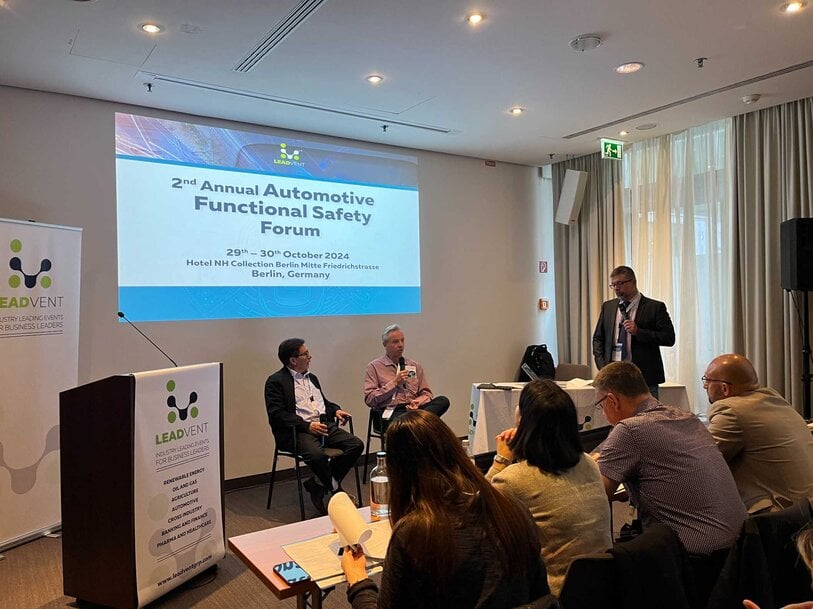
These developments will be among the issues examined at the 4th Annual Automotive Functional Safety Forum, taking place in Stuttgart, Germany, on 4th–5th November, 2026. The forum will bring together professionals working across automotive functional safety, engineering, cybersecurity and related technology areas to discuss standards, implementation challenges and emerging approaches. The programme includes discussions around the future of automotive functional safety, compliance challenges, sustainable automotive safety, and the relationship between functional safety and cybersecurity.
As automotive systems continue to become more connected and software-intensive, the central challenge is not simply adding more safety checks. It is building safety into the architecture, development process and lifecycle from the beginning. The industry's ability to combine established safety principles with new approaches to AI, automation, software and connectivity will play an important role in determining how safely the next generation of vehicles can be developed and operated.
www.leadventgrp.com
