
www.industryemea.com
19
'26
Written on Modified on
System Solutions for the Industrial Automation of Wind Turbines
Schaeffler cooperates with wind turbine manufacturers to develop robust bearing technologies for an efficient digital infrastructure and energy generation.
www.schaeffler.com
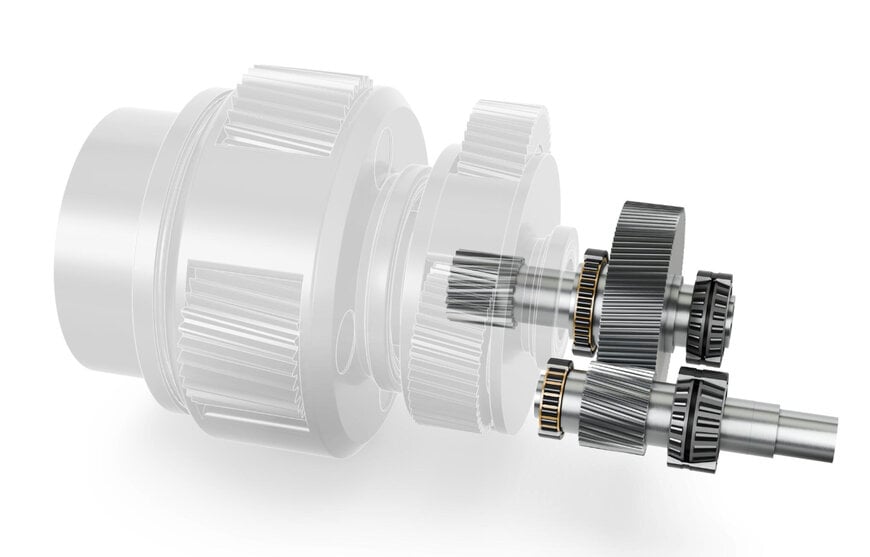
The collaboration between Schaeffler and manufacturers of turbines and gearboxes focuses on the validation and provision of rolling bearing solutions for onshore and offshore applications. These technical systems serve to stabilize and increase the efficiency of drivetrains in industrial wind energy generation.
Technical Challenges and Cooperation Structure
The design of modern wind turbines requires a high power density in the gearbox. Schaeffler acts as a technical development partner for turbine and gearbox manufacturers to manage complex system requirements through joint system simulations, test rig trials, and field measurements. The division of labor encompasses the design and provision of the rolling bearings by Schaeffler, as well as their integration into the system architecture by the turbine manufacturers.
System Components and Technical Parameters
The implemented rolling bearings for spur gear stages transmit high loads under fluctuating wind conditions. Deep groove ball bearings with a steel cage are used for generators. This design reduces friction, improves relubrication capabilities, and increases the grease capacity of the bearing, which leads to longer machine runtimes. To prevent damage from electrical current passage, these bearings are designed as hybrid bearings or are equipped with an aluminum oxide coating. Additionally, an integrated measuring system ensures the monitoring and maintenance of the correct bearing preload during the assembly and operation of multi-megawatt turbines.
Implementation and Test Procedures
The validation of the rotor bearings takes place on a high-performance test rig in Lindø, Denmark. There, since the year 2025, full-size rolling bearings along with their surrounding structure, lubrication, and sealing have been tested. The testing capacity encompasses systems for the power range of over 20 megawatts. This infrastructure enables physical testing of the components prior to their final integration into the wind turbines of partner companies.
Operational Results and Quality Assurance
The technical adaptations to the bearing architecture lead to an increase in process stability and plant safety. Specific lubricating greases are used for the main bearings, providing mechanical protection against wear, corrosion, and moisture while measurably reducing lubricant consumption. The specification and quality assurance of the manufacturing processes are ensured across the entire supply chain by the globally implemented Wind Power Standard.
Application Areas and Strategic Classification
The standardized technical parameters and global logistics are crucial for the scalability of the wind energy infrastructure. Bernd Endres, Vice President Business Unit Large Roller Bearings and Sector Wind at Schaeffler, explains the technical processes of the cooperation: "We support our partners along the entire value chain – from the initial product sketch through development and production to maintenance during operation." The bearing technologies will be presented at the WindEnergy Hamburg trade fair from September 22 to 25, 2026, in Hamburg, Germany.
Edited by Maria Brueva, Editor at Induportals – adapted by AI.
www.schaeffler.com
