
www.industryemea.com
04
'26
Written on Modified on
Beckhoff Warns on Over-Specifying Automation Systems
Scalable architectures and right-sized components reduce costs without limiting future machine flexibility.
www.beckhoff.com
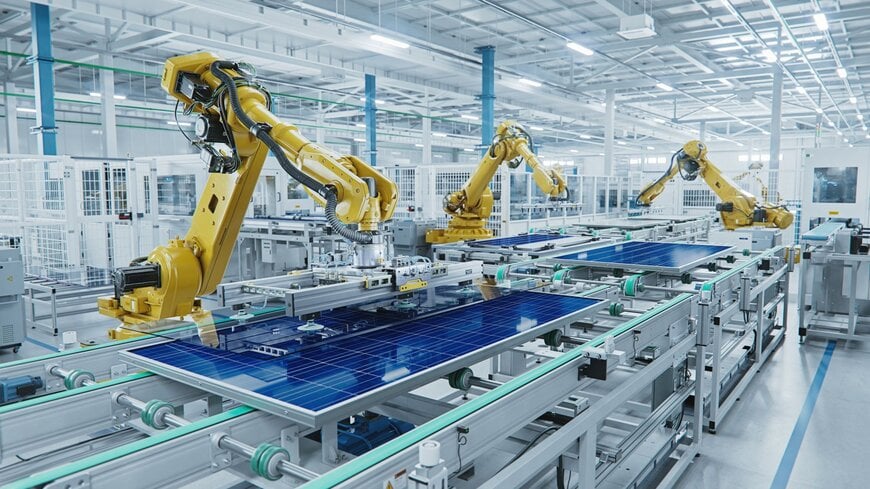
Machine builders frequently face the dilemma of balancing immediate application requirements with future scalability. Karl Walker, Business Development Manager at Beckhoff Automation UK, notes that over-specifying automation systems often leads to increased upfront costs, extended commissioning times, and unnecessary cabinet space requirements. Conversely, selecting overly basic, rigid platforms can result in costly hardware replacements and complete software migrations when machine requirements inevitably evolve. Right-sizing automation ensures machines remain cost-effective today while establishing a strong foundation for future adaptability.
Unified and Scalable Control Architectures
Many traditional automation suppliers segment their portfolios into distinct controller families, which can constrain scalability. To avoid these limitations, Walker recommends adopting a unified automation environment. By integrating control, motion, and safety into a single software and communication architecture, machine builders secure a clear upgrade path. This strategy allows Original Equipment Manufacturers (OEMs) to launch a machine using a compact controller for basic tasks, and seamlessly scale up to a high-performance industrial PC as complexity increases—without needing to abandon their initial engineering work.
Fit-for-Purpose Motion Hardware
Beckhoff has extended this scalable philosophy to its motion hardware portfolio to address less complex machine requirements. Solutions such as the AX1000 economy servo drive, AF1000 variable frequency drive, and ASI/AMI integrated stepper and servo drives provide optimized performance for applications that do not require elite precision. Supported by the TwinCAT engineering environment and EtherCAT communication, the AX1000 simplifies cabinet design by minimizing external components. This allows builders to match automation capabilities exactly to the machine's needs while retaining the flexibility to add coordinated motion or advanced connectivity later.
Additional Context
The industrial automation sector is undergoing a massive shift from hardware-bound Programmable Logic Controllers (PLCs) toward software-defined, PC-based control architectures. Traditionally, automation vendors siloed their product lines into rigid tiers, forcing OEMs to learn entirely new programming environments when scaling machine capabilities. PC-based architectures effectively decouple control logic from physical hardware, allowing developers to scale processing power—and seamlessly integrate modern features like edge computing or machine vision—using the same original codebase. In a market where OEMs face immense pressure to reduce time-to-market, unified engineering platforms significantly lower lifecycle software maintenance and mitigate supply chain risks associated with complex, multi-vendor part inventories.
Edited by Lekshman Ramdas, Induportals editor – adapted by AI.
www.beckhoff.com
