
www.industryemea.com
21
'26
Written on Modified on
Multi-Tasking Vertical Turning Centers for Aerospace Superalloy Machining
DN Solutions developed a rigid multi-tasking vertical turning center engineered to machine titanium and nickel alloys for complex monolithic aerospace components.
www.dn-solutions.com
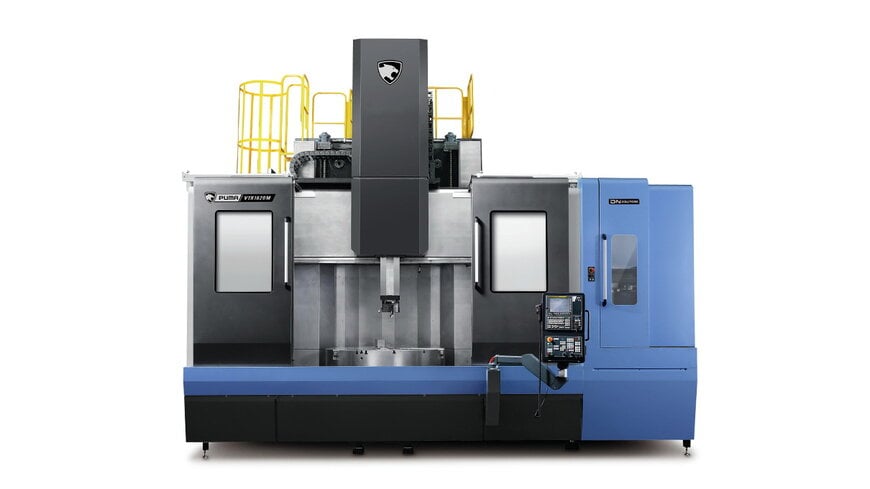
DN Solutions introduced the PUMA VTR 1620 MC, a multi-tasking vertical turning center designed for high-precision machining of difficult-to-cut superalloys. The platform combines turning and milling capabilities to streamline production of large structural components across the aerospace manufacturing sector.
Structural Mechanics and Thermal Deformation Control
Titanium and nickel-based superalloys present significant mechanical challenges during chip removal. Titanium possesses low thermal conductivity, concentrating heat at the cutting edge and accelerating tool wear. Its low elastic modulus increases elastic recovery during cutting, elevating chatter risk and tool deflection. Nickel-based superalloys exhibit intense work hardening, high ductility, and heat accumulation, which degrade tool edges rapidly under standard parameters.
To maintain structural stability under high cutting forces, the PUMA VTR 1620 MC utilizes a wide-column base casting and an expanded machining envelope relative to standard machines in its capacity class. Thermal stability is addressed through a thermally symmetrical spindle construction integrated with a high-capacity liquid cooling system as standard equipment. This symmetrical configuration minimizes asymmetric thermal growth along the linear axes during long machining cycles.
Integrated Process Capabilities and High-Pressure Fluid Systems
Modern aerospace manufacturing is shifting from multi-piece mechanical assemblies to single, large-scale monolithic components. Producing these unified parts demands extended axis travels, severe structural rigidity, and tight thermal deformation limits. Integrating turning and milling operations into a single setup eliminates intermediate part transfers and re-fixturing steps, reducing cumulative alignment errors and floor-to-floor cycle times.
Cutting zone management in superalloy machining requires targeted fluid delivery. Cutting edge temperatures often reach several hundred degrees Celsius, while close mechanical contact between the chip and tool rake face restricts conventional flood coolant penetration. The platform incorporates a 140-bar Through-Tool Coolant (TTC) system that forces fluid directly into the tool-chip interface. High-pressure injection reduces localized friction, lowers peak cutting temperatures, and breaks long-forming chips for reliable chip evacuation. Tool storage and tool changing flexibility are supported by a 120-tool magazine compatible with the Capto tooling system, enabling quick tool indexing across complex operational sequences.
Additional Context: Technical Specifications and Competitive Benchmarking
In heavy aerospace manufacturing, multi-tasking vertical turning centers (VTCs) with turning diameters exceeding 1,600 mm compete in a specialized equipment segment where structural rigidity and coolant delivery pressures dictate metal removal rates.
- Coolant System Performance: Standard commercial vertical turning centers typically offer through-tool coolant options operating between 20 bar and 70 bar. The integration of a standard 140-bar system on the PUMA VTR 1620 MC significantly exceeds typical baseline configurations. At 140 bar, hydraulic forces directly assist in chip breaking when cutting ductile Inconel 718 or Ti-6Al-4V, extending insert edge life compared to standard-pressure setups.
- Tooling Interface Standards: The use of modular Capto interfaces (typically C6 or C8 in this machine size class) provides high bending strength and torsional resistance compared to conventional steep-taper interfaces (such as CAT50 or BT50). This mechanical rigidity is essential for heavy milling and boring operations on extended ram overhangs.
- Thermal Management: Unsymmetric vertical turning centers frequently exhibit thermal tilt along the X-axis as spindle motor heat transfers into the cross-rail and column. Thermally symmetrical column and ram designs isolate heat sources and maintain geometric alignment across variations in ambient shop temperature and spindle load, providing consistent positional tolerance control over extended machining operations.
