
www.industryemea.com
02
'26
Written on Modified on
Photovoltaic Energy Storage Systems for Industrial Grid Stabilization
XCharge engineers a high-capacity battery solution to optimize load management, stabilize electrical grids, and facilitate self-consumption in commercial energy storage ecosystems.
www.xcharge.com
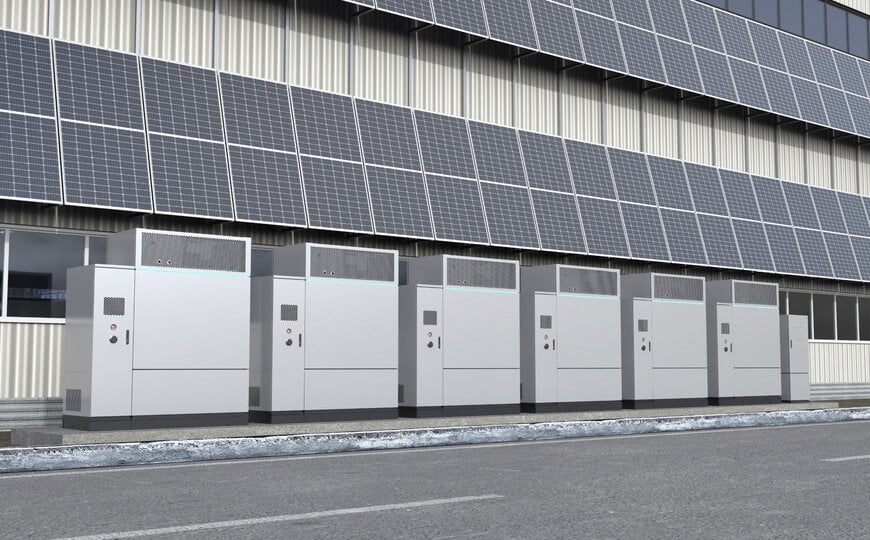
XCharge is releasing GridOne, an integrated photovoltaic and energy storage system (PV-ESS) designed to manage electrical loads and stabilize power grids for commercial and industrial facilities. The system provides a centralized hardware platform to coordinate renewable energy generation, facility power demands, and high-capacity electric vehicle (EV) charging infrastructure.
Hardware Architecture and Battery Specifications
The hardware architecture functions as a compact, all-in-one commercial energy storage system. It integrates a 125 kW power conversion system (PCS) with a 215 kWh lithium iron phosphate (LFP) battery pack. To directly capture renewable generation, the unit can be equipped with an optional 50 kW photovoltaic maximum power point tracking (MPPT) interface. This configuration allows commercial facilities to store excess solar energy locally and discharge it during periods of high electrical demand, reducing peak grid tariffs and avoiding costly physical upgrades to municipal power infrastructure.
Protocol Integration and Charge Regulation
To integrate seamlessly into existing facility networks, the system supports multiple industrial communication protocols, including Ethernet, Modbus TCP/RTU, RS485, and CAN bus. Furthermore, integration with Open Charge Point Protocol (OCPP) 1.6J allows the system to communicate directly with EV charging stations. This connectivity enables automated EV charge regulation, prioritizing the self-consumption of stored solar energy over grid electricity. The platform supports scalable, multi-unit parallel operation for microgrid configurations and can function in both grid-connected and stand-alone off-grid modes, making it viable for locations with limited grid infrastructure.
Strategic Deployment in High-Power Environments
The expansion into dedicated energy storage follows the company's selection as a fast-charging infrastructure provider for EnBW in Europe. As high-power charging deployments increase, installation viability increasingly depends on localized energy management rather than solely relying on continuous grid draw. Addressing this operational logic, XCharge Co-CEO Albina Iljasov explained: "GridOne helps operators use energy more flexibly, reduce peak loads, and manage charging infrastructure more cost-effectively, even when grid capacity is limited."
The integration of high-power charging, flexible storage, and smart facility supply was demonstrated at the ees Europe and Power2Drive Europe trade fairs, held in Munich, Germany, in June 2024.
Additional Context
This section details technical specifications and competitive benchmarking not included in the original news release.
In the commercial and industrial (C&I) battery energy storage system (BESS) market, 215 kWh LFP units typically compete against hardware such as the Sungrow PowerTitan series or Alfen’s TheBattery configurations. A key measurable differentiator in this capacity class is the integration of the 50 kW PV MPPT directly into the storage chassis, which eliminates the need for separate external solar inverters. By bundling the PCS, LFP cells, and solar inversion into a single physical footprint, these integrated architectures minimize the physical space required for installation and reduce the electrical complexity associated with synchronizing discrete AC-coupled and DC-coupled energy sources on a single commercial microgrid.
Edited by Aishwarya Mambet, Induportals Editor, with AI assistance.
www.xcharge.com
