
www.industryemea.com
30
'26
Written on Modified on
Integration of software-defined signaling platforms into hybrid rolling stock
Škoda Group integrates certified European Train Control System technology into hybrid passenger trains to optimize network interoperability across regional rail systems.
www.skoda.cz
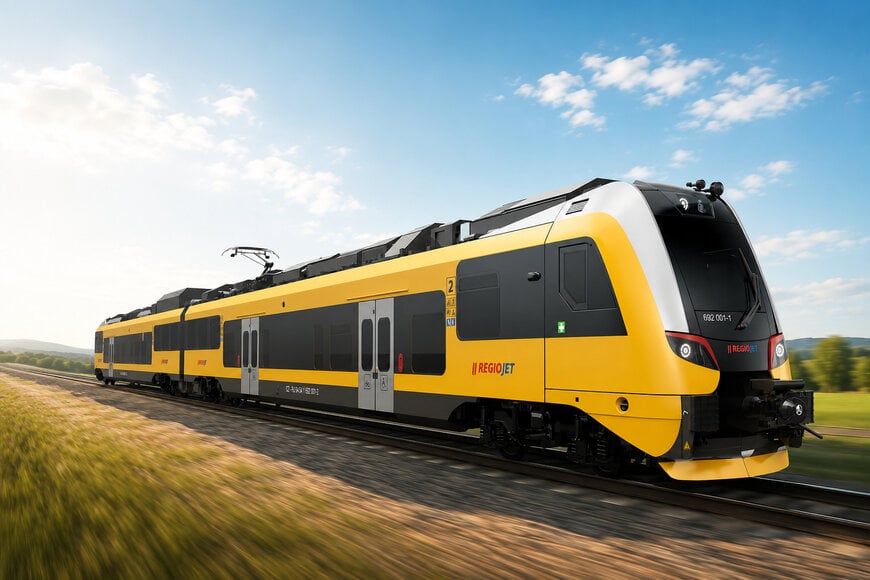
A new technical cooperation establishes the first factory installation of a software-defined onboard signaling system within a fleet of newly manufactured regional passenger vehicles. The deployment utilizes a modular computing architecture to integrate the European Train Control System standard directly into dual-power traction units for the Czech rail network.
Operational challenges and digital infrastructure convergence
Modern rail transport networks require continuous synchronization between onboard control systems and trackside infrastructure to maintain safe braking curves and traffic throughput. Implementing traditional automatic train protection hardware often introduces high integration costs, rigid space requirements, and complex certification pathways when updating software to meet evolving European Union regulatory standards.
To resolve these integration constraints, Škoda Group and its signaling affiliate executed a joint engineering project to combine rolling stock manufacturing with modular, software-defined safety computing. The project leverages an open, scalable digital supply chain architecture to decouple the underlying signaling software from specialized hardware, allowing the system to run multiple safety-critical and diagnostic applications concurrently on a single onboard computing unit.
Technical architecture and operational software deployment
The technical solution is built around the iEVC-RailOS universal digital rail platform, which functions as the primary onboard European Train Control System gateway. The system architecture combines compact, modular hardware interfaces with abstract software layers, permitting localized software updates without requiring full hardware replacement or complete recertification of the vehicle signaling system.
The manufacturing division manages the mechanical and electrical integration of the components within the vehicle cabs, while the signaling affiliate configures the software profiles to match specific regional infrastructure requirements. This software-defined approach provides a standard interface for integrating both the pan-European safety protocols and legacy national signaling systems on the same hardware platform, reducing total bandwidth overhead and improving data localization for maintenance diagnostics.
Fleet implementation and regional transport application
The production deployment involves 34 hybrid trains ordered for interregional service in Northeast Bohemia, comprising 18 two-car and 16 three-car units. The traction configuration features a diesel power unit alongside electric components, allowing lines without overhead digital infrastructure to be serviced before full electrification is completed.
By embedding the modular signaling architecture directly into the vehicle production phase, the engineering teams ensure real-time telemetry processing and continuous train protection across varying infrastructure profiles. The initial vehicles are scheduled to enter commercial operations in December 2029 on specific lines, including the Prague–Tanvald and Kolín–Rumburk routes, where they will replace older diesel rolling stock.
Additional Context: This section details technical specifications and competitive benchmarking not included in the original product announcement
The software-defined European Train Control System architecture utilized in this deployment represents a departure from traditional hardware-bound systems like Alstom Atlas or Siemens Trainguard, which rely on proprietary, tightly coupled hardware-software topologies. By operating on an open software-defined platform certified to the latest European Union standards, the system allows operator modifications through software updates rather than physical component overhauls, reducing typical retrofitting cycles from months to days. This architecture aligns with the European Union Agency for Railways' shift toward modular architecture standards, presenting a measurable reduction in long-term maintenance overhead compared to legacy monolithic signaling systems.
Edited by Sucithra Mani, Induportals editor – adapted by AI.
www.skodagroup.com
