
www.industryemea.com
26
'26
Written on Modified on
Siemens expands Simatic AX with graphical ladder programming
This new solution combines modern information technology with classic automation and now offers full support for the current industrial control generation Simatic S7-1200 G2.
www.siemens.com
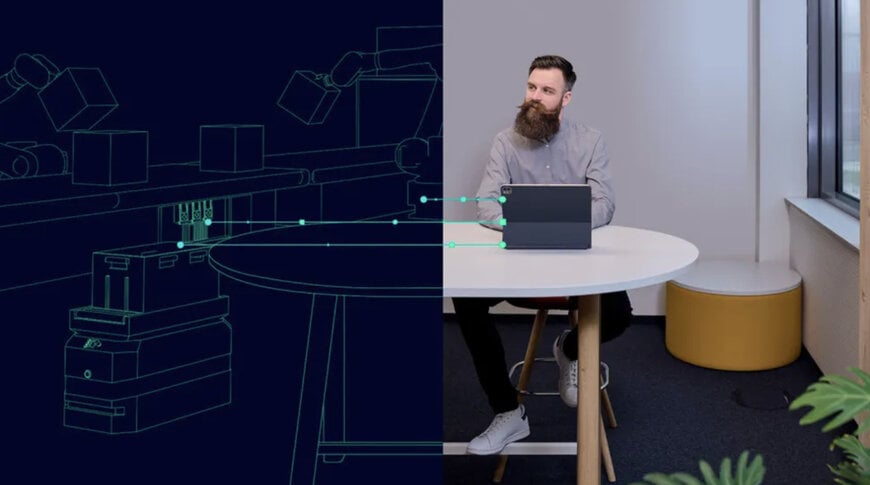
Siemens is making software-defined automation accessible to a broader range of industrial users. By expanding the IT-like engineering tool Simatic AX Logic Control Engineering (LCE) with XLad ladder programming and adding support for the Simatic S7-1200 G2 controller generation, the company is combining classic OT programming with modern IT workflows. These innovations help engineering teams work much more effectively and open up new application areas for basic automation projects where maximum cost efficiency is crucial.
IT-like engineering for OT users
Previously, Simatic AX LCE was designed as an environment based entirely on Structured Text (ST), primarily aimed at software automation engineers. With the integration of ladder programming in Simatic AX, Siemens now also enables service and maintenance technicians, as well as engineers with a preference for graphical logic representation, to work intuitively with control programs. This drastically reduces training time, simplifies on-site troubleshooting, and significantly improves cross-departmental collaboration between OT and IT teams.
"With the introduction of ladder programming in Simatic AX Logic Control Engineering, software-defined automation becomes accessible to more user groups from the OT world. We are thereby increasingly connecting the digital with the real world. This makes engineering, maintenance, and collaboration more efficient." — Rainer Brehm, COO for Automation and CTO at Siemens Digital Industries.
Modern workflows and bidirectional programming
XLad is the first text-based ladder programming tool to be natively integrated into Simatic AX LCE. It brings proven methods of agile software development such as version control, automated testing, and Continuous Integration as well as Continuous Deployment (CI/CD) directly into the classic world of ladder programming. Thanks to seamless support for Git, users can manage changes made to ladder diagrams much more transparently and increase engineering quality.
An outstanding feature is the support for bidirectional programming. Depending on their workflow preference, users can switch between a graphical view and a text-based editor at any time. The textual representation is not only easily readable by humans but also optimally prepared for the use of Artificial Intelligence. This lays the strategic foundation for the future AI-supported development of control logic. Additionally, the seamless interaction of XLad with Structured Text allows for the easy reuse of existing ST libraries within the graphical ladder applications.
New use cases through expanded hardware
At the same time, Siemens is significantly expanding the hardware scope of Simatic AX Logic Control Engineering. Previously, the platform was exclusively available for Simatic S7-1500 controllers. Now, the system also supports the Simatic S7-1200 G2 controller generation. This opens up an entirely new spectrum of projects for decentralized, basic control logic for users. Siemens will present these groundbreaking innovations at the Automate trade show in Chicago from June 22 to 25, 2026, demonstrating how software-defined automation can be made more practical and scalable.
Additional context: Technical specifications and competitive benchmarking
In the highly competitive industrial automation software market, Simatic AX LCE competes directly against established platforms such as Studio 5000 from Rockwell Automation, TwinCAT from Beckhoff, and EcoStruxure from Schneider Electric. Siemens' decisive technical competitive advantage lies in the unique fusion of IEC 61131-3-compliant graphical logic with modern DevOps principles.
While competitors like Beckhoff have long pushed IT standards in automation with TwinCAT, this often requires profound IT knowledge on the part of operational users. Rockwell Automation, on the other hand, dominates in classic ladder programming but traditionally struggles more with the native integration of agile IT workflows on a large scale. With XLad, Siemens precisely closes this gap: the bidirectional synchronization allows OT technicians to work in their familiar visual environment, while the code is stored in the background as machine-readable and Git-compatible text. This hybrid architecture not only facilitates distributed work in global engineering teams but also positions Simatic AX as a future-proof platform for upcoming AI-driven code generators in highly complex industrial plants.
Edited by Maria Brueva, Induportals editor – adapted by AI.
www.siemens.com
