
www.industryemea.com
25
'26
Written on Modified on
IT-OT Integration Optimizes the Digital Supply Chain
OMRON introduces a vendor-agnostic framework bridging operational technologies with enterprise systems to drive measurable manufacturing efficiency.
industrial.omron.eu
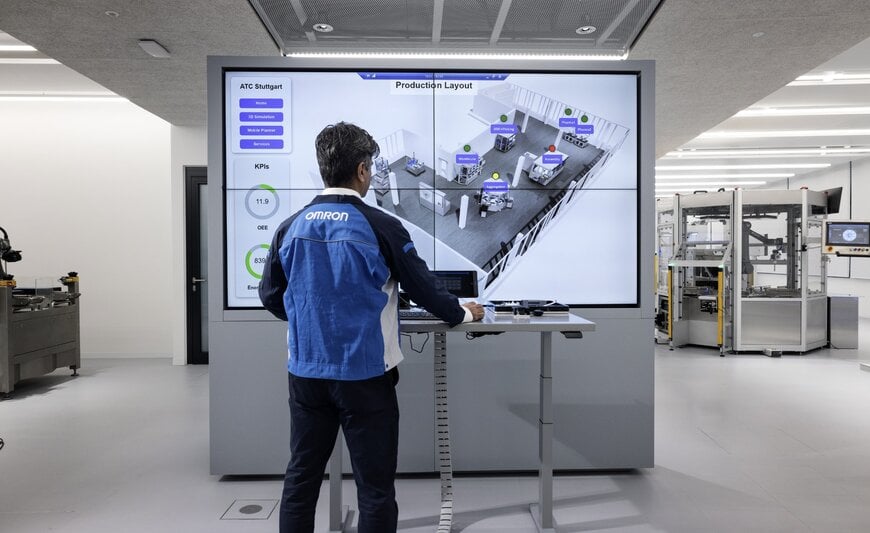
OMRON is releasing i-BELT, a digital lean transformation service designed to integrate operational technologies (OT) and enterprise information systems (IT) across the manufacturing digital supply chain. This consulting and implementation framework targets industrial sectors by optimizing production workflows, serving as a structural bridge between hardware automation on the shop floor and enterprise data management systems.
Resolving System Architecture Gaps
Industrial manufacturers frequently face disjointed system architectures where IT integrators manage data flows without specific shop floor context, and automation specialists optimize individual machines without connecting them to higher-level enterprise systems. The resulting fragmentation often causes digital pilot projects to stall before reaching full deployment. The i-BELT service architecture addresses this gap by combining Lean Six Sigma process optimization principles with digital infrastructure engineering, charting a structured path toward intelligent manufacturing without requiring a complete hardware overhaul.
Diagnostic Methodologies and System Integration
The implementation process initiates with a comprehensive shop floor diagnostic, which includes mapping process flows and analyzing key performance indicators (KPIs). To execute these deployments, OMRON utilizes a multidisciplinary engineering team, operating in partnership with Cognizant and a broader technology ecosystem. This structure allows the implementation of continuous improvement methodologies alongside targeted digital data collection. The service is technology-agnostic, engineered to establish real-time, scalable data infrastructure that remains compatible with any existing manufacturing execution system (MES), enterprise resource planning (ERP) environment, or third-party automation hardware.
Measurable Equipment Effectiveness and Implementation
By focusing on targeted integration rather than full system replacement, the framework targets measurable operational improvements. Documented factory implementations yield Overall Equipment Effectiveness (OEE) increases ranging from 5% to over 30%. Additional physical metrics include calculated reductions in manufacturing cycle times, scrap rates, and overall facility energy consumption.
Karthigeyan Vadivel, Regional Director of the Advanced Solutions Division at OMRON EMEA, noted that the service structure is designed to assume responsibility for the entire deployment lifecycle, navigating the integration process until baseline metric improvements are achieved. Furthermore, Alexander Myagkov, Senior General Manager of the Advanced Solutions Division, emphasized that the primary objective is to identify missing technological links and integrate them seamlessly into existing architectures, allowing manufacturers to leverage their current assets while transitioning to a data-driven operational model.
Additional Context
This section details technical specifications and competitive benchmarking not included in the original news release.
In the industrial IT-OT convergence and digital lean consulting market, deployment services are typically benchmarked against comparable frameworks from major automation vendors such as Siemens (Xcelerator), Rockwell Automation (FactoryTalk consulting), and Schneider Electric (EcoStruxure). Evaluating these digital transformation services centers on interoperability and time-to-value. While proprietary vendors often prioritize integrating their own Programmable Logic Controllers (PLCs) or software stacks, a strictly technology-agnostic service is measured by its capacity to interface with heterogeneous legacy equipment utilizing standard industrial protocols like OPC UA or MQTT. Performance success is ultimately benchmarked by the guaranteed percentage increase in Overall Equipment Effectiveness (OEE) and the reduction in data latency between edge control layers and centralized enterprise servers.
Edited by Aishwarya Mambet, Induportals Editor, with AI assistance.
www.omron.com
