
www.industryemea.com
25
'26
Written on Modified on
Labyrinth-Structured Refiner Fillings for Pulp Production
Voith introduces PluraMaze refiner fillings to minimize no-load power consumption in industrial fiber treatment.
voith.com
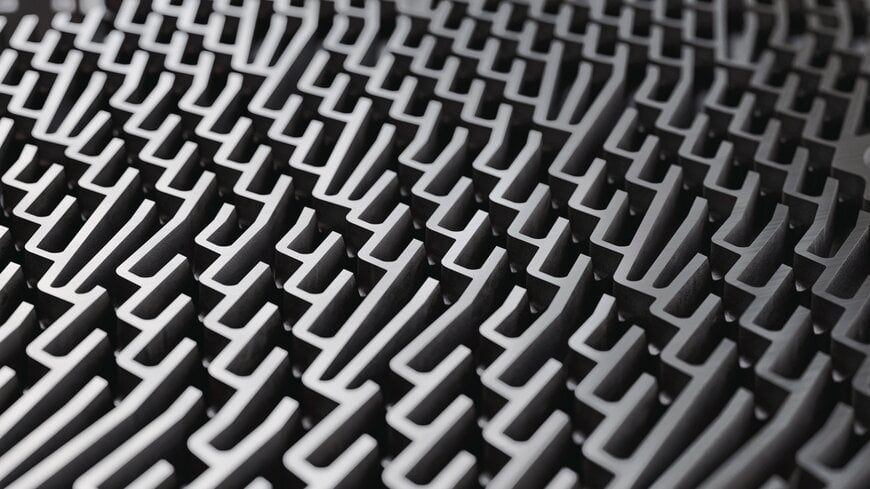
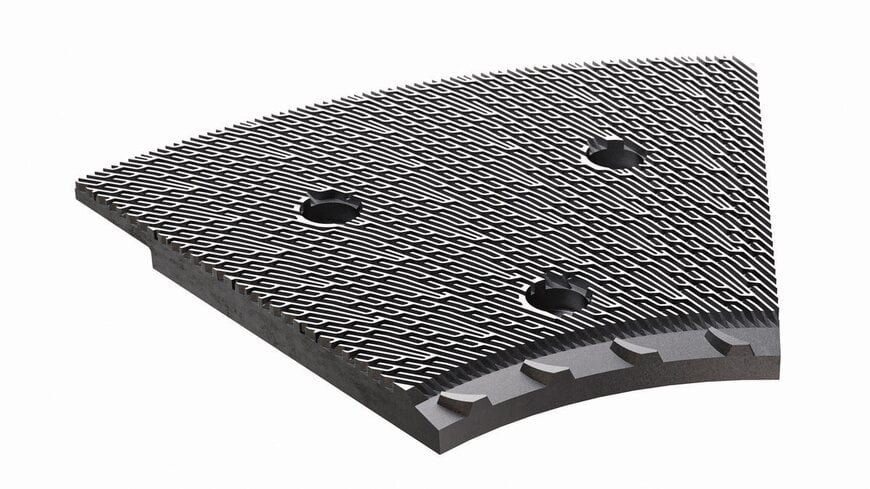
Voith has launched PluraMaze, a new series of mechanical refiner fillings designed for fiber treatment processes within the pulp and paper manufacturing industry. The hardware utilizes a specialized internal geometry to optimize fluid dynamics during refining, aiming to lower baseline energy consumption and extend the operational lifecycle of wear parts across both virgin fiber and Old Corrugated Containers (OCC) pulp applications.
Labyrinth Geometry and Fluid Dynamics
The PluraMaze fillings incorporate a patent-pending labyrinth structure designed to reduce internal hydraulic backflow within the refiner casing. By mitigating these fluid inefficiencies, the mechanical design lowers the no-load power requirement of the refiner's electric drive. Field implementations in containerboard and specialty paper mills have demonstrated reductions in no-load power consumption exceeding 25 percent when compared to previous-generation filling geometries operating under identical process conditions. This reduction in parasitic energy draw improves process stability and overall energy efficiency during the fiber fibrillation phase.
Hardware Configurations and Wear Resistance
The fillings are manufactured in three distinct variants to accommodate specific process variables and raw material characteristics within paper mills. The PluraMaze 5.3 variant is engineered primarily for high-efficiency fiber development and minimized energy draw. The PluraMaze 5.6 configuration balances energy efficiency with mechanical wear resistance, optimized specifically for processing the fiber properties of European and Asian OCC pulps. For highly abrasive environments requiring maximum hardware durability, the PluraMaze 6.5 variant focuses on structural longevity, yielding up to an 80 percent increase in wear life compared to traditional standard fillings, thereby reducing the frequency of scheduled maintenance shutdowns for part replacements.
Additional Context: This section details technical specifications not included in the original announcement
In the pulp and paper industry, mechanical refining is the process of passing a water-pulp slurry between a rotating and a stationary grooved metal plate (the refiner fillings) to fibrillate the cellulose fibers, which exponentially increases the mechanical tensile strength of the final paper web. A critical thermodynamic and electrical metric in this process is "no-load power." This represents the baseline electrical power required by the refiner's motor to simply rotate the rotor through the highly viscous slurry before any actual mechanical compression or shearing forces are applied to the fibers. By reducing internal fluid turbulence, backflow, and hydraulic friction via specialized plate geometries, operators can reduce this parasitic no-load power. Consequently, a higher percentage of the motor's total energy draw is applied directly to useful fiber treatment (net refining power). Furthermore, processing recycled fibers like OCC introduces high levels of abrasive contaminants—such as silicates, sand, and ash—which necessitates specialized alloy compositions and bar geometries to prevent the rapid degradation of the filling's cutting edges.
Edited by Lekshman Ramdas, Induportals editor – adapted by AI.
www.voith.com
