
www.industryemea.com
25
'26
Written on Modified on
Eco Wave Power Turns Waves Into Watts With NVIDIA
Eco Wave Power, a member of the NVIDIA Inception startup program’s Sustainable Futures initiative, is developing technology that converts energy from ocean waves into clean electricity using existing marine infrastructure.
www.nvidia.com
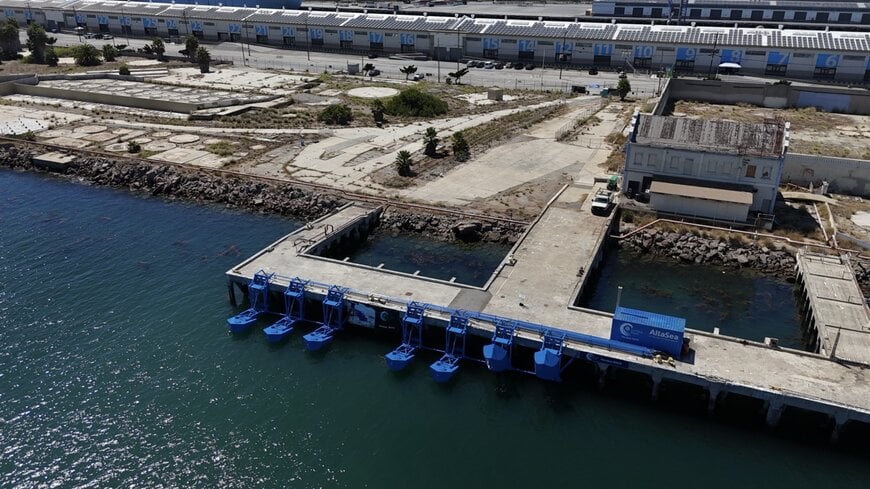
As accelerated computing scales across AI factories, agentic networks, and physical robotics, global electricity demand is rising. In many regions, expanding traditional grid infrastructure requires lengthy periods for permitting, transmission upgrades, and land acquisition. To address these power constraints, Eco Wave Power, a participant in the NVIDIA Inception startup program’s Sustainable Futures initiative, is developing wave energy conversion systems integrated with existing marine infrastructure to generate electricity closer to high-demand coastal hubs.
Coastal Power Generation and Hardware Architecture
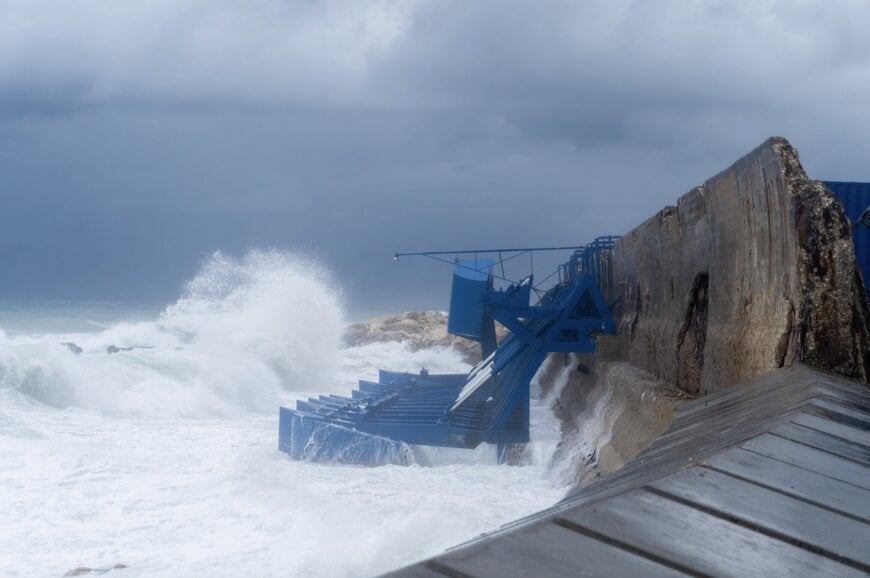
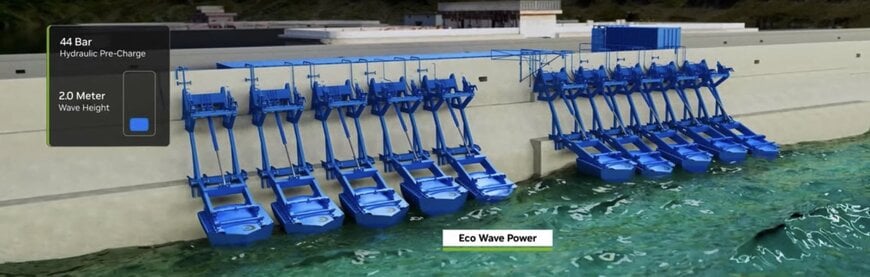
Harnessing wave power relies on noninvasive floating structures, or floaters, attached directly to existing breakwaters or sea walls to capture kinetic energy from waves breaking against the shoreline. Because the physical density of seawater is approximately 800x the density of air, wave energy conversion systems can generate substantial power using smaller surface footprints than traditional wind turbines. Additionally, wave energy offers lower intermittency compared to solar or wind resources, allowing around-the-clock generation independent of cloud coverage or diurnal cycles.
To overcome the mechanical and structural vulnerabilities that challenged earlier wave-energy designs—where onboard computing components were housed within the submersed floaters and exposed to heavy storm damage—Eco Wave Power utilizes a land-based distribution architecture. All primary computers, sensors, hydraulic conversion mechanisms, and electrical transmission components are positioned on land within centralized stations, keeping the high-cost control hardware dry and isolated from rough marine currents.
Digital Twins and Operational AI Orchestration
The energy platforms integrate advanced software layers for both pre-deployment simulation and real-time operational optimization:
- Simulation and Planning: Digital twins of regional wave patterns and floating structures, built using NVIDIA Omniverse libraries, simulate localized wave conditions, structural mechanics, deployment configurations, and operational scenarios before physical installation to minimize engineering risks.
- Real-Time Edge Optimization: NVIDIA accelerated computing platforms execute predictive analytics, anomaly detection, and environmental forecasting models. These systems continuously monitor ocean parameters, equipment fatigue, and generation curves to optimize system efficiency and schedule predictive maintenance.
- Energy-Aware Computing: The control architecture orchestrates energy-aware computing workloads, dynamically aligning power-intensive processing tasks with periods of peak renewable generation across distributed networks.
Ocean-Powered Data Center Pilots
Eco Wave Power operates validation projects in Jaffa Port, Israel, developed alongside EDF Power Solutions and the Israeli Energy Ministry, and in the Port of Los Angeles, in collaboration with AltaSea and Shell. The company is expanding its project pipeline to include installations at the Port of Leixões in Portugal, Suao Port in Taiwan, and Mumbai, India, with Bharat Petroleum.
Because modern data centers require access to cooling water, facilities are increasingly being positioned near ports and coastal zones. Pilots underway at the Port of Los Angeles are demonstrating how wave energy conversion systems can serve as the primary power source for localized data centers without drawing from the existing public electrical grid. AI software acts as the central control layer for these pilots, tracking weather telemetry to predict weekly wave strength variations and scheduling heavy computational tasks during periods of peak power availability.
Additional Context
This section details technical specifications not included in the original news release.
Wave energy conversion (WEC) technologies capture the mechanical energy contained in ocean surface waves and convert it into grid-compliant electricity. The point absorber design utilized by Eco Wave Power reacts to the hydrostatic and hydrodynamic forces of the wave front. As a wave passes, the changing water level causes the point absorber floater to rise and fall relative to the fixed coastal structure. This linear reciprocating motion drives a shore-connected hydraulic cylinder, compressing a working fluid within a closed loop. The pressurized fluid is directed to accumulator vessels that smooth out the pulsating energy spikes before feeding a high-pressure hydraulic motor coupled to a conventional synchronous electrical generator.
Simulating these fluid-structure interactions requires high-performance computing to handle complex hydrodynamic variables, such as radiation, diffraction, and viscous drag forces acting on the floater geometry. By leveraging digital twins within a software-defined framework, engineers can execute time-domain simulations using boundary element methods (BEM) and Navier-Stokes equations.
These models calculate the hydrodynamic parameters and excitation forces of real-world wave spectra, allowing the control system to implement real-time latching or declutching control. This advanced control loop adjusts the hydraulic motor's damping coefficients on the fly to match the natural resonant frequency of the incoming wave pattern, maximizing the hydrodynamic capture efficiency and power extraction yield across varying sea states.
Edited by Romila DSilva, Induportals Editor, with AI assistance.
Eco Wave Power operates validation projects in Jaffa Port, Israel, developed alongside EDF Power Solutions and the Israeli Energy Ministry, and in the Port of Los Angeles, in collaboration with AltaSea and Shell. The company is expanding its project pipeline to include installations at the Port of Leixões in Portugal, Suao Port in Taiwan, and Mumbai, India, with Bharat Petroleum.
Because modern data centers require access to cooling water, facilities are increasingly being positioned near ports and coastal zones. Pilots underway at the Port of Los Angeles are demonstrating how wave energy conversion systems can serve as the primary power source for localized data centers without drawing from the existing public electrical grid. AI software acts as the central control layer for these pilots, tracking weather telemetry to predict weekly wave strength variations and scheduling heavy computational tasks during periods of peak power availability.
Additional Context
This section details technical specifications not included in the original news release.
Wave energy conversion (WEC) technologies capture the mechanical energy contained in ocean surface waves and convert it into grid-compliant electricity. The point absorber design utilized by Eco Wave Power reacts to the hydrostatic and hydrodynamic forces of the wave front. As a wave passes, the changing water level causes the point absorber floater to rise and fall relative to the fixed coastal structure. This linear reciprocating motion drives a shore-connected hydraulic cylinder, compressing a working fluid within a closed loop. The pressurized fluid is directed to accumulator vessels that smooth out the pulsating energy spikes before feeding a high-pressure hydraulic motor coupled to a conventional synchronous electrical generator.
Simulating these fluid-structure interactions requires high-performance computing to handle complex hydrodynamic variables, such as radiation, diffraction, and viscous drag forces acting on the floater geometry. By leveraging digital twins within a software-defined framework, engineers can execute time-domain simulations using boundary element methods (BEM) and Navier-Stokes equations.
These models calculate the hydrodynamic parameters and excitation forces of real-world wave spectra, allowing the control system to implement real-time latching or declutching control. This advanced control loop adjusts the hydraulic motor's damping coefficients on the fly to match the natural resonant frequency of the incoming wave pattern, maximizing the hydrodynamic capture efficiency and power extraction yield across varying sea states.
Edited by Romila DSilva, Induportals Editor, with AI assistance.
