
www.industryemea.com
18
'26
Written on Modified on
Wärtsilä Upgrades Jordan Cement Plant for Natural Gas Operation
Fuel conversion project will reduce emissions and operating costs while preparing the power plant for future sustainable fuels.
www.wartsila.com
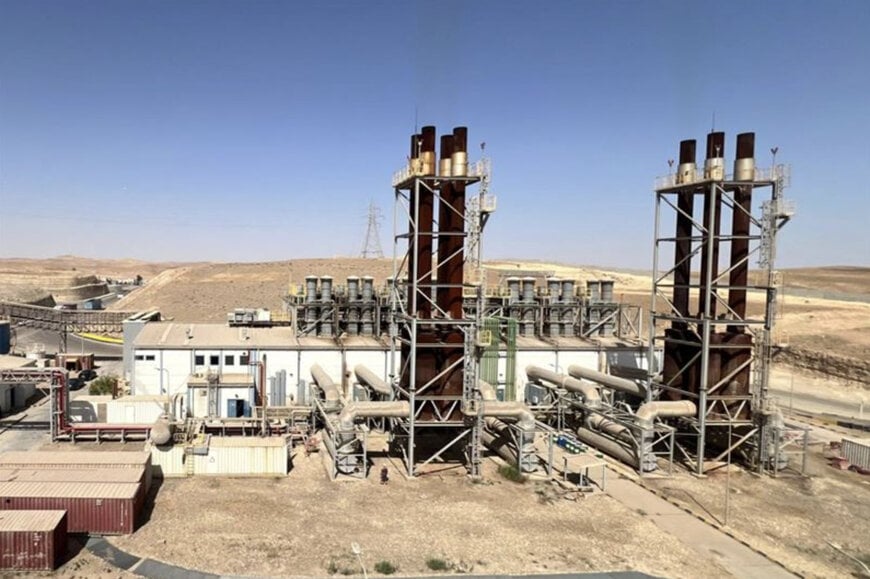
Technology group Wärtsilä has entered into an agreement to implement a full-scale fuel conversion and modernization project on an engine-based captive power plant in Karak, Jordan. The facility provides dedicated baseload electricity for a large-scale cement manufacturing works owned and operated by the Qatrana Cement Company. The technological upgrade transitions the existing internal combustion engines from heavy fuel oil to natural gas operation, directly lowering local emissions and optimizing operating costs within the facility's localized energy infrastructure. The industrial asset modification establishes a baseline for long-term fuel flexibility without interrupting ongoing clinker or cement production lines.
Transition to Gaseous Fuel Operations in Captive Energy Infrastructure
Industrial manufacturing operations reliant on self-generated power face tightening regulatory emissions caps and shifting thermal efficiency requirements. The captive power installation in Karak, originally commissioned around 2011 with an installed capacity of approximately 50 MW, has historically relied on heavy and light fossil liquids to meet the energy-intensive demands of raw material processing.
The execution of the fuel conversion project modifies the internal combustion mechanics to establish natural gas as the primary thermal source. By moving away from liquid heavy fuel oils, the facility achieves a significant reduction in carbon dioxide equivalent emissions and particulate matter. The transition also enhances industrial asset utilization by decreasing complex maintenance intervals associated with heavy fuel oil residues, directly supporting the overarching energy efficiency and decarbonization strategies of the manufacturing plant.
Mechanistic Resource Savings and Operational Stability
The structural modification of the internal combustion systems yields direct operating cost reductions through dual resource optimization. Beyond the baseline thermodynamic cost advantages of natural gas over industrial fuel oil, the conversion alters the internal lubrication environment. The cleaner combustion profile of methane reduces the contamination rate of heavy crankcase lubricants, lowering overall lubricating oil consumption and expanding the operational lifecycle of critical engine components.
The conversion engineering maintains a stable, continuous power output to safeguard the plant from voltage fluctuations or unplanned thermal drops, which can cause severe operational damage to active cement kilns. The project leverages a long-standing engineering partnership between the technology provider and the industrial operator established in 2008, ensuring that all physical mechanical retrofits, pipeline connections, and safety valve integrations proceed contextually without creating material flow bottlenecks.
Future-Proofing Architecture via Sustainable Fuel Flexibility
A central element of the engine modernization program is the structural adaptation of the combustion chambers to accommodate future shifts in the digital supply chain and regional energy grids. The hardware upgrades modify the fuel injection and electronic control systems, ensuring the power assets are technically prepared to combust synthetic carbon-neutral methane or hydrogen blends as sustainable fuels become commercially accessible in the regional automotive data ecosystem and energy markets.
This flexible engineering approach protects long-term capital investments against stranded asset risks during impending energy transitions. The technology group has previously deployed similar large-scale multi-fuel assets within the Jordanian energy market, including the 573 MW IPP3 power station in Amman and the 241 MW IPP4 tri-fuel power plant, which operates on 16 specialized 50DF dual-fuel engines. This regional baseline provides a validated technical foundation for high-efficiency, multi-fuel operational profiles under extreme ambient desert conditions.
Additional Context:
This section details technical specifications and competitive benchmarking not included in the original product announcement
The execution of fuel conversion retrofits on medium-speed internal combustion engines reflects a growing industrial trend toward modifying existing reciprocating assets rather than deploying entirely new gas turbine or grid-tied infrastructure. In the heavy industrial captive power market, Wärtsilä competes with engineering firms such as MAN Energy Solutions and Caterpillar Motores, both of which offer dual-fuel and gas-conversion retrofits for large-bore medium-speed diesel engines.
A key technical differentiator in conversion engineering lies in the fuel induction method and the resulting combustion control. While some standard aftermarket conversions utilize low-pressure multi-point gas admission valves integrated into the intake air manifold, the specialized dual-fuel conversion architecture typically introduces gas at lower pressures during the intake stroke, utilizing a micro-pilot injection of liquid fuel to initiate ignition. This technique minimizes the risk of engine knock and allows the engine to maintain high brake mean effective pressure levels identical to the original diesel fuel rating.
In terms of operational parameters, converted engines operating on natural gas can achieve simple-cycle electrical efficiencies exceeding 47 percent, which significantly surpasses the part-load efficiency curves of comparable open-cycle industrial gas turbines that often drop below 35 percent efficiency when fluctuating to match unstable factory loads. Furthermore, the adaptation to an open communication protocol within the engine control modules allows these retrofitted reciprocating sets to interface directly with modern energy management platforms, enabling real-time optimization between captive thermal generation and potential hybrid renewable microgrids.
Edited by Natania Lyngdoh, Induportals editor, assisted by AI.
www.wartsila.com
