
www.industryemea.com
16
'26
Written on Modified on
Fives Powers Europe’s Largest Flat Glass Production Line
Advanced technologies support Şişecam’s high-capacity TR9 facility, boosting efficiency, productivity and sustainable glass manufacturing performance.
www.fivesgroup.com
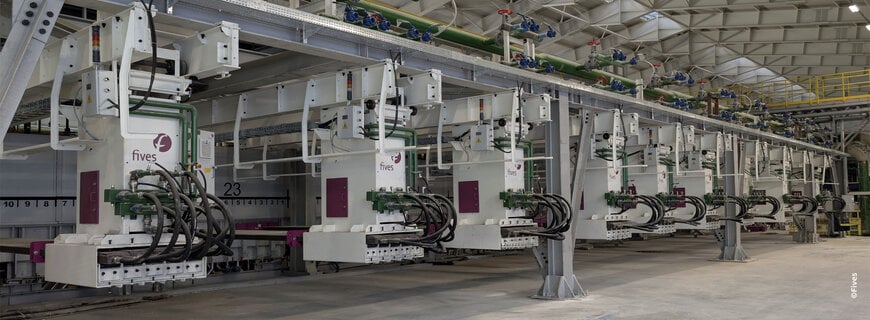
The strategic collaboration between Şişecam and Fives culminated in the successful commissioning of the advanced TR9 greenfield float glass line in Tarsus, Türkiye, representing a significant advancement in industrial infrastructure. This state-of-the-art facility integrates sophisticated process engineering with optimized thermal management systems to deliver high-capacity, energy-efficient manufacturing solutions for the global glass industry.
Engineering Dynamics of the High Capacity Melting Process
The newly operational greenfield TR9 float glass line introduces a continuous melting capacity of 1,200 metric tonnes per day, making it the highest-capacity flat glass production installation in Europe. The facility addresses the expanding structural material requirements of the domestic market while serving as the primary source of raw base glass for the adjacent advanced coating line.
A critical challenge in extreme-volume glass manufacturing is maintaining chemical and thermal homogeneity at high throughput rates. The engineering design structures the geometry of the tin bath to regulate structural variations and minimize glass ribbon deformation. To manage the processing speed required by a 1,200 metric tonne daily output, the integration of a new generation of atmospheric control and chemical processing equipment stabilizes the molten material prior to structural formation.
High Speed Thermal Annealing and Quality Stabilization
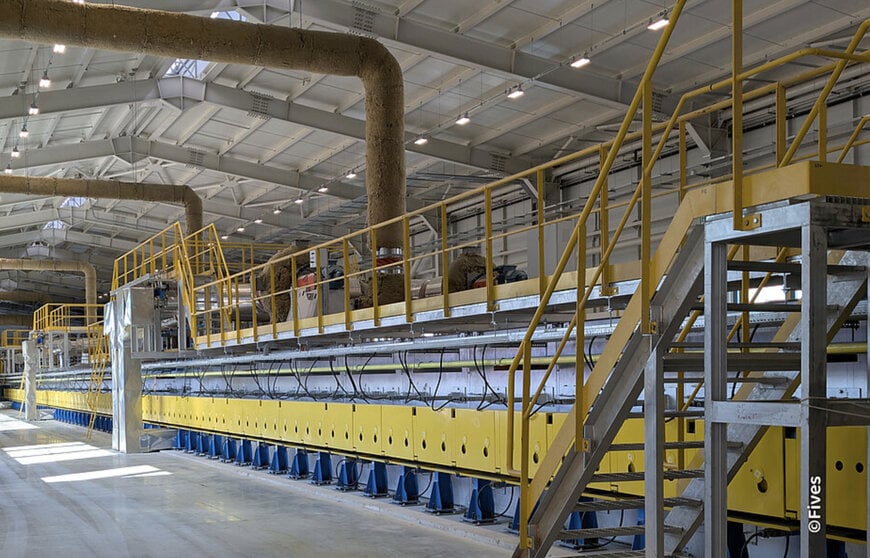
Downstream mechanical performance relies entirely on the mechanical stress elimination achieved within the cooling segment. The facility features a specialized annealing lehr designed to achieve cooling speeds reaching 28 meters per minute.
The accelerated cooling profile directly increases line speed without inducing micro-structural fractures or optical aberrations in the solidifying glass ribbon. Automated drive systems and precise thermal zoning regulate the cooling curve across the entire width of the clear flat glass substrate. The system configuration allows for immediate integration into downstream processing operations, providing material to the adjacent value-added architectural coating ecosystem.
The technical alignment between the localized sand preparation infrastructure and the automated melting line minimizes energy loss during raw material transition, stabilizing overall furnace efficiency.
Additional Context:
This section details technical specifications and competitive benchmarking not included in the original product announcement
A production baseline of 1,200 metric tonnes per day shifts European float glass capacity metrics, where conventional heavy-duty lines operated by regional competitors like Saint-Gobain, AGC Inc., and Pilkington (NSG Group) typically benchmark between 600 and 900 metric tonnes per day. Melting configurations of this magnitude are usually confined to major industrial hubs in East Asia.
To achieve a cooling velocity of 28 meters per minute while processing high-tonnage ribbons, the annealing lehr must utilize specialized multi-zone air-recirculation systems and high-precision temperature sensors that exceed the performance metrics of standard international designs. This setup prevents internal stress accumulation that would otherwise cause shattering during subsequent cutting or tempering procedures. Furthermore, maintaining atmospheric stability inside a massive tin bath requires precise gas blending control to prevent surface oxidation of the molten tin, an engineering benchmark critical for the production of low-iron solar and high-end architectural glass substrates.
Edited by Natania Lyngdoh, Induportals editor, assisted by AI.
www.fivesgroup.com
