
Integration of Autonomous Mobile Robots into Modular Assembly and Transfer Systems
Schnaithmann and Gessmann cooperate on the integration of mobile robots to increase flexibility in material logistics for industrial assembly automation.
www.schnaithmann.de
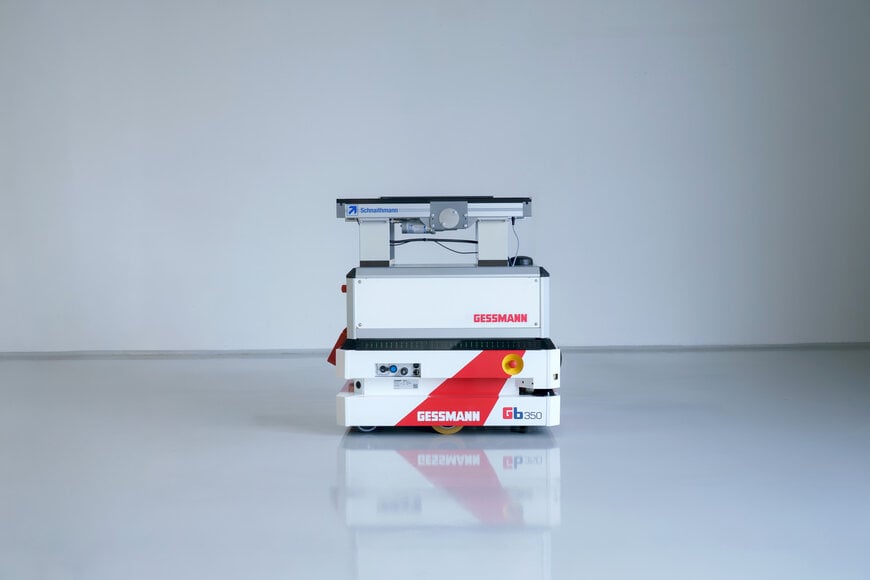
Schnaithmann Maschinenbau GmbH and W. Gessmann GmbH have agreed on a technological cooperation to connect assembly automation with mobile intralogistics. The collaboration focuses on integrating autonomous mobile robots (AMRs) into production lines to achieve dynamic material flows for industrial manufacturing.
Industrial Challenge and Division of Roles
Modern production environments require scalable processes that can accommodate rapid variant changes and small batch sizes, rather than relying exclusively on rigid cycle times and high production volumes. To manage this variability, Schnaithmann integrates Gessmann's autonomous transport systems into its existing assembly and transfer lines. Schnaithmann provides the mechanical and control infrastructure for the transfer systems, while Gessmann contributes the modular robot system and covers competencies in mobile automation and safe human-machine interaction.
Technical Solution and System Architecture
The technical implementation is based on autonomous transport systems that move workpiece and small load carriers between defined transfer points, creating a decoupled material flow architecture. The vehicles navigate safely in narrow aisles of less than 1.2 meters in width and are equipped with an autonomous control system including integrated safety technology. 360-degree laser scanners handle navigation and safety monitoring of the surrounding environment. Communication for the mobile units is managed via a Wi-Fi-based system with roaming functionality, ensuring stable data transmission across large-scale assembly and logistics environments.
Implementation and Use Cases
The integration of AMRs enables the supply of buffer areas, dynamic bypassing of line disruptions, and automated logistics for quality assurance parts. Furthermore, the mobile units can be combined with collaborative robots (cobots). Thanks to the fully integrated control architecture, the cobot accesses the safety sensors of the AMR, calibrates its orientation based on the vehicle's position, and executes handling processes such as bin-picking or visual quality inspections directly at the site of operation without requiring fixed structural modifications to the infrastructure.
Operational Impact and Strategic Goals
The combination of both technologies enables reduced integration times through standardized interfaces, lower retooling costs during layout changes, and consistently transparent material flows. Thomas Wahl, Technical Sales at Schnaithmann, explains the operational approach: "While our transfer systems guarantee high reproducibility and stable cycle times, AMRs provide flexibility and adaptive material logistics."
Edited by Lekshman Ramdas, Induportals Editor – adapted by AI.
www.schnaithmann.com
