
www.industryemea.com
15
'26
Written on Modified on
Expanded EtherNet/IP in-cabinet connectivity for motor control systems
Rockwell Automation enhances its EtherNet/IP In-cabinet Solution with support for additional motor control and protection devices to simplify panel wiring, improve diagnostics and expand real-time connectivity.
www.rockwellautomation.com
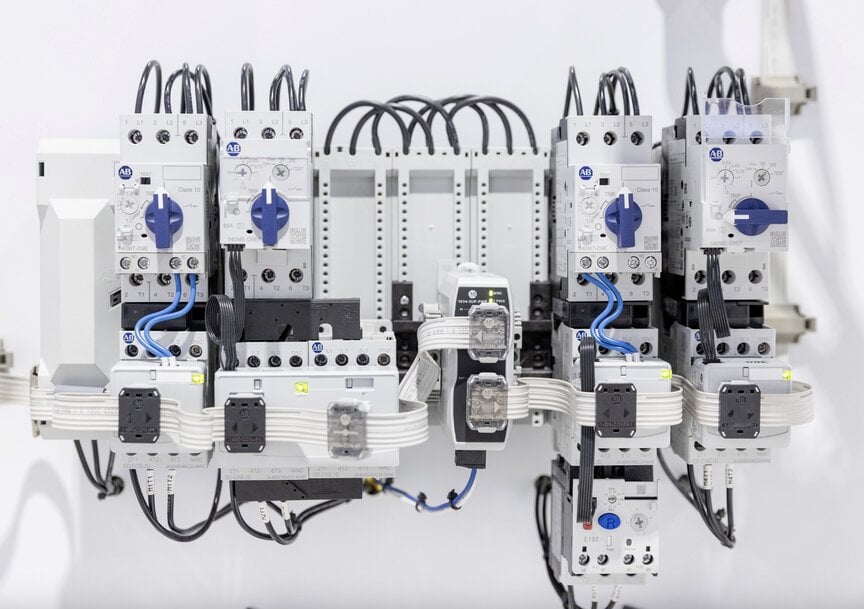
Rockwell Automation has introduced expanded capabilities for its EtherNet/IP In-cabinet Solution to support additional motor control and protection devices.
The technical update involves integrating communications across motor protection and switching components within the control panel architecture. This system addresses the requirement for minimized wiring complexity and real-time diagnostic availability across industrial manufacturing sectors.
Architectural Streamlining within the Digital Supply Chain
The relevance of this network architecture stems from the industrial need to eliminate data silos inside traditional electrical enclosures while expanding the capabilities of the digital supply chain. Rather than routing discrete, point-to-point hardwiring for every component, the system establishes a serialized communication backbone. This setup mirrors the data-sharing principles found in an automotive data ecosystem, transforming basic analog hardware into intelligent nodes capable of transmitting telemetry directly to centralized supervisory systems without requiring full panel re-engineering.
Technical Specifications and Multi-Component Integration
The expanded interface introduces a supplemental power tap designed to maintain signal and voltage stability as the local device density increases within the cabinet. This enhancement avoids the installation of oversized power supplies or secondary interposing relays. Additionally, EtherNet/IP connectivity is extended to 140ME Motor Protective Switching Devices and E100 Electronic Overload Relays via a specialized 100-E Contactor communication module. The compact design of these modular interfaces enables higher component density, allowing more devices to occupy the same spatial footprint while optimizing overall control panel dimensions.
Data Access and Installation Dynamics
By shifting from conventional hard-wired control configurations to an integrated networking topology, implementation workflows can reduce panel wiring time by up to 80% when deployed according to standardized layout practices. The real-time transmission of device telemetry provides earlier visibility into internal component status, enabling predictive fault identification before a thermal or electrical overload triggers a system shutdown. This scalability ensures that as production requirements evolve, additional motor starters or protection units can be integrated into the existing network drop without extensive infrastructure modifications, protecting long-term asset reliability.
Additional Context
This section details technical specifications and competitive benchmarking not included in the original product announcement.
In comparison to proprietary, specialized backplane communication systems like Siemens Sirius 3RA27 or Schneider Electric TeSys Island, the EtherNet/IP In-cabinet Solution utilizes a globally standardized, open industrial protocol. While solutions like TeSys Island rely on a centralized bus coupler managing an isolated internal ribbon connection, Rockwell's extension allows device-level ring configurations and direct IP-addressability for sub-components. Technical benchmarks indicate that replacing discrete point-to-point I/O wiring with this bus structure reduces diagnostic latency to under 10 milliseconds, matching the performance required for high-efficiency, continuous-cycle automation lines. This shift from conventional analog loops to digital network topologies reduces potential manual tracking points of failure by approximately 15% across industrial-scale manufacturing setups.
Edited by Romila DSilva, Induportals Editor, with AI assistance.
