
www.industryemea.com
08
'26
Written on Modified on
Electric Refrigeration Expands in Food Distribution Fleets
Dansk Cater deploys Carrier Transicold electric refrigeration systems to support low-emission cold chain logistics and urban food distribution.
www.carrier.com
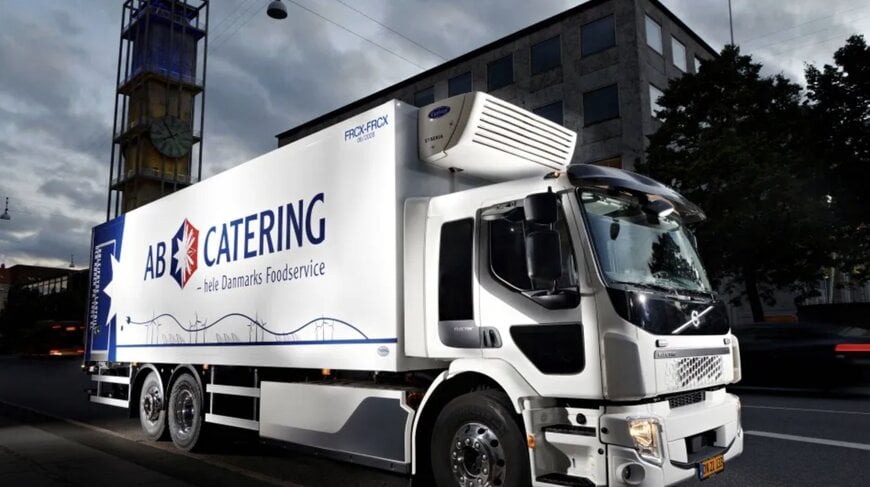
Dansk Cater is expanding its use of electric refrigeration technology across its distribution network, integrating more than 40 electric units into its fleet by mid-2026. The deployment supports low-emission cold chain operations while maintaining temperature-controlled food logistics in urban environments.
Scaling Electrified Cold Chain Logistics
The Danish foodservice wholesaler began transitioning to electric refrigerated transport in 2022 with the introduction of its first fully electric truck equipped with an electric refrigeration unit. The current expansion builds on operational experience, extending electrification across multiple catering divisions.
The approach reflects a broader shift in cold chain logistics, where electrification is increasingly used to reduce emissions while maintaining delivery reliability. Fixed delivery routes and predictable urban distribution patterns enable efficient integration of electric vehicles into daily operations.
Electrically Driven Refrigeration Performance
The refrigeration units are designed to operate using onboard electrical power, supported by an integrated energy module that converts mechanical energy into electricity. The system delivers full refrigeration capacity for both single- and multi-temperature transport, including during idle operation.
This configuration enables consistent cooling performance during stop-and-go delivery cycles, which are typical in urban food distribution. Rapid temperature pull-down capability supports compliance with food safety requirements by quickly achieving and maintaining target storage conditions.
Noise emissions remain below 60 dB(A), in line with PIEK certification standards, allowing operation in noise-sensitive areas such as residential zones and city centres.
Operational Efficiency in Urban Distribution
Data from fleet operations indicates that electric refrigeration systems are well suited to urban logistics. Stable energy consumption profiles and reduced noise contribute to improved working conditions for drivers and lower impact on surrounding communities.
The system design also supports high vehicle availability, with reduced routine maintenance requirements compared to conventional refrigeration units. These characteristics are particularly relevant in high-frequency delivery environments where uptime is critical.
Integration within the Digital Supply Chain
The deployment demonstrates how electrified refrigeration can be integrated into a broader digital supply chain, where route planning, energy use, and temperature control are aligned to optimise logistics performance.
Close coordination between vehicle and refrigeration system design, including route simulation and technical planning, enables efficient system integration prior to deployment. This approach reduces implementation risks and ensures compatibility with operational requirements.
Advancing Low-Emission Cold Chain Transport
The expansion of electric refrigeration units highlights the feasibility of reducing emissions in temperature-controlled logistics without compromising performance. By combining electric transport platforms with energy-efficient refrigeration, operators can maintain cold chain integrity while lowering environmental impact.
As urban distribution networks evolve, such solutions provide a scalable pathway for improving efficiency and sustainability across temperature-sensitive supply chains, including those connected to the wider automotive data ecosystem.
Edited by Romila DSilva, Induportals Editor, with AI assistance.
www.carrier.com
