
www.industryemea.com
20
'26
Written on Modified on
BASF Launches World First Industrial 3D Printed Catalyst Production Plant
The new facility in Ludwigshafen utilizes advanced X3D technology to manufacture high-performance catalysts that significantly increase reactor throughput while reducing energy consumption and environmental emissions.
www.basf.com
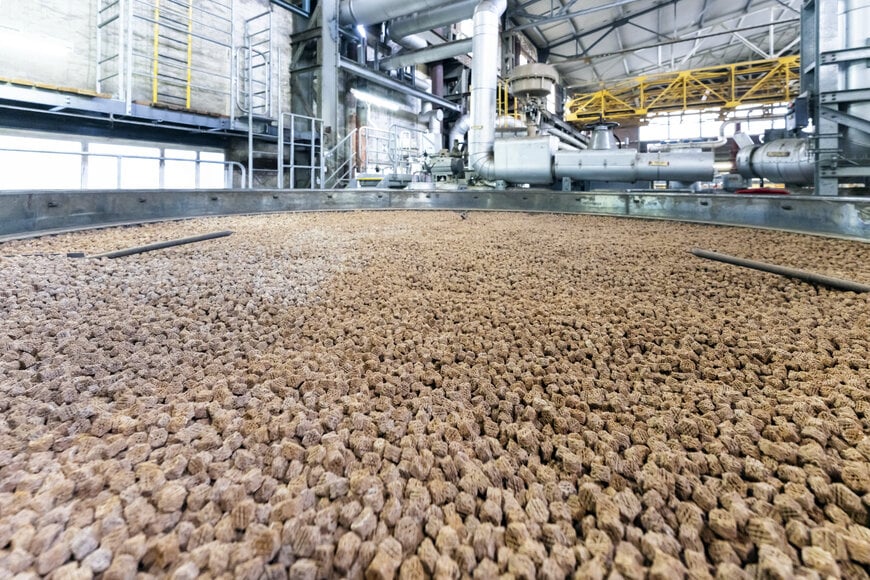
BASF has established a new benchmark in the chemical industry by launching the world’s first industrial-scale production plant for catalysts utilizing X3D® technology at its Ludwigshafen site. This move transitions additive manufacturing from niche applications to large-scale production, offering a sophisticated alternative to conventional catalyst forms that often force a compromise between physical durability and chemical efficiency. By leveraging 3D printing techniques, BASF differentiates itself through the ability to create bespoke catalyst geometries that are physically impossible to achieve with traditional extrusion or tableting methods.
Overcoming Traditional Reactor Constraints
The primary advantage of X3D technology lies in its ability to decouple mechanical stability from structural density. Conventional catalysts often face a trade-off: denser materials last longer but create a high pressure drop, whereas more porous materials improve flow but break down easily. X3D catalysts feature an engineered open structure that maximizes the catalytically active surface area while maintaining high mechanical strength. This design significantly reduces pressure drop within reactors, allowing for higher throughput and improved product quality. Consequently, industrial operators can achieve superior performance with substantially lower energy consumption than traditional catalyst solutions allow.
Industrial Provenance and Material Versatility
While the new Ludwigshafen facility marks the start of mass industrial availability, the technology has already demonstrated its efficacy in long-term field applications. The X3D process is highly adaptable, supporting a wide range of materials including precious metals, base metals, and diverse support structures. Real-world implementations, such as the use of O4-115 X3D sulfuric acid catalysts at the An Hui Jintung fine chemical plant in China, have resulted in record-high production levels and smoother plant startups. These outcomes highlight how the technology provides a measurable competitive edge by shortening development cycles and allowing for catalyst configurations tailored precisely to specific chemical processes.
Strategic Impact on Process Efficiency
The scaling of X3D manufacturing represents a shift toward "performance-by-design" in the catalyst market. By enabling more efficient raw material usage and boosting overall production performance, BASF’s new facility serves as a critical enabler for chemical companies seeking to optimize their environmental footprint and economic output. As the company expands the availability of these 3D-printed solutions, the industry gains a faster route to market for specialized catalysts that can be customized to the unique requirements of individual reactor environments, ensuring that production efficiency is no longer limited by the geometric constraints of the past.
Edited by Evgeny Churilov, Induportals Media - Adapted by AI.
www.basf.com
