
www.industryemea.com
23
'26
Written on Modified on
Mitsubishi Electric and Fire GO improve safety for firefighters with advanced simulation training
Fire GO's mobile aircraft fire trainer, which is controlled by Mitsubishi Electric systems, brings realistic firefighter trainings directly to airports. Ratingen, March 2026.
emea.mitsubishielectric.com
Fire GO GmbH has implemented Mitsubishi Electric's industrial automation solutions to manage its mobile aircraft fire trainer. The German manufacturer uses these technologies to provide realistic training environments for airport firefighters, enabling safer and more effective emergency response preparation.
The need for greater mobility
Fire GO GmbH based in Alsdorf, Germany, manufactures fire simulation systems for emergency services worldwide. The company builds fireproof structures that simulate real aircraft fires using controlled gas systems. These systems respond authentically to firefighting foam and water. "Everything that can catch fire in reality and requires fire brigade intervention, we build from fireproof materials and allow it to burn realistically," explains Jochen Schürgers, Managing Director of Fire GO. "The system is computer-controlled, gas-powered, and it reacts to extinguishing agents just like a real fire."
Building on this expertise, the company recently tackled a new challenge. Its latest project involved creating a full-scale aircraft replica from ten 20-foot containers, complete with 28 fire simulation points representing various emergency scenarios from cockpit fires to engine blazes. The company needed to develop a mobile aircraft simulator that could be quickly deployed at different airports. This would make high-quality training more accessible while ensuring reliable operation in safety-critical scenarios. Traditional stationary systems lacked the deployment flexibility required for comprehensive training programmes at multiple airport locations.
Where consistent performance is essential
Working with Siebers Mechanical Engineering from Marsberg, Fire GO selected Mitsubishi Electric's automation technologies to control the mobile simulator. The MELSEC System-Q PLC control system manages all simulator functions. It manages complex scenarios across the full-scale fire trainer, replicating an A320/B737 aircraft with an authentic cockpit, passenger cabin, and cargo hold environments. It also coordinates gas flows, safety systems, and fire behaviour parameters. The GOT2000 (Graphic Operation Terminal) is an HMI touchscreen of Mitsubishi Electric. These terminals allow instructors to monitor training sessions and adjust fire scenarios in real time. For example, they can increase flame intensity or change wind direction in order to test different firefighting strategies.
The data monitoring platform offered in GENESIS solution from Mitsubishi Electric, records everything that happens during training sessions. This includes how quickly firefighters respond to specific scenarios and which techniques prove most effective. This information helps training instructors identify in which areas where individual firefighters need to practice more. It also allows fire departments to improve their overall emergency procedures.
"The reliability of our MELSEC System-Q platform, combined with the HMI GOT interface and the data collection, provides a robust foundation for training systems where consistent performance is essential," comments Jörg Springsguth, Sales Engineer at Mitsubishi Electric Europe. "When firefighters depend on their training to save lives, every component must function reliably."
Simulated mistakes lead to real improvements
The Mitsubishi Electric automation system has delivered measurable improvements in training capability. The control system maintains precise management of fire simulations, ensuring that scenarios remain realistic but safe. Firefighters can practice dangerous techniques without risking injury or damage to equipment. The mobile design enables training to occur directly at operational airports. This allows firefighters to practice with the specific aircraft types and layouts they will encounter in real emergencies.
With 28 fire simulation points, training can be conducted on diverse scenarios, including engine fires, landing gear incidents, cabin emergencies, and fuel spills, providing comprehensive preparation for real-world airport emergencies. Data monitoring capabilities provide detailed insight into training effectiveness. Instructors can track how different firefighters respond to various scenarios and identify the most effective techniques. The system's reliability ensures that training sessions can proceed without technical interruptions that could undermine learning. "Regular preventive maintenance, a smooth supply of spare parts, and a reliable troubleshooting service keep our systems fully operational and ready for use," notes Schürgers.
Research demonstrates the value of this approach
Fire GO's mobile simulator addresses key challenges in firefighter preparation. Automation technology ensures consistent, high-quality scenarios in every training session, regardless of location. The system enables firefighters to practice decision-making in controlled environments. In these environments, mistakes become learning opportunities rather than life-threatening situations.
The mobile deployment capability means that training can occur at the airports where firefighters will actually work. This provides contextual preparation that enhances the effectiveness of emergency response training programmes. Research conducted by the Allen Fire Department in Texas, USA, demonstrates the value of such simulation-based training, showing that simulation training can improve firefighter decision-making competency by 22 per cent.
Beyond airport operations, the mobile simulation solution is highly relevant to other industries with comparable safety requirements, such as chemical production, energy facilities, transport infrastructure and logistics hubs. In such environments, it is essential to be able to create controlled and repeatable training scenarios in order to prepare teams to act under extreme conditions. By combining advanced automation technology with specialised engineering expertise, complex fire dynamics can be replicated with precision and reliability. This enables emergency personnel to train in realistic yet safe conditions, while objective data collection supports continuous skill and decision-making improvement across different industries.
Sources:
1. https://www.firehouse.com/technology/article/55237747/sparking-excellence-in-firefighting-through-simulation-training
Video:
https://www.youtube.com/watch?v=ivBahmyu660
Pictures:
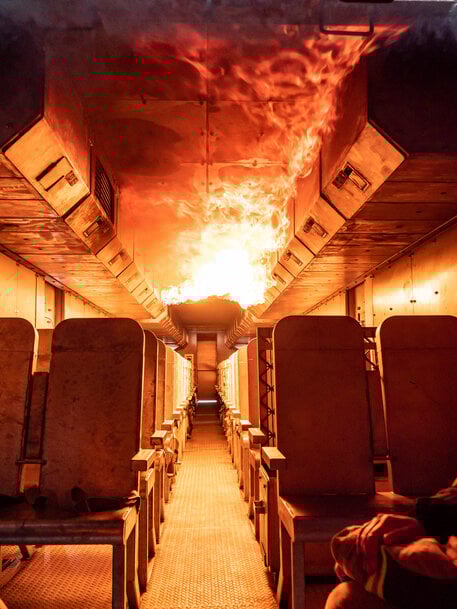
Spectacular training situation inside the aircraft replica.
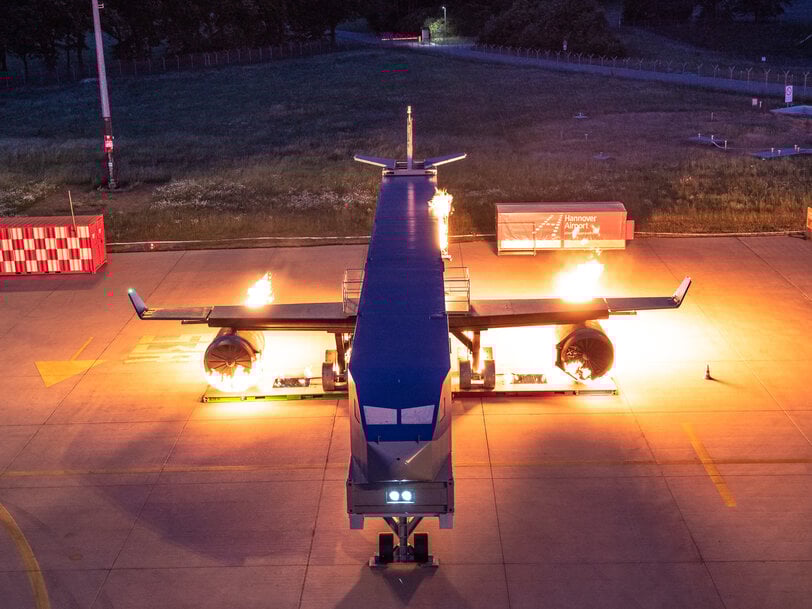
A320/B737 aircraft replica during training session
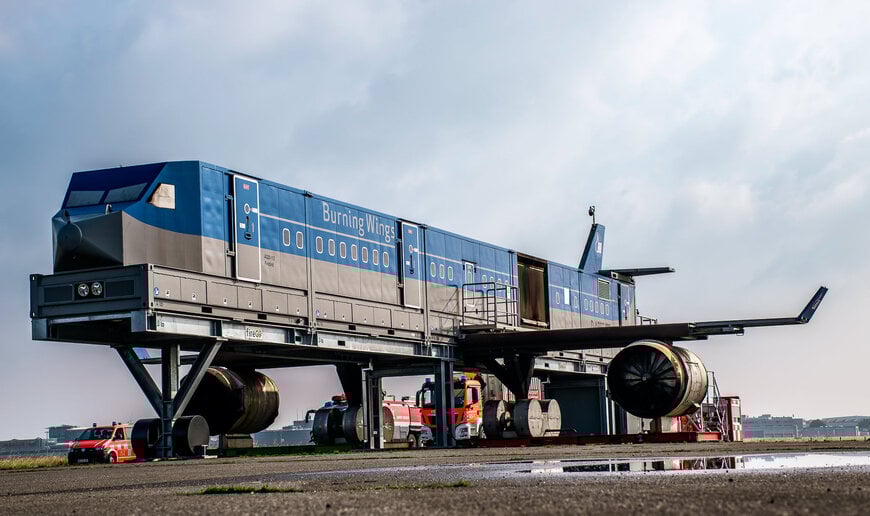
A320/B737 aircraft replica during training session
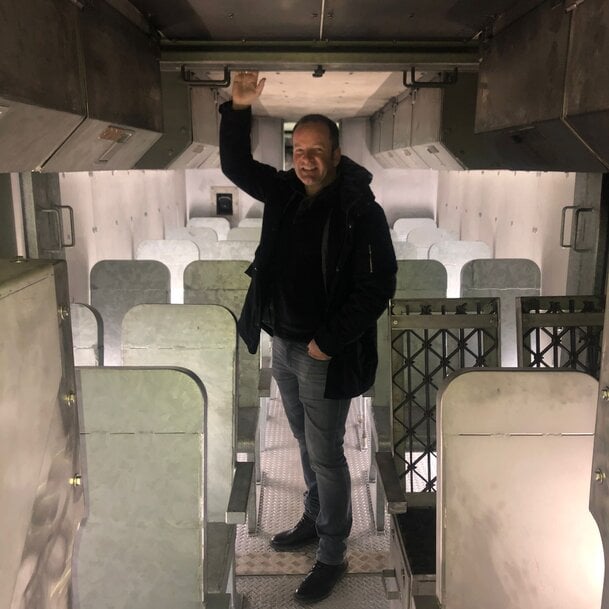
Jochen Schürgens, Managing Director of Fire GO, in the aircraft replica has implemented Mitsubishi Electric's industrial automation solutions to manage its mobile aircraft fire trainer.
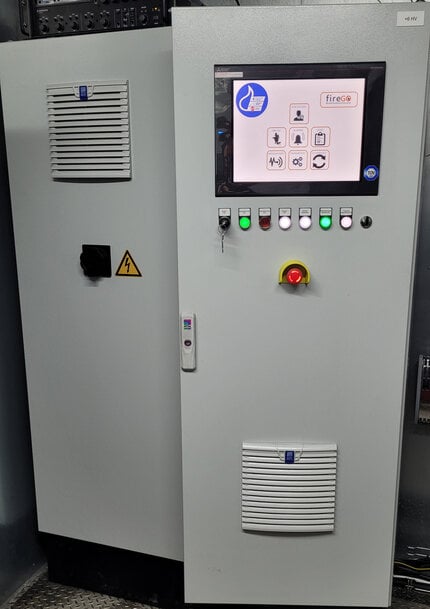
Control cabinet with Mitsubishi Electric GOT2000 HIMI
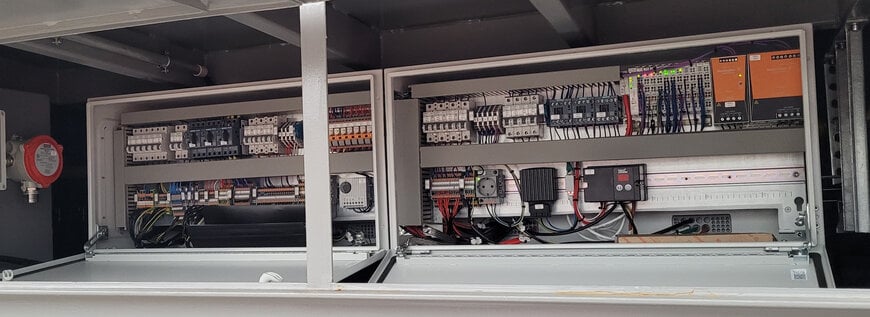
The MELSEC System-Q PLC control system manages all simulator functions
Image Source: Fire Go GmbH. The image(s) distributed with this press release is/are intended for editorial use only and is/are subject to copyright. The image(s) may only be used for the press release mentioned here, no other use is permitted.
About Fire Go GmbH
Fire Go GmbH, headquartered in Alsdorf (NRW), develops and maintains advanced fire simulation systems designed for realistic live fire training. The company provides both servicing and new designs of gas-powered, computer-controlled installations, ensuring safe and reliable training environments for fire departments and emergency services.
firego.de
