
www.industryemea.com
02
'26
Written on Modified on
Standard for energy measurement of industrial robots
ABB Robotics is collaborating with the Swedish Institute for Standards to develop a global method for measuring energy consumption and efficiency in industrial robots.
global.abb
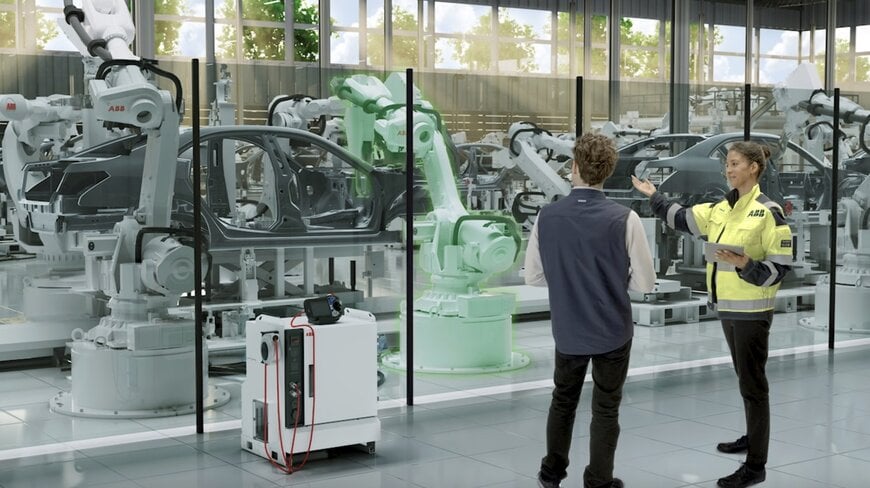
The energy consumption of industrial robots is becoming an increasingly important factor as automation expands across the manufacturing industry. At the same time, there is currently no globally established method for measuring and comparing the energy performance of robots in a consistent way. This makes it difficult for manufacturers and end users to make data-driven decisions when selecting robot systems—particularly in applications where energy-efficient production is an explicit objective.
Against this backdrop, ABB Robotics is leading an initiative to develop the first global, standardized method for measuring energy consumption and efficiency in industrial robots. The initiative aims to increase transparency and support the industry’s efforts to reduce the climate impact of automated production systems.
From lack of a standard to a technical specification
Unlike consumer products and industrial components such as electric motors—where international standards for energy efficiency classification already exist—industrial robots have so far lacked a comparable framework. As a result, energy data is often based on manufacturer-specific test methods, making direct comparisons difficult.
To address this, ABB Robotics, together with the Swedish Institute for Standards, has brought together experts from several robot manufacturers and research institutes. This work has resulted in a proposal that now forms the basis for a new global technical specification. The goal is to define how energy consumption should be measured under representative operating conditions, so that results are comparable regardless of brand or application.
The technical specification is expected to be finalized in August 2026 and is intended for global application.
The operational phase accounts for the greatest climate impact
According to internal studies by ABB, more than 70 percent of customers’ carbon emissions associated with industrial robots stem from electricity consumption during the operational phase. This makes energy performance a critical parameter—not only at the purchasing stage, but also when optimizing existing automation solutions.
At the same time, data from the International Federation of Robotics shows that more than four million industrial robots are currently in operation worldwide, and the number continues to grow as automation expands into new sectors. The combined energy use of robot systems therefore becomes a relevant factor in companies’ efforts to reduce emissions in line with international climate targets, including the Paris Agreement.
Practical relevance for industry
With a common global measurement standard, industrial robot users will be able to more easily compare energy consumption across different robot models and select solutions better suited to specific applications. For system integrators and production managers, this creates improved conditions for designing robot cells based on both productivity and energy use.
At an industry level, standardized energy measurement can contribute to more consistent reporting, facilitate life-cycle analyses, and create incentives for further technological development of more energy-efficient robot systems. As such, the initiative represents a structural step toward greater transparency and more sustainable industrial automation.
new.abb.com
