
www.industryemea.com
09
'26
Written on Modified on
Integrated Ticketing System for Île-de-France Cable Car
Hitachi Rail deploys a back-office and passenger access solution with EASIER for the Câble 1 urban cable car in the Île-de-France region transport network.
www.hitachirail.com
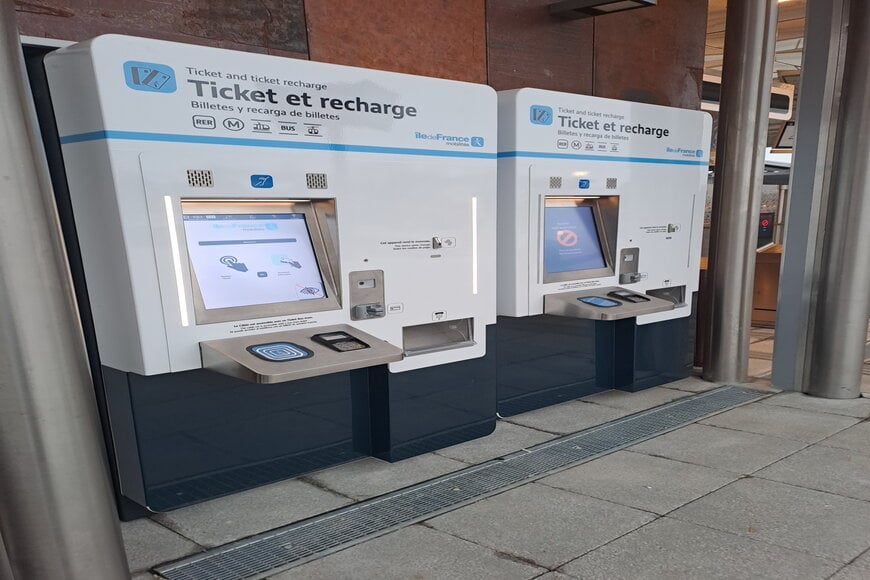
Hitachi Rail has delivered an integrated ticketing system tailored to the Câble 1 urban cable car in the Île-de-France region, incorporating vending machines, back-office connectivity and accessibility-oriented access control. The deployment supports daily operations for this novel aerial link, intended to serve suburban passenger flows and complement existing regional transit.
The Câble 1 project represents the first urban cable car system in the Île-de-France region, linking five stations over a 4.5 km route and seeking to reduce bus travel times from about 40 minutes to 18 minutes. It is part of urban mobility strategies aiming to address constrained transit corridors and to provide additional capacity for suburbs south-east of Paris. Technical stakeholders include Île-de-France Mobilités as the transport authority and EGIS as the engineering client issuing the tender, with Hitachi Rail and EASIER selected to supply the ticketing and access infrastructure.
System Architecture and Integration Mechanisms
The ticketing solution comprises automated ticket vending machines, a back-office information system, and validation gates. Ticketing machines interface with the central back-office linked to the Île-de-France Mobilités information ecosystem, enabling fare data synchronization, transaction logging, and system monitoring across the cable car network. Validation points at stations use swing-door access gates supplied by EASIER, designed for passenger throughput management and fraud mitigation.
The integration adheres to contactless fare media standards prevalent in the regional transport ecosystem, facilitating interoperability with broader fare systems. Though specifics on protocol stacks and payment schemes are not disclosed in the press material, the emphasis on connectivity and cyber-secure integration underscores adherence to established fare collection standards in European urban transit systems.
Accessibility and Passenger Flow Considerations
Equipment adaptation for passengers with reduced mobility has been incorporated, ensuring that ticketing interfaces and access points conform to accessibility requirements and do not impede boarding. The design focus on accessibility aligns with broader regulatory and usability expectations for public transport infrastructure in the region.
The EASIER access gates employ infrared detection technology to manage passenger flow. While detailed performance metrics (e.g., throughput per minute) are not specified in the press releases, the systems are described as engineered to handle peak flows of roughly 1,600 passengers during high demand intervals.
Operational and Maintenance Framework
Hitachi Rail retains responsibility for system maintenance and lifecycle support, drawing on experience from analogous deployments, including its work on the Grand Paris Express metro projects. This continuity in service and technical support is intended to optimize availability and reduce operational disruptions over time.
Use Cases and Expected Benefits
In practical terms, the integrated ticketing and access control solution enables unified fare payment and validation across the cable car service, reducing barriers to passenger entry and aligning with existing transport media used across Île-de-France. For transport planners, the solution supports real-time fare reconciliation and operational analytics, which can inform capacity planning and service optimization.
For passengers, contactless payment options and accessible gates simplify boarding and reduce dwell times at stations, contributing to overall service reliability. The deployment of an integrated ticketing ecosystem also facilitates multimodal connectivity, encouraging shifts from private car use to public transit options.
Industry Context
Urban cable car systems, while less common in Europe than traditional rail or bus services, have precedent in other metropolitan areas as transit supplements where terrain or urban infrastructure limits conventional modes. In the Île-de-France context, the Câble 1 project extends multimodal network capacity and provides a technology platform that can scale with future fare and payment innovations.
The focus on a coherent ticketing layer and access control underscores the importance of integrated fare infrastructures — part of what is increasingly termed the digital supply chain in mobility — where data flows, payment authentication, and user interfaces converge to support seamless travel across transport modes.
www.hitachirail.com
