
www.industryemea.com
10
'25
Written on Modified on
Textile Lifting Slings Reduce Weight and Handling Constraints
Developed by SEGULA Technologies with Nodus Factory, these UHMWPE-based lifting slings target safer, lighter and metal-free load handling in industrial environments.
www.segulatechnologies.com
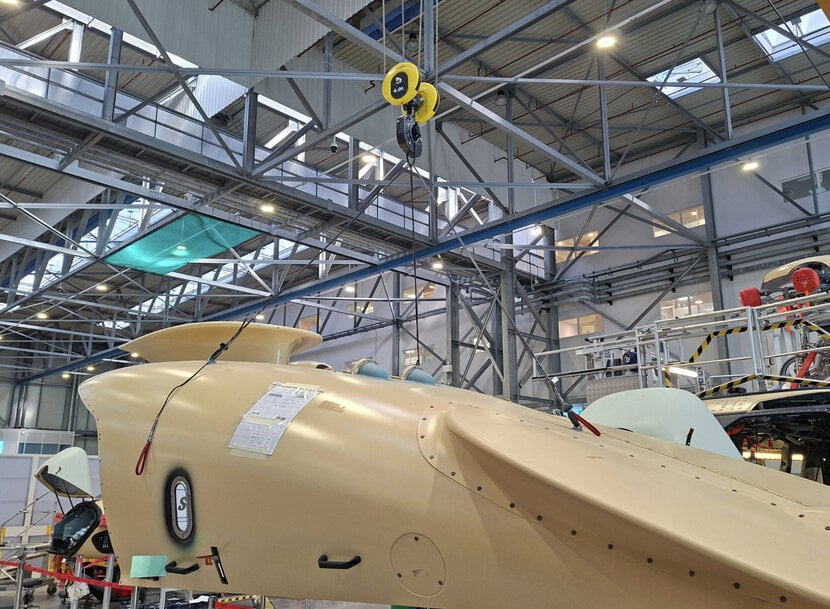
Construction, aeronautics, automotive, naval, energy and defence industries rely on lifting systems that must combine mechanical strength, operator safety and logistics efficiency. A new generation of textile lifting slings developed jointly by SEGULA Technologies and Nodus Factory introduces a technical alternative to conventional steel cables by combining high mechanical resistance with extreme compactness.
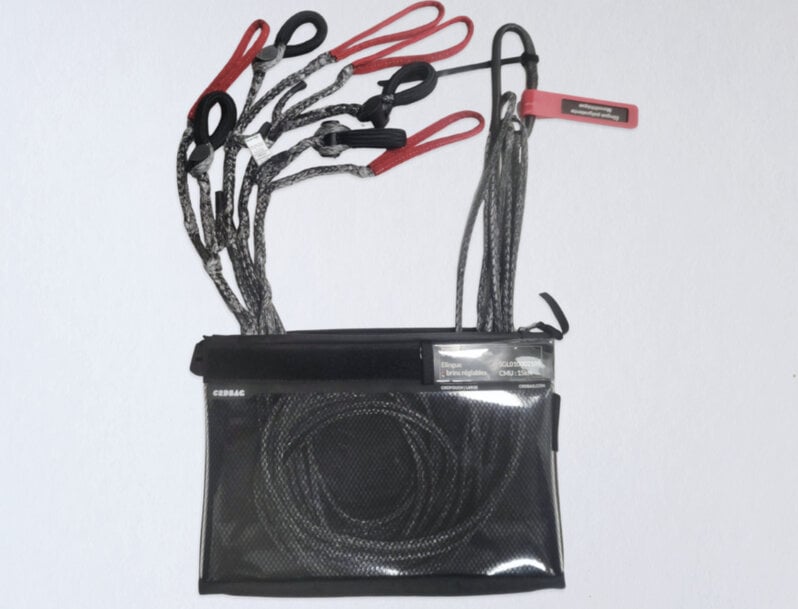
Designed for industrial lifting and securing operations, these CE-certified textile slings are currently validated for loads of up to 1.5 tonnes per strand. Their originality lies in the use of UHMWPE (Ultra-High Molecular Weight Polyethylene) fibres, a material whose strength-to-weight ratio significantly exceeds that of steel. At equivalent load capacity, a 4 mm textile sling replaces a 12 mm steel cable, enabling a substantial reduction in mass and bulk. A 2-metre sling weighs approximately 300 g, allowing transport and storage in a simple A5-format pouch.
UHMWPE Fibre as the Core Load-Bearing Material
Compliant with the NF ISO 13135 lifting standard, the UHMWPE fibres used in these slings combine high tensile strength with resistance to fatigue, UV radiation, abrasion and chemical exposure. The material is also hydrophobic, exhibits very low friction, and maintains its mechanical properties under prolonged tension. These characteristics directly contribute to dimensional stability, load reliability and service life in demanding industrial environments.
Unlike conventional systems, the slings integrate textile shackles at each end, based on the T-close adjustable shackle technology, protected by a global patent held by Nodus Factory. This configuration forms a non-detachable, metal-free assembly incorporating safety devices such as the Textile-Blocker. The absence of removable parts reduces the risk of assembly errors while further limiting overall system weight.
Measured Impact on Ergonomics, Safety and Maintenance
Replacing steel cables with UHMWPE textile slings leads to quantifiable operational improvements. The reduction in tool weight and storage volume directly limits operator fatigue during repetitive handling. The absence of metal eliminates impact damage during positioning and minimizes the risk of surface deterioration on high-value components.
Abrasion resistance and corrosion immunity reduce inspection frequency and maintenance requirements. In logistical terms, the lower transport mass contributes to reduced CO₂ emissions associated with on-site supply and equipment circulation. A single sling configuration can cover multiple load types, reducing the number of dedicated lifting accessories required.
Applications in Heavy and Mobile Industrial Equipment
The slings were designed for lifting, securing, pulling and mechanical protection of industrial equipment. Typical applications include the handling of automotive assemblies, helicopter engines, aircraft structures and large mechanical subassemblies. Their flexibility and quick adjustability allow operators to configure lifting systems in a few seconds without auxiliary hardware.
All targeted industrial sectors share a common constraint: combining lifting performance with reduced physical workload for personnel. The textile slings address this constraint by replacing rigid metal systems with lightweight, high-strength load-bearing elements suitable for both fixed workshops and mobile construction environments.
Positioning Relative to Existing Lifting Technologies
Conventional steel wire ropes remain dominant in high-load lifting because of their well-known mechanical behaviour and high maximum load ratings. In the low- to medium-tonnage segment (up to 1.5 tonnes per strand), the UHMWPE textile solution offers objectively comparable load capacity with significantly reduced mass and handling effort. Unlike steel cables, these textile slings are non-corrosive, electrically non-conductive and impact-free, characteristics that influence both safety procedures and equipment protection strategies.
At this stage, no directly equivalent metal-free, compact textile sling system combining integrated adjustable textile shackles and certified industrial lifting capacity is widely established on the market at this load level. Future scalability studies announced by the developers indicate potential extensions toward multi-hundred-tonne capacities, which would position textile slings in heavy industrial lifting segments currently dominated by steel.
What Makes This Product Technically New
The novelty of this solution does not lie solely in the use of textile fibres for lifting, but in the combination of UHMWPE load-bearing elements, patented adjustable textile shackles, integrated safety blocking and full metal-free assembly within a certified industrial lifting system. The resulting product introduces new design constraints in ergonomics, storage, transport and on-site handling that differ structurally from conventional steel-based lifting equipment.
www.segulatechnologies.com
