
www.industryemea.com
04
'25
Written on Modified on
Hydrogen-Powered Construction Equipment
Milton D'silva explains the rationality, feasibility and current status of the use of hydrogen-powered construction equipment.
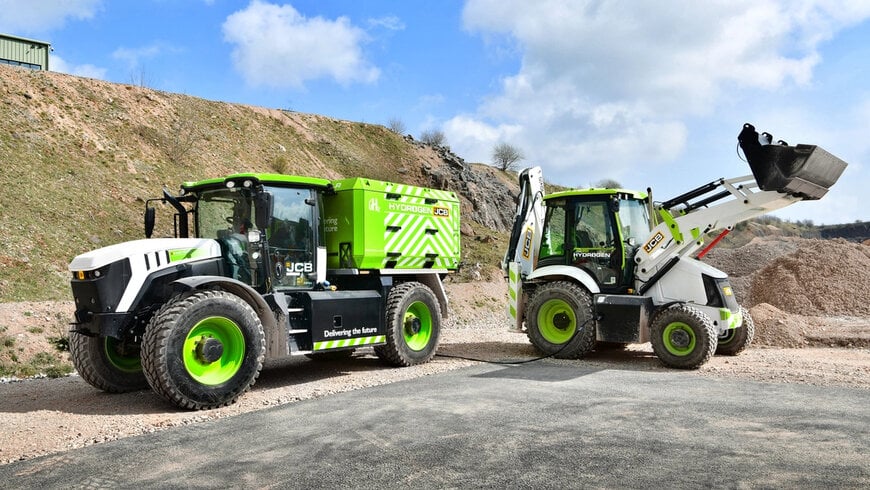
To support hydrogen equipment, JCB has developed a hydrogen refuelling unit which stores hydrogen in cylinders. Image source: JCB
The buildings and construction sector globally contributes a whopping 37% of the total greenhouse gas (GHG) emissions. A major portion of this is attributed to emissions that result from the production and use of construction materials such as cement, steel, aluminum, and glass, plus the energy consumption of the buildings. Around 12% of the GHGs are emitted by the construction equipment and machinery, forming a substantial chunk. Hypothetically, if all construction equipment ran on decarbonised fuel, the industry would see a significant reduction in GHGs and harmful particulate emissions, leading to a major cleaning up of construction sites, and a big step forward in the global march towards Net-Zero goal.
A beginning has already been made with electric construction equipment, now available from leading manufacturers. Though the overall rate of adoption is a low 5% at present, it is expected to grow at a much faster pace as more stringent regulations are put in place. Moreover, there are many segments within the construction industry where electrification, especially for heavier machinery, is not a feasible option in the absence of a grid, and hence hydrogen powered equipment makes better sense.
Why hydrogen?
Hydrogen, whether used as in fuel cells to produce electricity or as fuel for IC engines, offers an effective alternative to diesel powered equipment, thanks to these three properties:
The buildings and construction sector globally contributes a whopping 37% of the total greenhouse gas (GHG) emissions. A major portion of this is attributed to emissions that result from the production and use of construction materials such as cement, steel, aluminum, and glass, plus the energy consumption of the buildings. Around 12% of the GHGs are emitted by the construction equipment and machinery, forming a substantial chunk. Hypothetically, if all construction equipment ran on decarbonised fuel, the industry would see a significant reduction in GHGs and harmful particulate emissions, leading to a major cleaning up of construction sites, and a big step forward in the global march towards Net-Zero goal.
A beginning has already been made with electric construction equipment, now available from leading manufacturers. Though the overall rate of adoption is a low 5% at present, it is expected to grow at a much faster pace as more stringent regulations are put in place. Moreover, there are many segments within the construction industry where electrification, especially for heavier machinery, is not a feasible option in the absence of a grid, and hence hydrogen powered equipment makes better sense.
Why hydrogen?
Hydrogen, whether used as in fuel cells to produce electricity or as fuel for IC engines, offers an effective alternative to diesel powered equipment, thanks to these three properties:
- First, high energy density and fast refueling. Typically, hydrogen systems can store and deliver more usable energy per unit time than many battery systems for a given vehicle duty cycle.
- Second, and more significant, the refuelling is fast like conventional fuel – takes just minutes rather than the long hours needed for battery charging – which makes it very convenient for busy site work. This also ensures operational continuity, as hydrogen powered machines can run longer shifts.
- Third, and the most important property, is operation with zero emissions that totally eliminates noxious NOx and particulates, also reducing noise at the site. This is especially important for projects in urban areas that also have more stringent regulations.
Technical feasibility
How feasible is hydrogen for use in construction equipment? As seen in the above paragraph, hydrogen can be used as a fuel in two different ways for mobility:
How feasible is hydrogen for use in construction equipment? As seen in the above paragraph, hydrogen can be used as a fuel in two different ways for mobility:
- A combination of fuel cell and electric drivetrain where hydrogen feeds the fuel cell along with oxygen and the electricity drives the electric motor; and
- Hydrogen is directly used as a fuel for IC-engine – whether a modified one or specially built for hydrogen use.
Presently, both these methods are being prototyped and used in heavy vehicles for transport as well as niche applications. While fuel cells are already in use for electricity in off-grid locations and in vehicles, mostly in battery-hybrid layouts, hydrogen IC engines are used for power generation as well as mobility applications. The core technology requirements for both these applications – high-pressure hydrogen tanks, fuel-cell stacks, and associated power electronics and safety systems – are all mature technologies with a host of vendors, and leading manufacturers are now in the process of integrating them into machinery and equipment for construction and mining sectors.
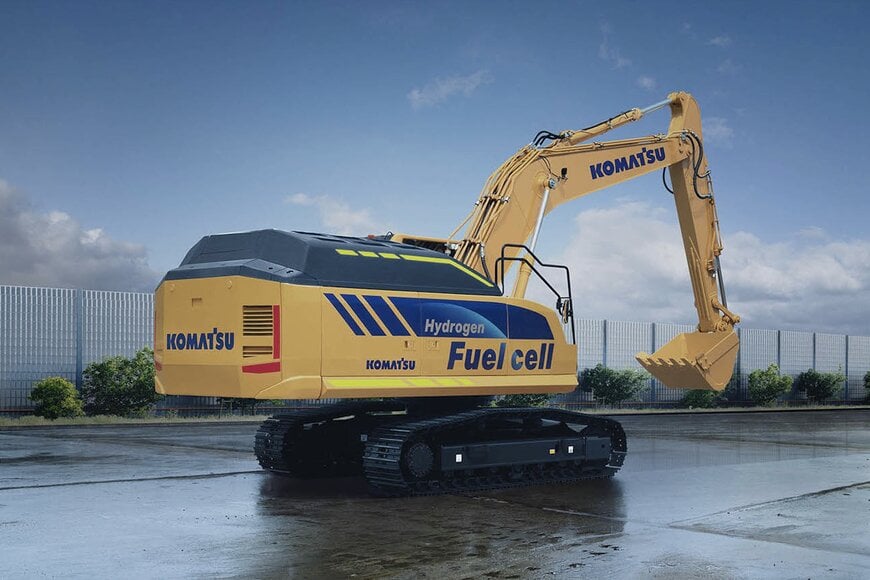
Komatsu has developed a new concept medium-sized hydraulic excavator that combines a hydrogen fuel cell Image source: Komatsu
Major players in hydrogen-powered construction equipment
It is a nascent market when it comes to hydrogen-powered construction equipment, one that is still emerging. Nevertheless, almost all manufacturers are now weighing the options given the environmental awareness and the push for Net-Zero goal. Presented here are the Top 10 global players, based on information available in the public domain and various market reports. These are companies that are at the moment most actively engaged in pilots and prototyping of hydrogen construction/heavy equipment, viz., excavators, loaders, forklifts, crawler cranes, wheel-loaders, etc.
Komatsu has developed a new concept medium-sized hydraulic excavator that combines a hydrogen fuel cell Image source: Komatsu
Major players in hydrogen-powered construction equipment
It is a nascent market when it comes to hydrogen-powered construction equipment, one that is still emerging. Nevertheless, almost all manufacturers are now weighing the options given the environmental awareness and the push for Net-Zero goal. Presented here are the Top 10 global players, based on information available in the public domain and various market reports. These are companies that are at the moment most actively engaged in pilots and prototyping of hydrogen construction/heavy equipment, viz., excavators, loaders, forklifts, crawler cranes, wheel-loaders, etc.
- Caterpillar, Inc: A global heavy-equipment giant, actively investing in hydrogen fuel-cell and hydrogen-fuel solutions; reportedly working on hydrogen-powered excavators and loaders.
- Komatsu Ltd: Leading Japanese OEM; recently unveiled a hydrogen fuel-cell excavator concept and is advancing PoC testing for medium/large machines.
- Hyundai Construction Equipment Co Ltd: Among the first to commit to hydrogen excavators and forklifts – in collaboration with other hydrogen technology players – targeting commercialisation.
- JCB Ltd: Developed a working prototype hydrogen-powered excavator (hydrogen combustion engine) and explored hydrogen for heavy plant machinery.
- Liebherr Group: Engineering heavyweight with broad heavy-machinery range; involved in hydrogen equipment R&D, including cranes and loaders.
- Hitachi Construction Machinery Co Ltd: Active in hydrogen excavator development; part of the cohort of traditional OEMs transitioning to low-emissions powertrains.
- Volvo Construction Equipment: Known for integrating digital and automation technologies; increasingly investing in hydrogen-based heavy equipment solutions (e.g., wheel-loaders, excavators).
- Develon (formerly Doosan, now part of Hyundai/HD Hyundai): Developing modular hydrogen-fuel/fuel-cell systems adaptable to various equipment types – excavators, loaders, compact machinery.
- CNH Industrial NV: Large global OEM; reportedly working on hydrogen-enabled construction/machinery solutions, likely leveraging modular platforms and scaling capabilities.
- SANY Group: Chinese heavy-machinery OEM – active in the hydrogen equipment market, including excavators, wheel loaders, and other heavy construction gear.
These and other manufacturers working on hydrogen powered construction equipment are actively supported by a large base of high tech equipment and systems.
Among the leading suppliers of hydrogen fuel-cells and associated systems are well known companies like Ballard Power Systems, Plug Power, FuelCell Energy, Cummins, and Bloom Energy. Other significant players include Air Liquide, Linde, Doosan Fuel Cell, SFC Energy, and ITM Power.
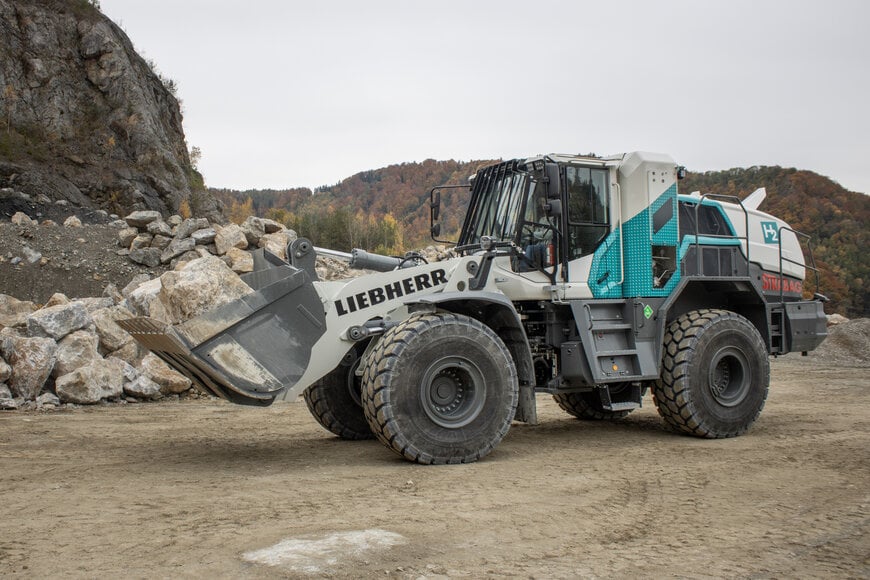
A hydrogen-powered wheel loader from Liebherr is being tested at the Kanzelstein quarry in Gratkorn, Austria. Image source: Liebherr
When it comes to hydrogen production and refueling infrastructure, this is a segment that is witnessing much action and huge investments in anticipation of large-scale adoption of the Hydrogen Economy globally, which is part of the decarbonisation of energy. Companies leading this initiative are global industrial gas suppliers like Linde and Air Liquide; energy companies such as Shell plc, Reliance Industries, and TotalEnergies; and specialised hydrogen technology firms like Plug Power, Ballard Power Systems, and Nel ASA. Apart from these, there are other players emerging in specific regions, such as Indian companies like Adani Green Energy, Larsen & Toubro, and NTPC, which are investing heavily in the sector.
Among the leading suppliers of hydrogen fuel-cells and associated systems are well known companies like Ballard Power Systems, Plug Power, FuelCell Energy, Cummins, and Bloom Energy. Other significant players include Air Liquide, Linde, Doosan Fuel Cell, SFC Energy, and ITM Power.
A hydrogen-powered wheel loader from Liebherr is being tested at the Kanzelstein quarry in Gratkorn, Austria. Image source: Liebherr
When it comes to hydrogen production and refueling infrastructure, this is a segment that is witnessing much action and huge investments in anticipation of large-scale adoption of the Hydrogen Economy globally, which is part of the decarbonisation of energy. Companies leading this initiative are global industrial gas suppliers like Linde and Air Liquide; energy companies such as Shell plc, Reliance Industries, and TotalEnergies; and specialised hydrogen technology firms like Plug Power, Ballard Power Systems, and Nel ASA. Apart from these, there are other players emerging in specific regions, such as Indian companies like Adani Green Energy, Larsen & Toubro, and NTPC, which are investing heavily in the sector.
These companies are involved in a range of products and services, from fuel cell manufacturing and system development to hydrogen production and distribution infrastructure.
Current status – from pilots to PoCs
With all the research and development by major OEMs, the segment is now ready to move from mere concept to proof-of-concept (PoC) and pilot trials. Once the regulatory hurdles are cleared and the charging infrastructure is put in place, the next and logical step will be mass production as the demand picks up.
Some of the recent developments include:
- JCB premiered the world’s first-ever hydrogen combustion engine powered backhoe loader, the JCB 3DX at EXCON 2023 in India. Recently in mid-2025, the company also conducted a trial with the JCB 540-180H Loadall powered by a hydrogen combustion engine fuelled with hydrogen provided by Ryze Power.
- Hyundai Construction Equipment launched its HW155H hydrogen-powered excavator at Bauma 2025 in April.
- Japanese major Komatsu, a notable leader in this space, has announced concept machines earlier and has progressed to PoC testing for hydrogen-powered hydraulic excavators and even hydrogen-powered large haul trucks, with formal PoC activity reported in 2025 to evaluate drivability, continuous operating hours and safety around high-pressure hydrogen. These programs show manufacturers are tackling real-world duty cycles, not just lab demos.
OEM strategies vary: some manufacturers (including major European players) are advancing electric and hydraulic-hybrid machines as nearer-term carbon reduction steps while keeping an eye on hydrogen for heavier, longer-duty applications. Volvo CE, for example, continues to expand electric and hydraulic hybrid offerings and has signalled broader investments in future product lines while watching hydrogen developments. The market is therefore plural: batteries and hybrids where grid charging is practical, hydrogen where long range and quick refuelling matter.
Early adopters and sectors: in material-handling, forklifts have been an early commercial success for hydrogen fuel cells because of centralised fleets and predictable duty cycles; that experience is informing construction pilots where task profiles and refuelling logistics are more complex.
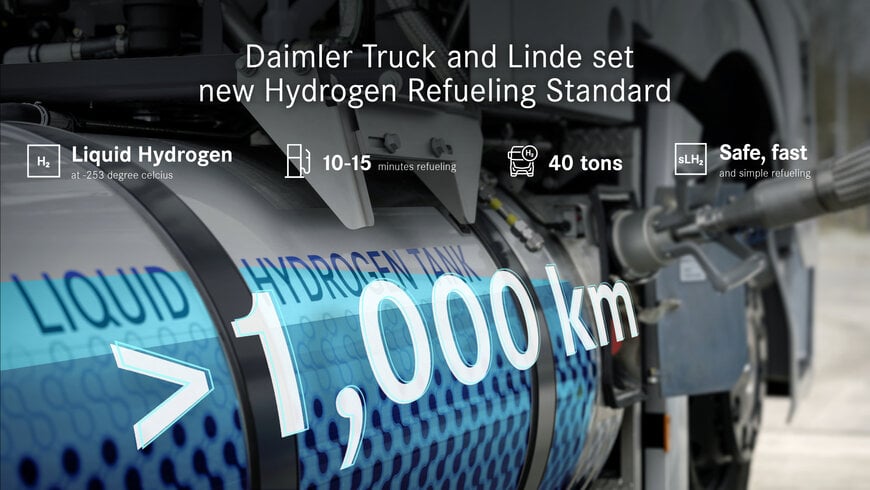
Daimler Truck and Linde have developed a revolutionary refueling technology for subcooled liquid hydrogen. Image source: Daimler Truck
Economic and infrastructure hurdles
The biggest constraints in hydrogen powered construction equipment are not the machines themselves but fuel supply, cost and the carbon intensity of hydrogen. Green hydrogen (made from renewable electricity via electrolysis) remains more expensive than fossil H₂ or diesel on an energy-equivalent basis in many regions, and production capacity and refuelling networks for heavy equipment are sparse. On-site hydrogen production, mobile refuelling trucks, or hub-and-spoke solutions are being trialled, but they add CAPEX/OPEX and regulatory complexity (storage, safety and permitting). Lifecycle emissions also depend on how the hydrogen is produced – only green or low-carbon hydrogen delivers genuine upstream decarbonisation.
What next?
The general consensus in industry is that a staged rollout can be expected over the next 3-10 years:
Early adopters and sectors: in material-handling, forklifts have been an early commercial success for hydrogen fuel cells because of centralised fleets and predictable duty cycles; that experience is informing construction pilots where task profiles and refuelling logistics are more complex.
Daimler Truck and Linde have developed a revolutionary refueling technology for subcooled liquid hydrogen. Image source: Daimler Truck
Economic and infrastructure hurdles
The biggest constraints in hydrogen powered construction equipment are not the machines themselves but fuel supply, cost and the carbon intensity of hydrogen. Green hydrogen (made from renewable electricity via electrolysis) remains more expensive than fossil H₂ or diesel on an energy-equivalent basis in many regions, and production capacity and refuelling networks for heavy equipment are sparse. On-site hydrogen production, mobile refuelling trucks, or hub-and-spoke solutions are being trialled, but they add CAPEX/OPEX and regulatory complexity (storage, safety and permitting). Lifecycle emissions also depend on how the hydrogen is produced – only green or low-carbon hydrogen delivers genuine upstream decarbonisation.
What next?
The general consensus in industry is that a staged rollout can be expected over the next 3-10 years:
- Short term (now-3 years): pilots, PoCs and niche projects, often at high-value or city projects where local emissions rules justify the cost; continued growth of electric/hybrid alternatives for many machines.
- Medium term (3-7 years): fleet trials and limited commercial models as hydrogen supply chains mature, costs fall with scale, and OEMs validate reliability in heavy-duty cycles.
- Longer term (7+ years): mainstream adoption for the heaviest or longest-running machines in regions with accessible low-carbon hydrogen or robust refuelling networks.
Manufacturers and contractors will likely adopt a mixed strategy – batteries and charging where sites can support them; hydrogen where continuous power, rapid refuelling or range are decisive. The sector’s path will be shaped as much by energy markets, policy incentives and refuelling networks as by advances in the machines themselves.
Bottom line
Hydrogen is a promising and rational option for decarbonising the heaviest and longest-duty construction equipment because it combines rapid refuelling with high usable energy. Technical feasibility is proven at the prototype and PoC level; commercial viability depends on cheaper, low-carbon hydrogen and practical refuelling logistics. For now, contractors and OEMs should watch pilots closely, plan mixed fleets, and evaluate site-specific tradeoffs – hydrogen is not a universal silver bullet, but it will almost certainly be an important tool in the construction sector’s low-carbon toolbox.
Bottom line
Hydrogen is a promising and rational option for decarbonising the heaviest and longest-duty construction equipment because it combines rapid refuelling with high usable energy. Technical feasibility is proven at the prototype and PoC level; commercial viability depends on cheaper, low-carbon hydrogen and practical refuelling logistics. For now, contractors and OEMs should watch pilots closely, plan mixed fleets, and evaluate site-specific tradeoffs – hydrogen is not a universal silver bullet, but it will almost certainly be an important tool in the construction sector’s low-carbon toolbox.
