
www.industryemea.com
15
'26
Written on Modified on
Wild Water Group Improves Cold Chain Efficiency & Noise with Carrier Transicold Vector HE 17 Units
Fleet-wide adoption of Vector HE 17 units improves fuel efficiency, cooling performance and reduces noise in temperature-controlled transport operations.
www.carrier.com
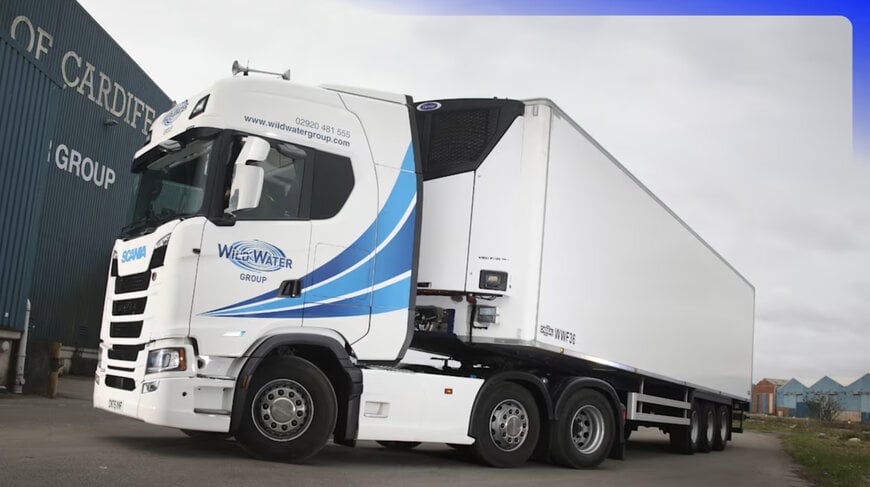
Cold chain logistics, refrigerated transport, and food distribution require reliable temperature control systems that balance energy efficiency, cooling performance, and operational impact. Carrier Transicold has equipped Wild Water Group’s trailer fleet with Vector HE 17 refrigeration units, supporting improvements in fuel consumption, noise reduction, and cooling capacity across its distribution network.
Following the initial deployment of five units, the company reported measurable performance gains compared to the previously used Vector 1550 systems. Based on these results, Wild Water Group is planning to upgrade its full fleet of 24 trailers, each mounted on 13.6-metre units, as part of its broader fleet modernization strategy.
Improved efficiency through adaptive cooling technology
The Vector HE 17 system uses inverter-driven compressor technology to continuously adjust output based on real-time cooling demand. This enables more efficient energy use compared to fixed-speed systems, particularly in operations with variable load conditions.
With a cooling capacity exceeding 16 kW, the system supports consistent temperature control for perishable goods across long-distance transport. At the same time, its optimized energy consumption contributes to reduced fuel usage, which is a key factor in operating costs for refrigerated fleets.
Reduced noise and lightweight design
Noise reduction is another key characteristic of the upgraded system. The Vector HE 17 delivers approximately 6 dB(A) lower noise levels compared to earlier models, which can improve working conditions for drivers and reduce disturbance in urban delivery environments.
Weighing around 720 kg, the unit is also designed to minimize additional load on the trailer, supporting overall vehicle efficiency without compromising cooling performance.
Electrified architecture for flexible operation
The system incorporates E-Drive technology, which replaces traditional mechanical transmission components with an electric architecture. Energy from the vehicle engine or external sources is converted into electricity to power the refrigeration unit.
This configuration allows operation both when connected to the grid at a depot and during transit, including compatibility with alternative power sources such as battery packs or generator modules integrated with the tractor unit. The result is a more flexible and efficient approach to refrigeration compared to belt-driven systems.
Supporting modern cold chain requirements
The transition reflects a broader trend in refrigerated transport, where operators are upgrading systems to improve efficiency and reduce environmental impact. For logistics providers handling temperature-sensitive goods, consistent performance and reduced downtime are essential for maintaining product quality.
While similar transport refrigeration systems are available on the market, differences typically lie in energy efficiency, cooling output, noise levels, and integration with electrified power architectures. In this context, the deployment of inverter-driven and electrically powered systems represents a shift toward more adaptable and energy-efficient cold chain solutions.
Edited by Natania Lyngdoh, Induportals Editor — Adapted by AI.
www.carrier.com
