
www.industryemea.com
09
'26
Written on Modified on
QAFCO increases ammonia output with AI-based framework
Baker Hughes digital solutions deliver higher production reliability and 566 hours of saved operating time.
www.bakerhughes.com
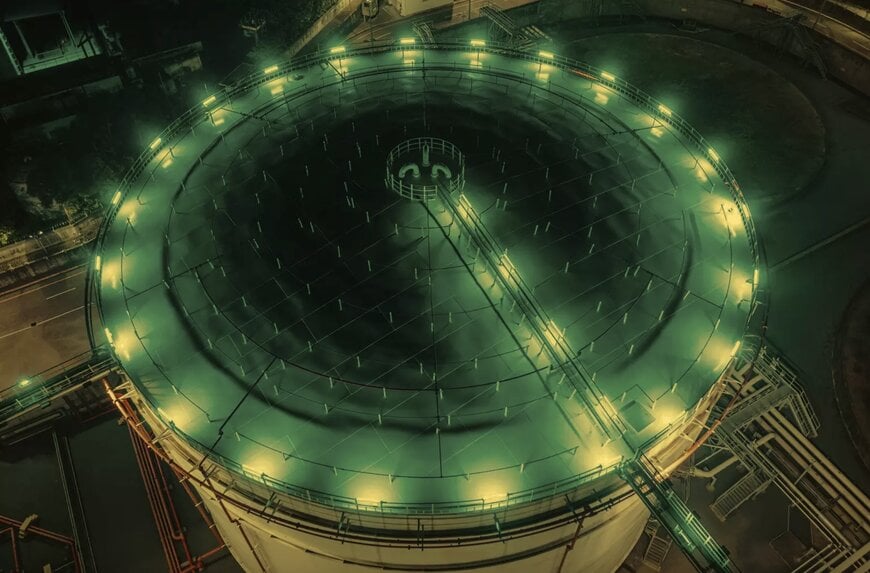
Qatar Fertilizer Company (QAFCO) has initiated a long-term operational transformation aimed at becoming the world’s leading urea producer. Founded in 1969, QAFCO operates large-scale ammonia and urea plants where even marginal improvements in efficiency and reliability have a significant impact on overall output and profitability.
To support this ambition, QAFCO launched an Operational Excellence Framework that embeds artificial intelligence into daily operations. The programme focuses on improving production efficiency, reducing unplanned downtime and establishing more predictive, data-driven ways of working across the organisation.
Production and reliability challenges
Despite strong operational performance, QAFCO identified several structural challenges limiting its ability to fully utilise installed capacity. Analysis of production losses relative to Maximum Demonstrated Rate (MDR) revealed gaps between actual and potential output.
Optimising ammonia production involves complex trade-offs between front-end and back-end process units, with multiple constraints that are difficult to manage using advanced process control alone. In parallel, asset reliability posed a risk. Critical rotating equipment—including gas turbines, steam turbines and compressors—was monitored through fragmented systems, with maintenance often triggered reactively after faults occurred. This increased the likelihood of unplanned shutdowns and production losses.
QAFCO also recognised that technology adoption would require organisational change, including new operating routines, stronger cross-functional collaboration and a shift toward predictive decision-making.
AI-enabled process optimization and predictive maintenance
To address these challenges, QAFCO partnered with Baker Hughes to implement digital solutions based on the Cordant™ platform. The transformation was structured around three pillars: process optimization, reliability-driven maintenance and change management.
For process optimization, QAFCO deployed Cordant™ Process Optimization on top of existing advanced process control systems. Domain-led machine learning models analyse real-time operating data and generate control recommendations, helping operators balance competing process variables and increase ammonia throughput.
Asset reliability is supported through a hybrid diagnostic approach combining physics-based models with AI algorithms. Baker Hughes’ iCenter™, powered by Cordant™, provides 24/7 remote monitoring of critical assets from Doha, supported by dedicated diagnostic engineers. In parallel, Cordant™ Asset Health, built on System 1™, consolidates data from multiple machines into a unified platform, enabling early fault detection, prioritisation of actions and optimisation of maintenance costs.
Embedding change across the organisation
Recognising that sustainable improvement depends on people as well as technology, QAFCO adopted Baker Hughes’ change management methodology as an integral part of the programme. Senior leadership engagement, targeted capability building and structured communication were used to support adoption across engineering, operations and maintenance teams.
Condition monitoring engineers and rotating equipment specialists from mechanical, electrical and automation disciplines were actively involved, strengthening internal ownership of the new tools and processes.
Measurable operational results
Since going live in November 2023, the programme has delivered quantifiable benefits:
- 0.8% increase in site-wide daily ammonia production
- Approximately 566 hours of production time saved over two years
- Example: 80 hours of production loss avoided through early detection of a CO₂ high-pressure compressor anomaly
In addition, the framework has formalised discussions around plant constraints, improvement initiatives and proactive alert handling, improving coordination between operations and maintenance.
Scaling across the enterprise
Building on early results, QAFCO is preparing to extend Cordant™ Process Optimization to its urea plants and implement site-wide optimisation by 2027. The next phase will allocate production targets across ammonia and urea units based on CO₂ availability and market pricing, optimising energy and feedstock use at enterprise level.
Further initiatives include the deployment of Cordant™ Asset Strategy to standardise maintenance strategies and Cordant™ Root Cause Analysis to support structured investigations into production losses and equipment downtime.
Industry context and outlook
The results and approach were presented jointly by QAFCO and Baker Hughes at the GPCA Agri-Nutrients Conference, highlighting how AI-based optimisation and predictive maintenance can deliver measurable gains in large-scale fertilizer production.
For QAFCO, the programme demonstrates how combining advanced analytics with organisational change can improve reliability, increase output and create a scalable foundation for long-term operational excellence.
Scaling across the enterprise
Building on early results, QAFCO is preparing to extend Cordant™ Process Optimization to its urea plants and implement site-wide optimisation by 2027. The next phase will allocate production targets across ammonia and urea units based on CO₂ availability and market pricing, optimising energy and feedstock use at enterprise level.
Further initiatives include the deployment of Cordant™ Asset Strategy to standardise maintenance strategies and Cordant™ Root Cause Analysis to support structured investigations into production losses and equipment downtime.
Industry context and outlook
The results and approach were presented jointly by QAFCO and Baker Hughes at the GPCA Agri-Nutrients Conference, highlighting how AI-based optimisation and predictive maintenance can deliver measurable gains in large-scale fertilizer production.
For QAFCO, the programme demonstrates how combining advanced analytics with organisational change can improve reliability, increase output and create a scalable foundation for long-term operational excellence.
